


Introduction
Materials and Methods
Experimental Materials and Cultivation Management
Treatments and Plant Management
Measurement of Growth and Characteristics
Statistical Analysis
Results and Discussion
Mother Plant Growth and Runner Production as Affected by Planting Density
Seedling Quality and Morphological Characteristics as Affected by Runner Age
Post-Transplanting Growth and Yield Components as Affected by Runner Age
Conclusion
Introduction
The total production value of strawberry (Fragaria × ananassa Duch.) in South Korea has reached approximately 1.5 trillion KRW, making it the highest-value horticultural crop and indicating its increasing economic importance (MAFRA, 2024). The cultivation area is approximately 5,518 ha, with an annual production of about 160,000 tons (KREI, 2025). In addition, approximately 5,270 tons of strawberries are exported, mainly to Southeast Asian countries, underscoring its status as a strategically important horticultural export crop (KATI, 2025).
In South Korea, strawberry transplants are generally produced from March to September through runner propagation using elevated bench pot systems. However, this conventional method requires a long production period and intensive labor, and the recent increase in the cost of substrates and other nursery materials has further increased production costs. To address these limitations, cutting propagation (commonly referred to as plug cutting) has been proposed as a promising alternative for reducing labor input and improving the uniformity of seedling quality (Kang et al., 2019). For the successful adoption of cutting propagation, it is essential to secure mother plants capable of producing a sufficient number of high-quality runners and to establish a stable transplant production system. Strawberry is vegetatively propagated through runners, and transplant vigor substantially influences not only early growth after transplanting but also flowering and final yield. Crown diameter is commonly used as an indicator of transplant vigor; however, its relationship with subsequent growth and yield may vary depending on the cultivar and transplant type (Lee and Yeoung, 2021).
Recently, hanging-bed propagation systems have been introduced along with the development of smart farming technologies. These systems can increase runner production per unit area by utilizing vertical space above the cultivation beds. Compared with conventional elevated bench pot systems, hanging-bed systems can provide better canopy ventilation and a more uniform light environment, which may help suppress excessive elongation of runners and maintain seedling quality even under high-density planting conditions. Despite these advantages, the practical implementation of hanging-bed systems still faces challenges related to harvesting management. In mass-propagation systems, once-over harvesting inevitably results in considerable variation in runner age, as runners initiated early and late in the season are harvested simultaneously. Although older runners may appear vigorous, they may have reduced physiological quality, including decreased rooting ability after cutting due to stolon tissue aging and lignification. Although mother plant establishment followed by once-over runner harvesting is commonly used in Europe and the United States, information is still limited regarding the optimal runner age at cutting and mother planting density suitable for Korean production conditions and cultivars.
Therefore, this study was conducted to determine the optimal mother planting density for maximizing the production of viable runners per unit area in a hanging-bed propagation system. In addition, the effects of runner age at cutting on seedling quality, survival rate, and post-transplanting yield were evaluated. The findings of this study are expected to provide practical guidelines for establishing an efficient mass-propagation system for strawberry transplants.
Materials and Methods
Experimental Materials and Cultivation Management
This study was conducted in a two-span greenhouse at the Gangwon State Agricultural Research and Extension Services, located in Sinbuk-eup, Chuncheon, Gangwon, South Korea. A top-fixed hanging-bed system consisting of eight beds was installed at a height of 2.5 m within the greenhouse. The strawberry (Fragaria × ananassa Duch.) cultivar ‘Seolhyang’, was used as the experimental material.
For the mother plants, primary runners produced from the previous year’s transplants were collected and cold-stored at 4°C to break dormancy. On February 15, the prepared plants were transplanted in two rows into desalinated coir substrate contained in the hanging beds. The substrate consisted of coir chip and dust at a ratio of 7:3 (v/v), and the substrate slabs measured 100 × 20 × 15 cm.
Treatments and Plant Management
Mother planting density was established at four levels: 9,120, 4,320, 2,400, and 1,920 plants per 990 m2 (approximately 9.2, 4.4, 2.4, and 1.9 plants・m-2, respectively). Nutrient solution was supplied to each plant through individual button drippers. From mid-February to early June, corresponding to the period of mother plant vegetative growth and runner production, the nutrient solution was supplied at an electrical conductivity (EC) of 0.8-1.0 dS・m-1 and a pH of 6.0.
Irrigation was initiated 2 h after sunrise and stopped 3 h before sunset. The irrigation interval was controlled based on accumulated solar radiation. Nutrient solution was supplied once every 200-250 J・cm-2 of accumulated solar radiation, with a minimum interval of 2 h between irrigation events. Greenhouse temperature was maintained at approximately 25-30°C during the day and above 15°C at night. To prevent aging and browning of runner adventitious roots under low-humidity conditions, a fogging system was operated during the daytime to maintain the relative humidity at 55-65%. All runners emerging from the mother plants were removed through the end of March to promote initial vegetative growth, and runner induction was started on April 1.
For the runner age treatments, runners harvested from the 9,120 plants per 990 m2 density treatment were used. To evaluate differences in seedling growth according to runner age at cutting, runners were classified into five age groups based on the number of days after adventitious root emergence: 0-15, 16-30, 31-45, 46-60, and > 60 days. To determine runner age accurately, dated tags were attached to individual runners immediately after the date of adventitious root emergence. Runner age was calculated as the number of days from the date of adventitious root emergence to plug cutting on June 7.
The harvested runners were inserted into 24-cell propagation trays (Hwasung Co., Ltd., Hwaseong, South Korea) filled with a commercial seedling substrate (Purumi; Seoul Bio Co., Ltd., Eumseong, South Korea) and secured in place using seedling pins. The propagation trays were placed in a single-span greenhouse equipped with a 55% external shading net. For initial rooting and establishment, a micro-sprinkler system was operated for two weeks from 06:00 to 18:00, with 3 min of misting followed by a 7 min off period (Kang et al., 2019). Thereafter, micro-sprinkling was discontinued, and excess leaves were removed to maintain three leaves per seedling until final transplanting. During the nursery period, nutrient solution with an EC of 0.6 dS・m-1 and a pH of 6.0 was supplied 0-2 times per day depending on weather conditions. To induce floral bud differentiation, nitrogen-containing fertilizers, such as calcium nitrate, were excluded from the nutrient solution from mid-August, and pH was adjusted using nitric acid; the nutrient solution was maintained at an EC of 0.6 dS・m-1 and a pH of 6.0. The survival rate of the cuttings was evaluated two weeks after plug-cutting, and seedlings with active new adventitious root elongation and successful establishment were counted as survived. The seedlings were finally transplanted into an elevated hydroponic bed system filled with coir substrate consisting of chip and dust at a ratio of 7:3 (v/v). Post-transplanting crop management and cultivation practices were conducted according to the Standard Strawberry Cultivation Manual provided by the Rural Development Administration (RDA, 2019).
Measurement of Growth and Characteristics
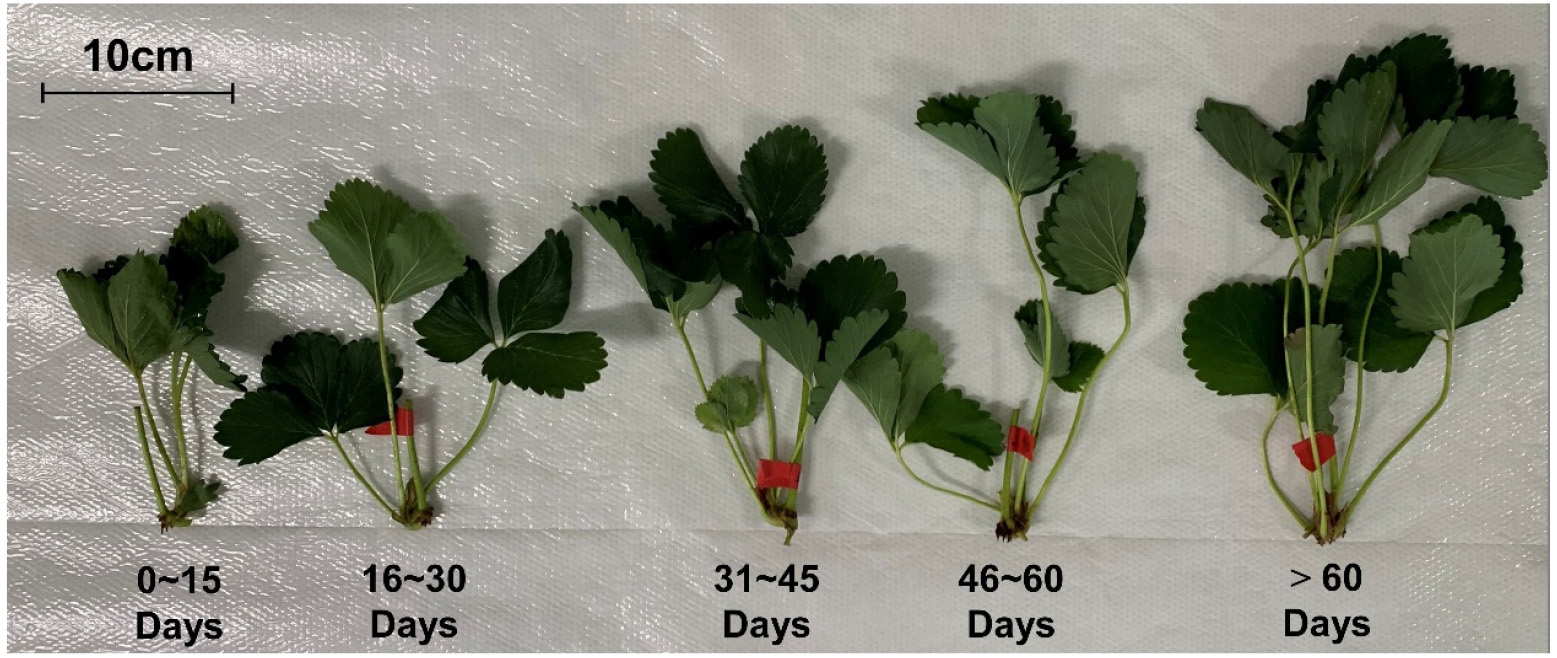
Plant growth parameters were measured according to the Agricultural Science and Technology Research Analysis Standards provided by the Rural Development Administration (RDA, 2017, 2019). Crown diameter was measured using a digital caliper (Mitutoyo, Tokyo, Japan). To evaluate the browning severity of runner adventitious roots, all runners were harvested simultaneously on the cutting date, June 7. For each runner, the browning severity was determined as the proportion of browned adventitious roots relative to the total number of adventitious roots on that runner. Based on this proportion, each runner was assigned to one of three browning grades: < 25%, 25-50%, and > 50% (Fig. 1). To minimize visual subjectivity, three researchers independently assigned the browning grade of each runner using the photographic standard chart shown in Fig. 1, and the grade agreed upon by the majority was used for analysis. The browning severity of each treatment was then expressed as the percentage of runners belonging to each grade.
Runner fresh weight was measured using an electronic scale (HS1000TB; Hansung Co., Ltd., Incheon, Korea). For runner preparation, the stolon extending toward the daughter plant was completely removed, whereas the stolon connected to the mother plant was cut to a length of 5 cm. During the nursery period, seedlings were separated into shoots and roots at the crown base, and the fresh weights of each part were measured. For dry weight determination, the separated samples were dried at 70°C for 72 h and then weighed using a microbalance (Sartorius, Göttingen, Germany). Fruit quality characteristics and cumulative yield after transplanting were measured twice a week.
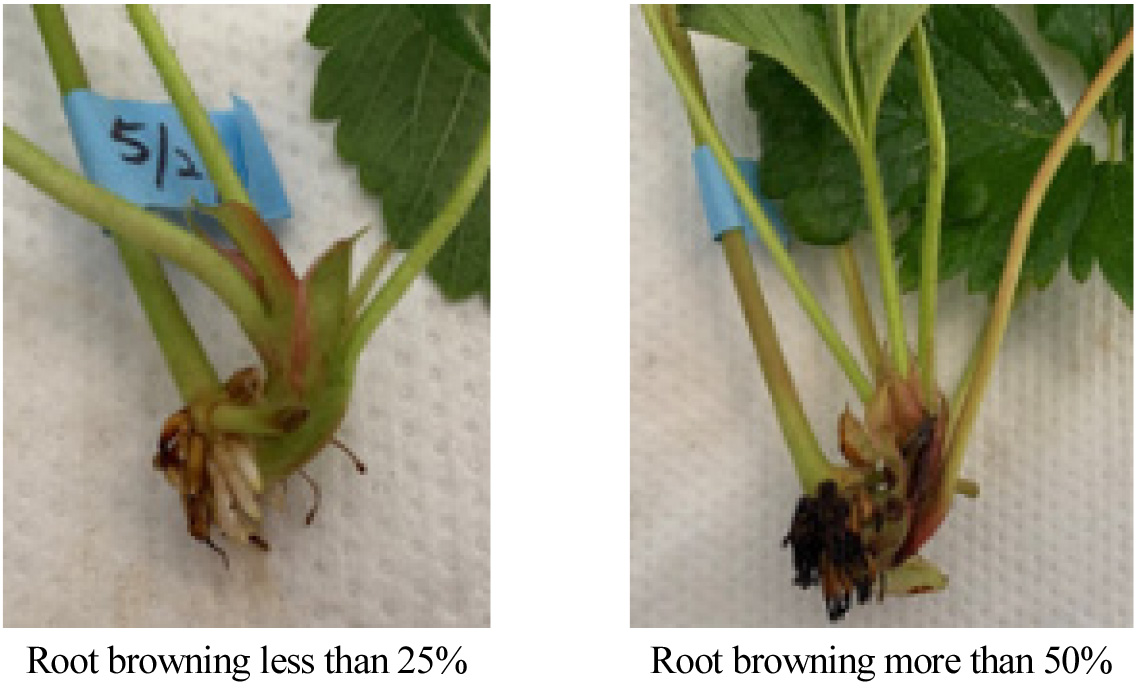
Fig. 1.
Visual rating standard for adventitious root browning severity in ‘Seolhyang’ strawberry runners. Browning was classified into three grades according to the proportion of browned (blackened or dark-brown) roots relative to the total number of adventitious roots: (A) less than 25%, (B) 25-50%, and (C) more than 50%.
Statistical Analysis
The experimental plots for both the nursery phase and post-transplanting growth evaluation were arranged in a randomized complete block design (RCBD) with three replications. For plot-level data such as total runner production and final fruit yield, ten plants were evaluated per plot, resulting in a total of 30 plants per treatment (n = 30). In contrast, for destructive or detailed morphological measurements during the nursery and harvesting phases, a representative subsample of 10 or 20 plants per treatment (n = 10 or 20) was randomly collected across the replications to minimize experimental error and handling artifacts. For the survival rate evaluation, 10 plants per plot were assessed, resulting in a total of 30 plants per treatment (n = 30). For the adventitious root browning assessment, five runners were randomly selected from each of the three blocks, resulting in a total of 15 runners per treatment (n = 15). The proportion of runners belonging to each browning grade was calculated for each block, and the block-level proportions were used as replicates for analysis of variance. All data were subjected to analysis of variance using SAS 9.4 software (SAS Institute Inc., Cary, NC, USA). Treatment means were separated using Duncan’s multiple range test at p < 0.05.
Results and Discussion
Mother Plant Growth and Runner Production as Affected by Planting Density
Prior to their utilization as mother plants, the initial growth parameters of the strawberry (cv. Seolhyang) seedlings were evaluated, revealing an average crown diameter of 11.7 ± 1.1 mm and a fresh weight of 19.9 ± 2.8 g. Regarding the vegetative growth of mother plants in response to planting density, plant height increased with planting density and differed significantly among the treatments from early April onward, whereas leaf number showed no significant differences at any measurement date. Leaf length, leaf width, and crown diameter differed significantly only at one or two individual measurement dates—leaf length on March 22, leaf width on April 5 and 19, and crown diameter on April 19—without a consistent trend across planting densities during the remainder of the investigation period (Fig. 2). These results indicate that as planting density increases, intense competition for light among adjacent plants induces upward stretching, resulting in an elongated growth habit (Kim et al., 2015). It is widely recognized that an increase in planting density during strawberry propagation leads to insufficient light penetration into the canopy, which consequently stimulates shoot elongation and suppresses crown enlargement (Yoshida et al., 2012).
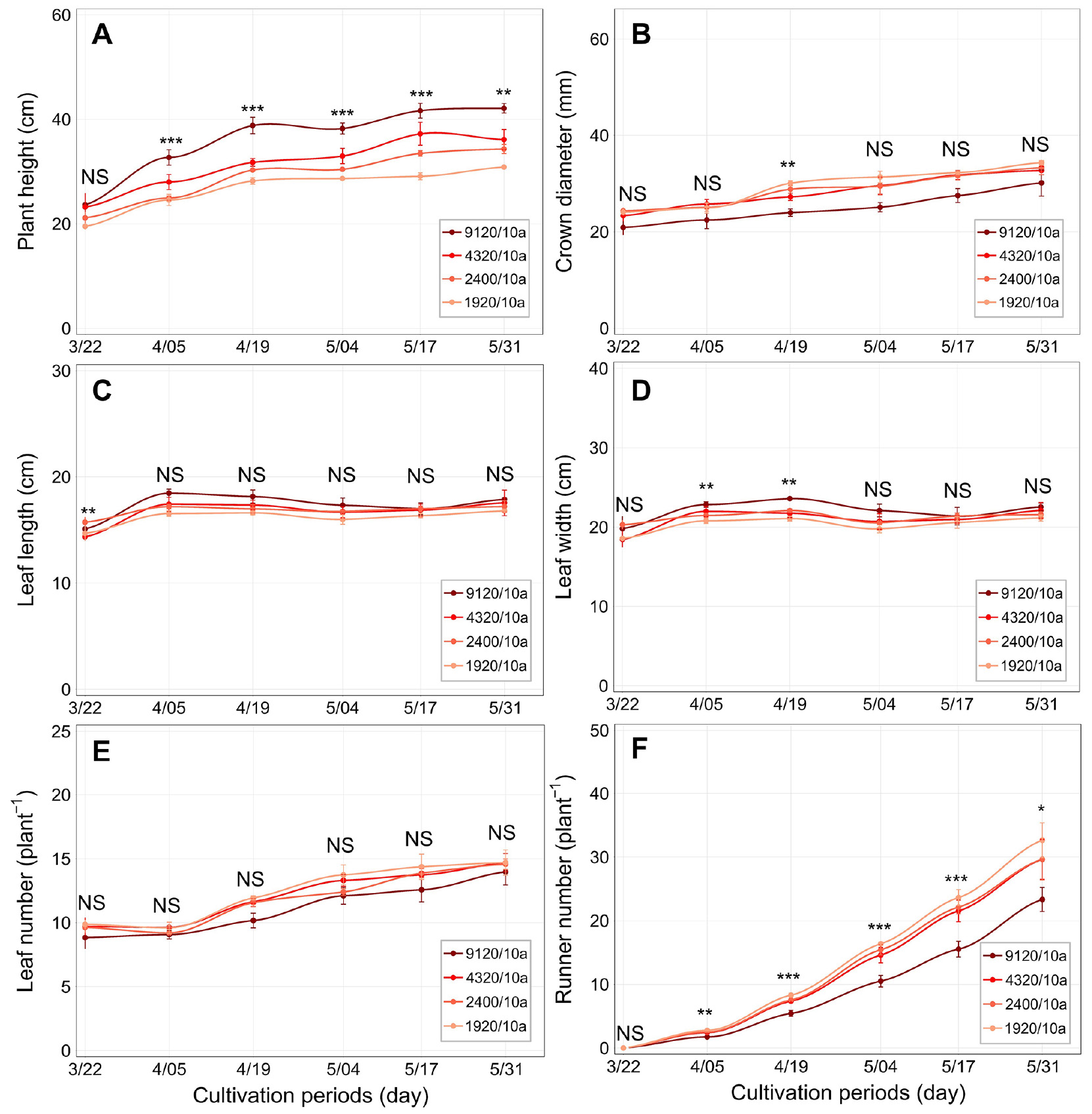
Fig. 2.
Growth dynamics and morphological characteristics of strawberry mother plants as affected by planting density of ‘Seolhyang’ strawberry (n = 30). (A) Plant height, (B) crown diameter, (C) leaf length, (D) leaf width, (E) leaf number, and (F) runner number. Runner number represents runners suitable for plug cutting. Vertical bars indicate ± SEM. NS, *, **, and *** indicate non-significant or significant differences among treatments at p < 0.05, 0.01, and 0.001, respectively.
The number of runners produced per individual mother plant was highest in the lowest density treatment (1,920 plants/990 m2) and significantly decreased as the planting density progressed. This reduction is likely associated with a decline in photosynthetic efficiency caused by reduced light transmittance within the dense canopy, which would limit the carbohydrate supply. However, despite the reduction in the total number of runners produced per individual mother plant at higher planting densities (26.0, 35.0, 37.5, and 41.8 runners per plant in the 9,120, 4,320, 2,400, and 1,920 density treatments, respectively; Table 1), the number of runners suitable for cutting per unit area was significantly higher in the high-density treatment plots (Table 2). This pattern suggests that while the vigor of individual mother plants was compromised by crowding—leading to fewer runners per plant—the sheer number of mother plants compensated for the individual loss. This aligns with previous findings stating that when the nutritional status of strawberry mother plants is maintained above a certain threshold, the elongation capacity of existing runners is preserved, but light competition and nutrient deficiencies induced by high planting density preferentially suppress the formation of new runner buds (Cocco et al., 2010; Kim et al., 2015).
Table 1.
Number of strawberry runners produced at different runner ages as affected by mother plant planting density (n = 30)
| Mother planting density | 0-15 Daysz | 16-30 Days | 31-45 Days | 46-60 Days | > 60 Days | Totalx |
| 9,120/990 m2 | 10.5dy | 5.0c | 5.1c | 3.7c | 1.7b | 26.0c |
| 4,320/990 m2 | 13.6c | 6.9b | 7.2b | 4.9b | 2.4a | 35.0b |
| 2,400/990 m2 | 15.4b | 6.7b | 7.9a | 5.0b | 2.5a | 37.5b |
| 1,920/990 m2 | 18.1a | 7.3a | 8.1a | 5.5a | 2.8a | 41.8a |
Table 2.
Morphological characteristics and seedling quality, runner yield of strawberry runners as affected by mother plant planting density of ‘Seolhyang’ strawberry (n = 20)
|
Mother planting density |
Crown diameter (mm) |
No. of leaves (ea) |
Fresh weight (g) |
Total number of runners (plants/990 m2)y |
| 9,120/990 m2 | 7.4az | 4.5a | 13.0a | 212,800a |
| 4,320/990 m2 | 6.7a | 4.6a | 12.4a | 128,016b |
| 2,400/990 m2 | 7.4a | 4.8a | 13.3a | 71,120c |
| 1,920/990 m2 | 7.2a | 5.0a | 13.1a | 62,565d |
Regarding the temporal patterns of runner production as affected by mother plant planting density, the highest number of runner emergence was observed during the initial 0-15 day period across all treatments, exhibiting a gradual decline over time. Notably, the lowest density treatment (1,920 plants/990 m2 consistently maintained a significantly higher rate of runner emergence throughout the entire experimental period compared to the other treatments. The reduction in the number of runners per plant observed in the high-density (9,120 plants/990 m2) treatment is suspected to be due to altered internal hormonal balances—specifically involving auxins and gibberellins—triggered by reduced light transmittance within the canopy; this physiological shift likely prioritized shoot elongation over stolon differentiation (Yoshida et al., 2012).
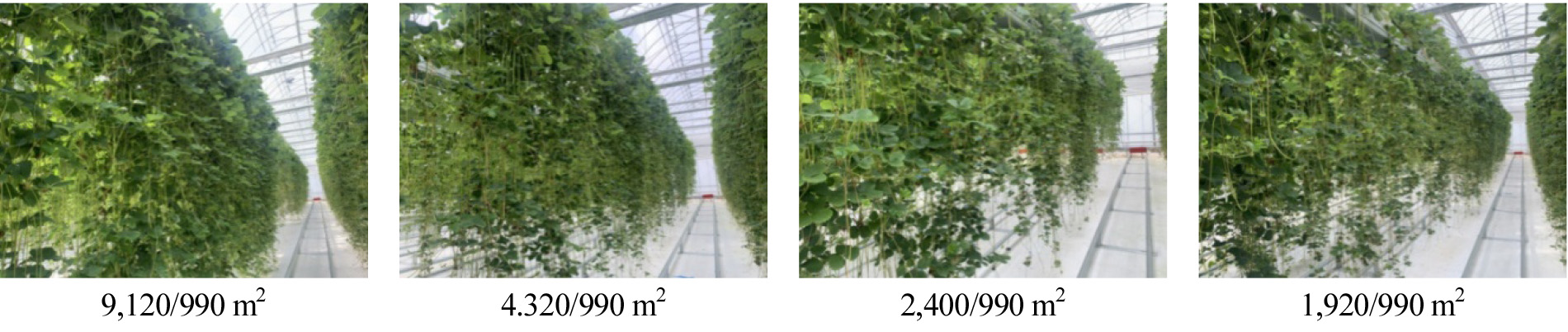
Furthermore, although strawberry mother plants under environmental stress generally tend to prioritize nutrient translocation to their daughter plants, the lower runner yield per plant in the high-density plots in this study suggests that an absolute deficiency in total photosynthesis severely hindered the initiation and formation of new runner stolons (Alpert, 1991). Consequently, a visual comparison of overall runner production across the planting densities revealed that the highest density treatment (9,120 plants/990 m2) produced a dense, compact canopy of runners compared to the other groups, whereas more open, vacant spaces were observed as the planting density decreased (Fig. 3).
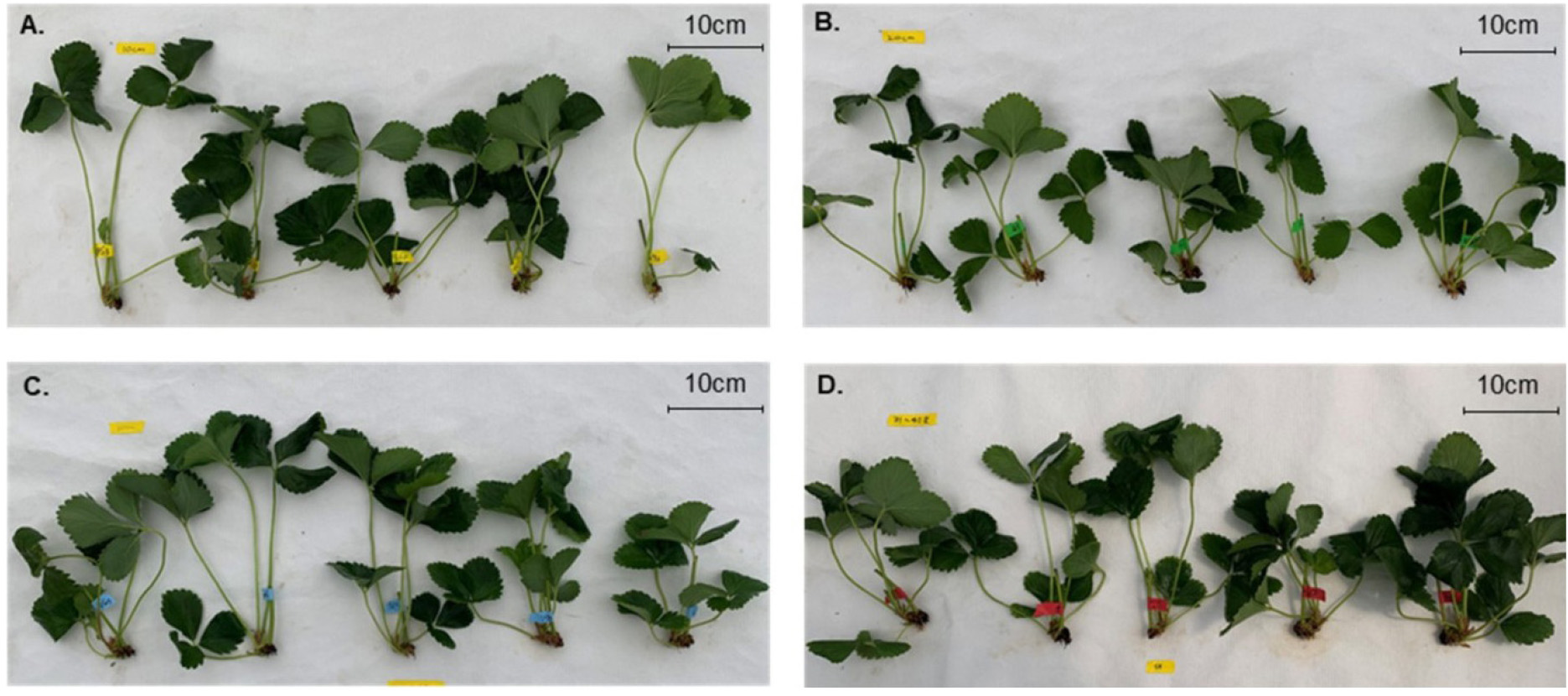
According to the evaluation of runner growth parameters harvested simultaneously on June 7 across the different planting densities, major quality indicators—including crown diameter, number of leaves, and fresh weight—did not exhibit statistically significant differences among the treatments (Table 2, Fig. 4). Generally, until root initiation occurs, strawberry runners act as heterotrophic organs that are entirely dependent on nutrient supplies from the mother plant. Therefore, it was hypothesized that the reduction in mother plant vigor caused by crowding would lead to compromised growth in the daughter plants. Contrary to this expectation, however, the results of this study demonstrated that the density-induced variations in the vegetative growth of mother plants did not exert a significant influence on individual runner quality.
This outcome strongly implies that even under environmental stress induced by high-density planting, strawberry mother plants possess a physiological characteristic that prioritizes source-to-sink nutrient translocation to their daughter plants for next-generation reproduction (Alpert, 1991). Furthermore, unlike conventional elevated bench pot systems, the hanging-bed propagation system permits dimensional vertical space utilization. This structural advantage was expected to maintain sufficient light interception and excellent ventilation around the daughter plants even under high-density conditions, which might help suppress runner elongation and quality deterioration. Hokanson et al. (2004) also reported that runner tips produced in hanging-bed system maintained stable post-transplanting performance. Consequently, the results obtained from the high-density planting treatment in this study further substantiate the technical feasibility and viability of such structured propagation systems (Hokanson et al., 2004).
Seedling Quality and Morphological Characteristics as Affected by Runner Age
According to the evaluation of growth parameters as affected by runner age, early-stage runners within a runner age of ≤ 15 days exhibited significantly lower values in both plant height and fresh weight compared to the other treatments. However, a rapid elongation of the shoot parts was observed in runners aged 16 days or older, and a trend toward statistically comparable vegetative growth was maintained across the treatments ranging from 16 to over 60 days of age (Table 3, Fig. 5).
Table 3.
Morphological characteristics and nursery plant quality of ‘Seolhyang’ strawberry cuttings as affected by runner age (investigation date: Jun 7; n = 10)
| Runner Age | Plant height (cm) | Crown diameter (mm) | No. of leaves (ea) | Fresh weight (g) |
| 0-15 Days | 15.5bz | 5.7c | 2.2d | 4.6c |
| 16-30 Days | 20.3a | 6.1bc | 3.2c | 7.5b |
| 31-45 Days | 21.9a | 6.7ab | 3.5bc | 8.9b |
| 46-60 Days | 22.2a | 7.6a | 4.2a | 10.4a |
| > 60 Days | 22.9a | 7.5a | 4.2a | 10.5a |
These findings indicate that during the initial stages of emergence, strawberry runners grow at a moderate pace, relying heavily on nutrient supplies translocated from the mother plant. Subsequently, once a certain threshold of leaf area is secured, the accumulation of photosynthetic assimilates accelerates, driving rapid vegetative growth (Durner, 1999). Furthermore, the plateau observed in the growth parameters after approximately 16 days suggests that the physical dimensions of the runners reached a ceiling dictated by environmental factors or the upper limits of nutrient supply from the mother plant. This structural stabilization implies a physiological transition at a certain seedling age, shifting the developmental focus from visual shoot enlargement to internal physiological maturation, such as the accumulation of non-structural carbohydrates within the plant tissues (Bish et al., 2002).
Regarding the root browning severity as affected by runner age, runners within a runner age of less than 30 days exhibited little to no browning, or remained at a minor level. However, browning severity became significantly exacerbated in runners aged 31 days or older; in particular, for senescent runners aged 46 to over 60 days, the proportion of severe browning increased sharply (Fig. 6). In the > 60-day treatment, most mother plants produced no runners during this period, and the lower browning percentages therefore reflect the limited number of runners available rather than a reduction in browning severity. However, the onset of browning at 31 days did not immediately translate into functional decline: survival rate and subsequent yield remained unaffected in the 31-45-day cuttings, as described below. A pronounced loss of root function occurred only in the over 60-day group, in which severe browning predominated. This indicates that moderate browning does not impair establishment, whereas functional failure is associated specifically with severe browning. Park et al. (2018) reported that the timing of runner separation from the mother plant directly influences both propagation rate and uniformity, with propagation efficiency being optimized within a specific age window (Park et al., 2018).
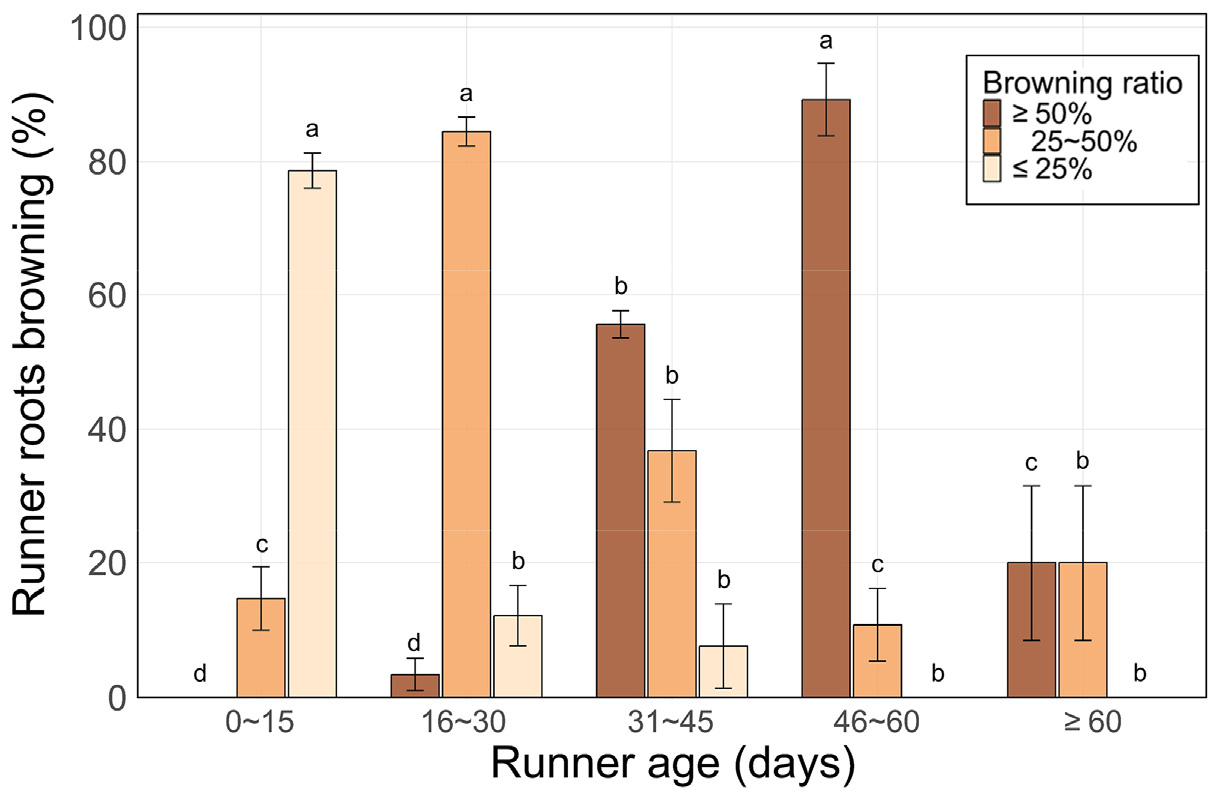
Fig. 6.
Adventitious root browning rate of strawberry cuttings as affected by runner age of ‘Seolhyang’ strawberry (%) (n = 3 blocks, 5 runners per block). Vertical bars indicate ± SEM. Values marked with different letters within each browning grade indicate significant differences according to Duncan’s multiple range test at the 5% level.
In general strawberry propagation, root browning not only diminishes the efficiency of water and nutrient uptake but also acts as a critical limiting factor that hinders initial root establishment and vegetative stabilization after plug-cutting (Nestby et al., 2002). According to the evaluation of growth parameters during the nursery period following plug-cutting, distinct differences based on runner age were observed in plant height, crown diameter, and root number (Figs. 7 and 8). Regarding plant height, the older treatment groups (46-60 days and over 60 days) maintained relatively higher values during the initial stage after cutting; however, as the nursery period progressed toward the later stage, the gap between these and the 16-45-day-old runners tended to narrow. (Fig. 7). This pattern indicates that although senescent runners possess abundant initial nutrient reserves, their subsequent shoot elongation was hindered after cutting due to compromised root vigor and physiological limitations. The crown diameter tended to remain thicker as the runner age increased, which appears to be a carryover effect of the physical dimensions established prior to plug-cutting. However, in the treatment group aged over 60 days, despite having a thick crown diameter, the number of newly emerged roots was significantly lower, and the root initiation rate was slower compared to the other treatments. The number of roots was generally deficient in the over 60-day treatment compared to the other groups. This phenomenon is closely linked to the previously discussed root browning severity. In senescent runners, tissue lignification is presumed to suppress the differentiation and development of essential adventitious roots after plug-cutting. This suppression ultimately results in a reduced functional root area, acting as a critical limiting factor for high-quality seedling production during the late nursery stage (Strik and Proctor, 1988). Conversely, runners with an optimal seedling age of 16-60 days secured a balanced top-to-root (T/R) ratio driven by active new root emergence, thereby acquiring the physiological vigor necessary for successful field transplanting.
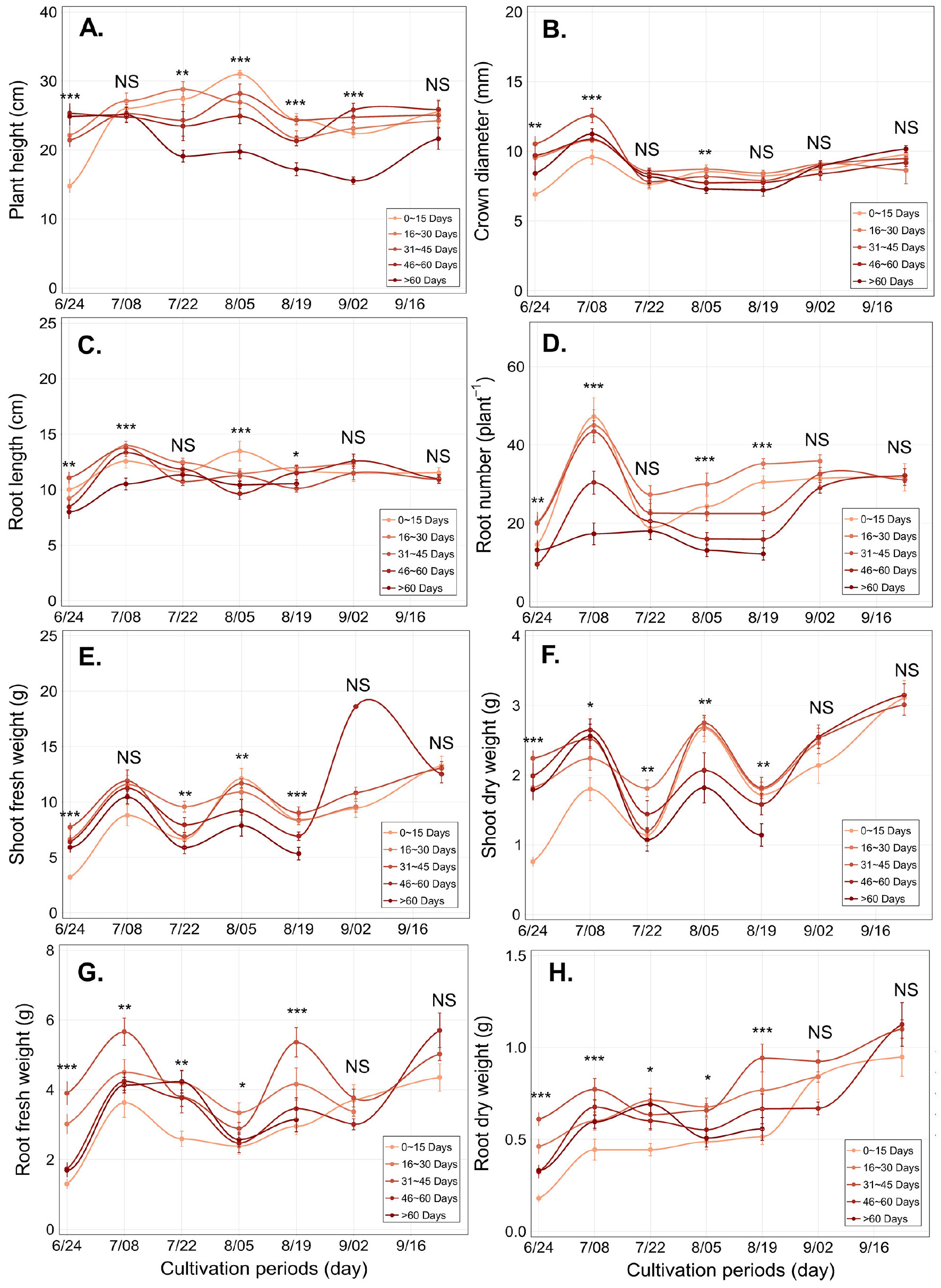
Fig. 7.
Comparison of shoot and root growth dynamics in strawberry nursery plants during the raising period as affected by runner age of ‘Seolhyang’ strawberry (Jun 24-Sep 23) (n = 10). (A) Plant height, (B) crown diameter, (C) root length, (D) root number, (E) shoot fresh weight, (F) shoot dry weight, (G) root fresh weight, and (H) root dry weight. Vertical bars indicate ± SEM. NS, *, **, and *** indicate non-significant or significant differences among treatments at p < 0.05, 0.01, and 0.001, respectively.
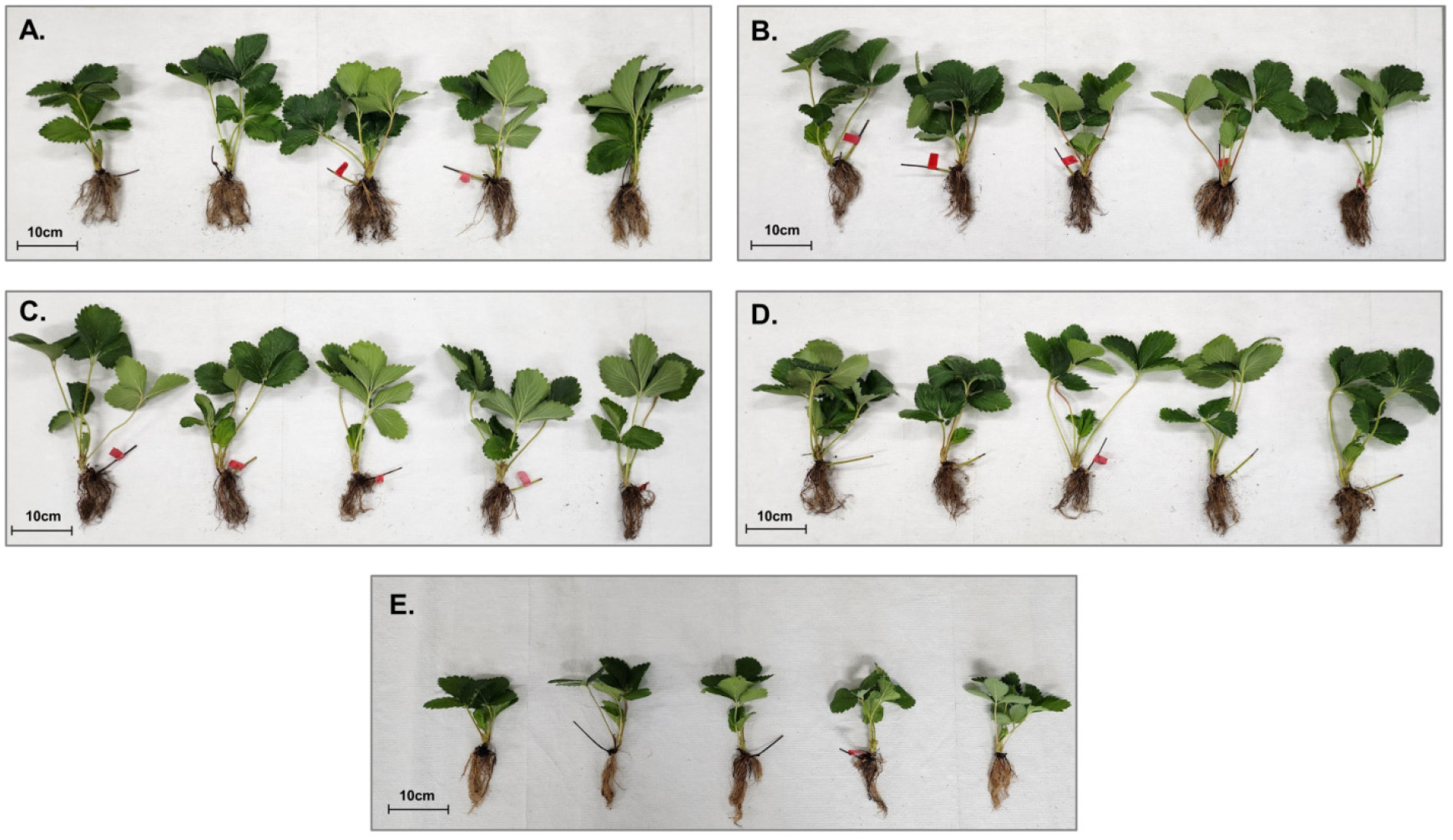
Regarding the survival rate during the propagation period as affected by runner age, no statistically significant differences were observed among treatments within a runner age of less than 45 days, demonstrating stable establishment. However, the survival rate began to decline in the 46-60-day treatment, and notably, for senescent runners aged over 60 days, the survival rate abruptly plummeted to 36.2%, exhibiting the lowest performance among all treatments (Fig. 9). Although a slight decline in the survival rate initiated in the 46-60-day treatment, it did not critically compromise the final productivity, indicating that runners up to 60 days of age can still be classified into the economically favorable group. The survival rate of strawberry plug-cuttings is heavily influenced not only by the physiological status of the cuttings but also by misting duration and substrate conditions, with survival rates above 90% reported under adequate humidification and substrate conditions (Hwang et al., 2020); the low survival rate of over-aged seedlings in the present study may therefore be correlated with such physiological vulnerabilities. Furthermore, when the runner age exceeded 60 days, the belowground tissues had already undergone substantial senescence (Fig. 6), despite the fact that aboveground traits such as crown diameter and fresh weight had reached their maximum peaks (Table 3). In particular, the adventitious roots of senescent cuttings displayed high browning severity, a symptom attributed in aging strawberry root tissues to phenolic accumulation and cell wall lignification (Wang and Faust, 1992). A comparable biochemical progression would be expected in runners retained on the mother plant beyond 60 days, and direct quantification of these parameters would clarify the physiological basis of the observed browning. As phenolic content, lignification, and antioxidant enzyme activity were not quantified in the present study, this mechanism remains inferential and warrants direct biochemical verification in future work.
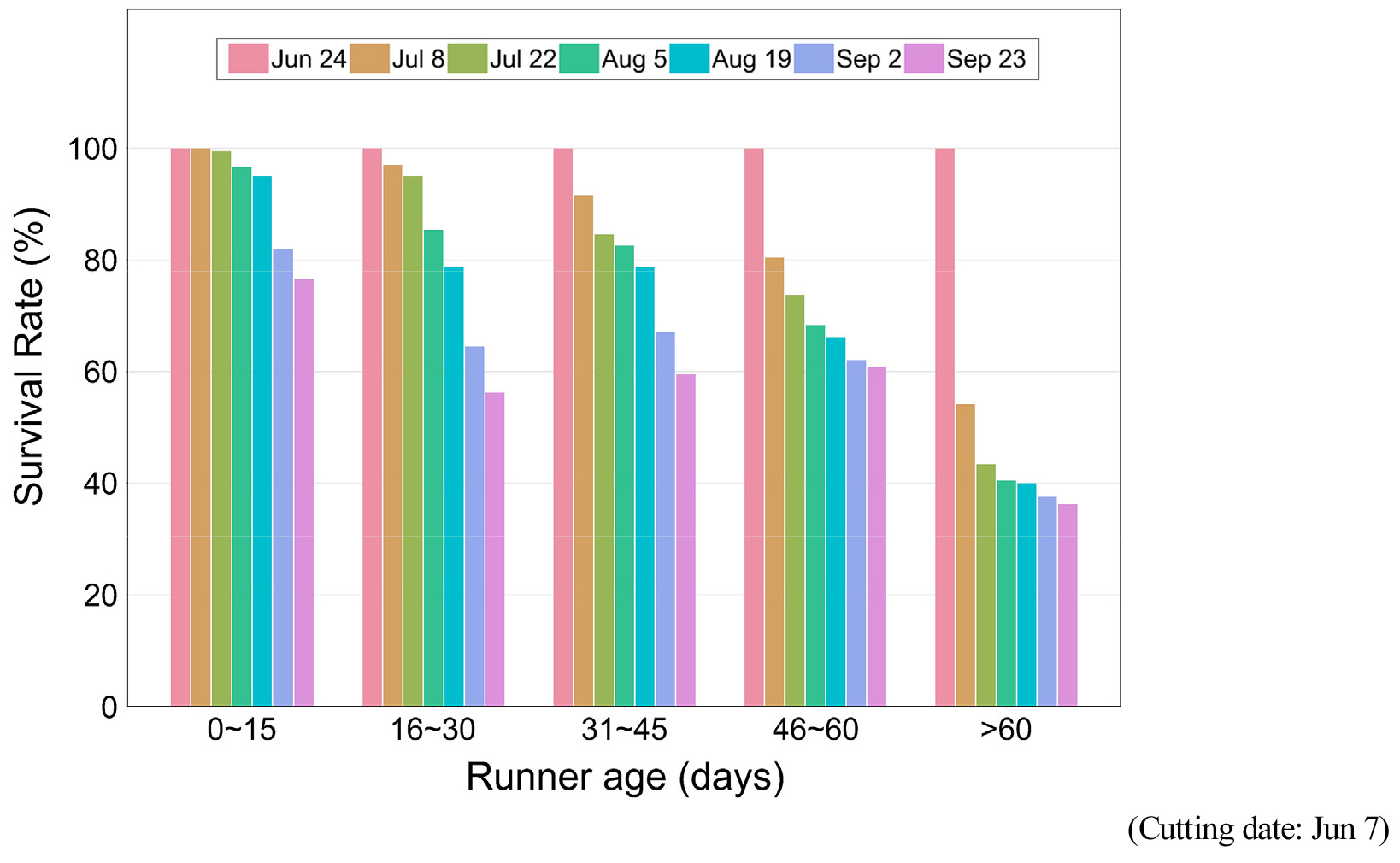
In this regard, it has been reported that delayed harvesting of cuttings retards initial root zone formation after transplanting (Hamann and Poling, 1997), which strongly supports the result of this study where the survival rate of over 60-day-old senescent seedlings drastically dropped to 36.2% (Fig. 9). In other words, although senescent cuttings may possess abundant internal nutrient reserves, they have lost their root functional activity—specifically, the capacity to rapidly secure new functional roots essential for overcoming initial transplanting moisture stress. Additionally, browned roots exhibit significantly lower nutrient uptake efficiency compared to healthy seedlings, causing a post-transplanting moisture imbalance that acts as a decisive factor increasing seedling mortality (Nestby et al., 2002). Conclusively, these findings imply that allowing cuttings to over-age within a mass-propagation system carries a high risk of inducing poor establishment and subsequent economic losses due to the excessive physiological age of the roots. Therefore, under the high-density condition of 9,120 plants/990 m2 used in this experiment, it is determined that runners should be harvested and subjected to plug-cutting within a runner age of 16 to 60 days to secure high survival rates and uniform seedling quality in a mass-propagation system utilizing hanging beds.
Post-Transplanting Growth and Yield Components as Affected by Runner Age
According to the evaluation of chronological growth parameters after field transplanting, the measured growth parameters exhibited distinct performance patterns between the early and late cultivation stages as affected by runner age (Fig. 10). From November to December (the early post-transplanting stage), the over 60-day treatment showed the lowest values for all measured parameters, whereas plant height did not differ significantly among treatments at either time point. This early growth depression is interpreted to be due to the impaired root function of the over-aged seedlings, in which severe root browning and delayed root initiation (Figs. 6 and 8) restricted water and nutrient uptake during establishment, despite the abundant internal nutrient reserves and the pre-established physical dimensions of the shoots that they possessed at the time of transplanting. However, as the cultivation progressed into the mid-growth period from February to March, the growth discrepancies among the treatments gradually narrowed and stabilized. This outcome suggests that as time elapsed after transplanting, all plants adapted to the field environment and established an autotrophic system for photosynthetic assimilate production, thereby neutralizing the initial carryover effects of seedling age. The crown diameter was likewise lowest in the over 60-day treatment during the early post-transplanting stage; however, as subsequent vegetative growth advanced, the differences among treatments diminished, exhibiting a plateaued pattern. While larger seedlings generally possess advantages for early floral bud differentiation and root zone establishment, once the crown diameter reaches a certain developmental threshold, the plant limits further shoot enlargement and channels its assimilated nutrients into reproductive growth for fruit production, thereby flattening the growth variations among treatments (Bish et al., 2002). Consequently, these results confirm that while early field growth is predominantly determined by initial runner age, long-term vegetative stability is more heavily governed by the post-transplanting management and environmental conditions in the field.
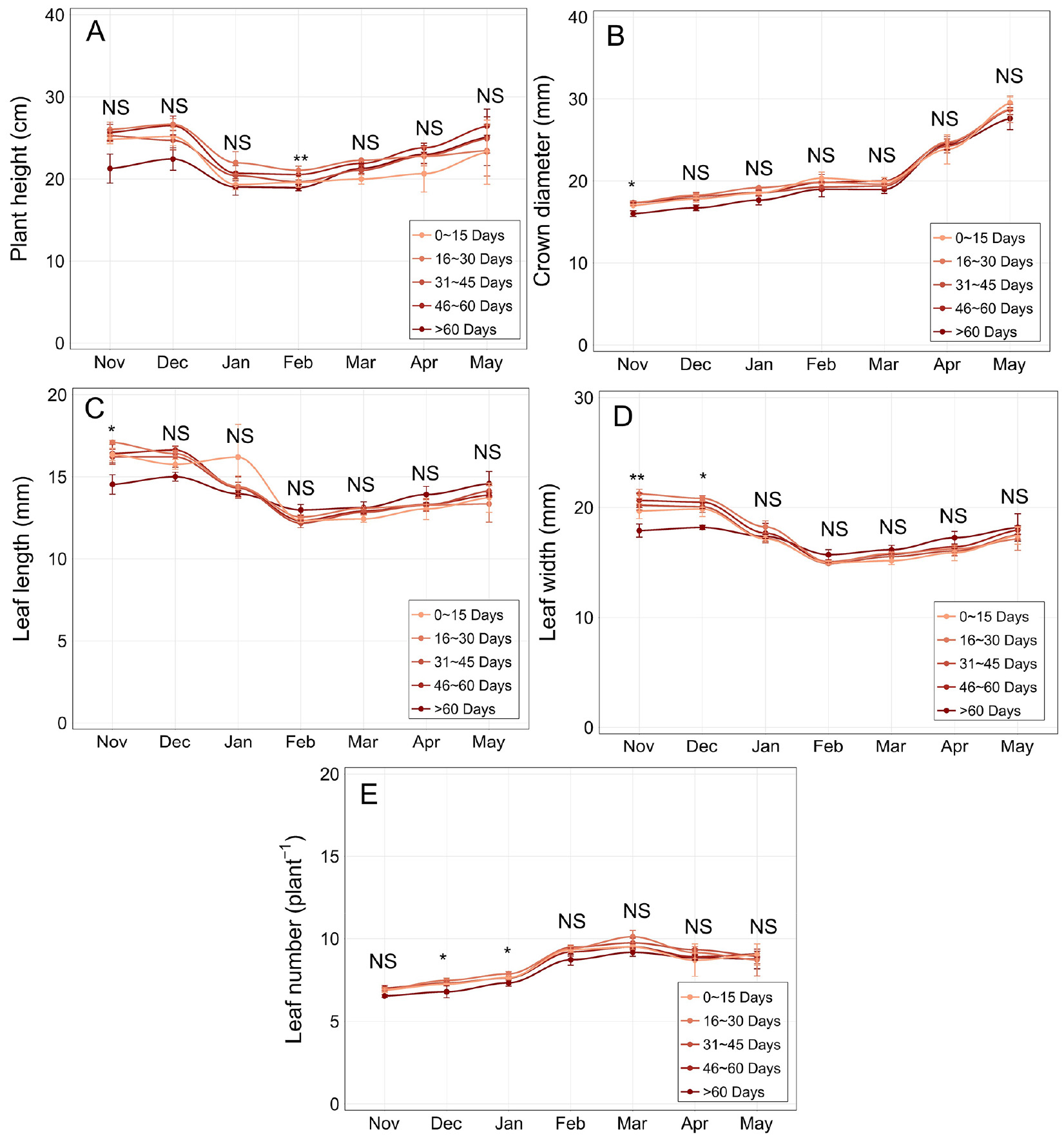
Fig. 10.
Seasonal changes in plant height, crown diameter, leaf length, leaf width, and leaf number after transplanting as affected by runner age of ‘Seolhyang’ strawberry (Nov-May) (n = 3 blocks, 20 plants per block). (A) Plant height, (B) crown diameter, (C) leaf length, (D) leaf width, and (E) leaf number. Vertical bars indicate ± SEM. NS, *, **, and *** indicate non-significant or significant differences among treatments at p < 0.05, 0.01, and 0.001, respectively.
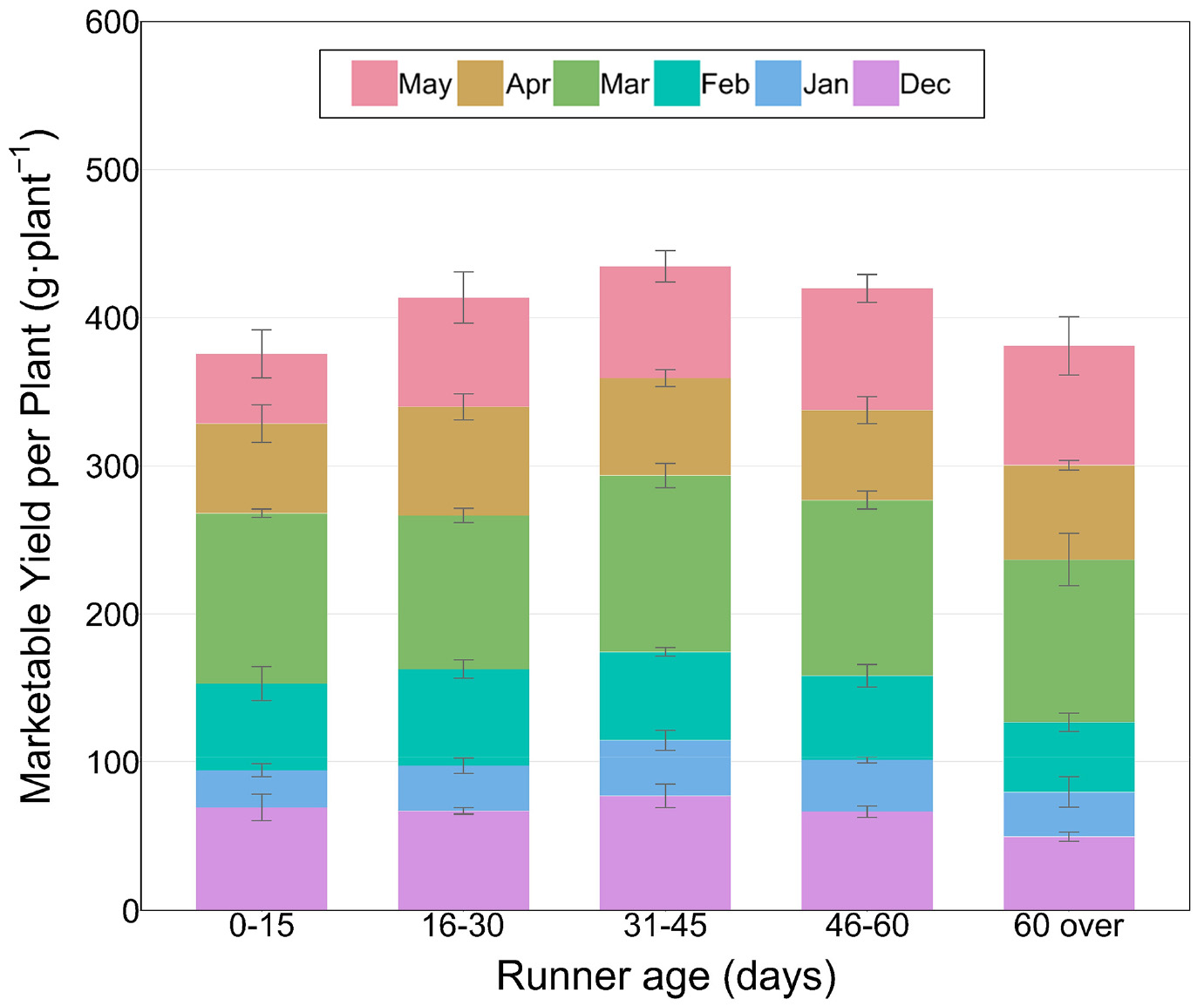
According to the evaluation of monthly fruit yields as affected by runner age (Fig. 11), the 31-45-day treatment produced the highest yield during the early harvest season from December to January, whereas the over 60-day treatment produced the lowest. This outcome indicates that mid-aged seedlings had accumulated sufficient nutrient reserves before cutting while still retaining root vigor at transplanting, which acted advantageously for early floral bud differentiation and subsequent fruit development. In strawberry plug-seedlings, crown diameter and root system architecture have been documented as crucial indicators determining post-transplanting establishment and early vegetative performance (Durner et al., 2002). However, during the mid-harvest period starting from February, fruit production in the 0-15-day and over 60-day treatments either stagnated or declined, whereas treatments within the 16-60-day range consistently secured stable yields. Consequently, the final cumulative total yield, expressed on an initially transplanted plant basis, was lower in both the 0-15-day and over 60-day treatments, while the 16-60-day runner groups showed comparable cumulative yields.
Particularly, the fruit yield per plant presented in Fig. 11 was calculated based on the initially transplanted number of seedlings. Therefore, the yield reduction observed in the > 60-day treatment should be interpreted as a combined outcome of initial stand loss and the performance of the surviving individual plants. Because yield per surviving plant was not analyzed separately in this study, the relative contribution of these two factors cannot be determined from the present data. Although larger seedlings can contribute to enhancing early-season yields, these findings imply that runners experiencing advanced physiological senescence possess limitations in maintaining sustained productivity through the later stages of the harvest season (Hamann and Poling, 1997). Conversely, optimum-aged runners spanning 16-60 days maintained high production efficiency over the extended harvesting period, driven by smooth field establishment and balanced vegetative growth after transplanting. While the initial size and emergence characteristics of strawberry daughter plants influence subsequent yield formation, it has been reported that early vegetative dominance does not necessarily translate into an increase in final cumulative yield (Takeda et al., 2004). Furthermore, because the combination of propagation methodology and cultivation systems exerts a significant influence on post-transplanting growth and subsequent yield architecture in strawberries (Kang et al., 2020), the results of this study further underscore the absolute necessity of concurrently optimizing both runner physiological age and mother plant planting density.
Conclusion
This study was conducted to establish an efficient mass-propagation system for strawberries (Fragaria × ananassa Duch.) in a hanging-bed culture by determining the effects of mother plant planting density and runner age, expressed as days after adventitious root emergence, on seedling quality and post-transplanting yield. Regarding runner productivity as affected by mother plant planting density, the highest density treatment 9,120plants/990 m2 produced the lowest number of runners per plant (26 runners/plant); however, it yielded the highest total number of runners per unit area compared to the other treatments. Furthermore, no quality deterioration was observed in individual runners or plug-seedlings due to the high-density planting of mother plants. In the evaluation of runner growth, physical traits such as plant height, crown diameter, and fresh weight increased with longer runner age, but these differences diminished significantly in seedlings prior to final transplanting. Meanwhile, runners aged 60 days or older exhibited severe browning of adventitious roots and an abrupt drop in the survival rate to 36.2% after plug-cutting, consequently reducing actual seedling production efficiency. Following field transplanting, the post-transplanting growth of plug-seedlings was initially lowest in the over 60-day treatment, but the differences among treatments gradually decreased after the mid-growth stage. Yield analysis based on the initially transplanted number of seedlings showed that the cumulative total fruit yield was lower in the 0-15-day and over 60-day treatments, whereas the treatments within the 16-60-day range showed comparable yields. In the over 60-day treatment, this reduction reflects the combined effects of stand loss and the productivity of the surviving plants. Conclusively, for efficient strawberry propagation using a hanging-bed system, it is advantageous to establish mother plants at a high density and, under this condition, to harvest healthy runners within an optimal age window of 16 to 60 days after adventitious root emergence to prevent critical yield losses caused by advanced tissue senescence. However, it should be noted that the effects of runner age were evaluated exclusively under the highest planting density condition of 9,120 plants/990 m2. Accordingly, the recommended runner age range of 16 to 60 days applies to this high-density condition, and further studies are warranted to verify whether similar physiological aging patterns and yield responses occur under lower mother plant densities.