


Introduction
Materials and Methods
Experimental materials and cultivation management
Investigating Fruit Characteristics
Investigating the content and composition of major free sugar
Statistical analysis
Results and Discussion
Changes in Fruit Enlargement by Harvest Period
Analysis of quality according to irrigation conditions by harvest time
Major Free Sugar Content According to Irrigation Conditions by Harvest Time
Analysis of Sugar Content According to the Harvest Time and Fruit Weight of Red Fleshed Pitaya Farms
Conclusion
Introduction
Changes in production conditions owing to climate change and increased demand for functional crops are driving the need to identify new subtropical fruit trees (Bellec et al., 2006). Pitaya (dragon fruit) is a plant with Crassulacean acid metabolism (CAM), namely, a type of succulent that belongs to the Cactaceae family and grows in deserts (Anderson, 2001). It is native to Mexico and Central and South America and is classified into red (Hylocereus polyrhizus), white (H. undatus), and yellow (Selenicerreus megalanthus) species based on the color of the pulp and flesh (An et al., 2020). As of 2023, the white-fleshed variety of pitaya was primarily cultivated in Korea, with a total area of 6.0 ha, 25 farms, and 60.6 tons of production. In Jeju, the white variety of pitaya was introduced in 1999, with a cultivation area of 2.0 ha, eight farms, and an output of 25.1 tons, whereas the red variety was established in 2020 as a new income crop, with a cultivation area of 3.0 ha, ten farms, and an output of 25.1 tons. The white variety of pitaya is known for its strong cold resistance and firm texture. In contrast, the red variety is characterized by its soft texture and high sugar content. Additionally, owing to the differences in physiological and ecological characteristics between the white and red varieties, specific cultivation techniques must be established for the red fleshed pitaya. The red variety of pitaya flowers approximately 15 days earlier than the white variety (An et al., 2020) but is more sensitive to cold temperatures, with yellow spots appearing on the stem when temperatures drop below 8°C; thus, temperatures must be maintained above 8°C through heating during winter (Lee et al., 2023). The maturation process of red fleshed pitaya fruit begins with flower bud emergence, followed by flowering approximately 15-20 days later; subsequently, artificial pollination occurs, leading to rapid increases in the fruit’s length and width during the early growth stage. Thereafter, approximately 20-25 days after pollination, fruit growth stops and the skin begins to turn red. The pointed vinyl-like structures on the fruit’s exterior are called “bracts,” and harvesting typically occurs when more than two-thirds of the bracts have become red (Kim et al., 2011). In Jeju, red fleshed pitaya flowers from June to October, with harvest occurring approximately 35 days after artificial pollination. Four to eight harvests are possible annually, prompting an investigation into fruit characteristics at different harvest times. Cultivation methods for red fleshed pitaya regarding the appropriate irrigation amounts, fruit setting quantities, and temperature management have not been established in Jeju, leading to issues of reduced productivity and fruit quality as they are being cultivated using existing methods for white fleshed pitaya. As red fleshed pitaya was introduced relatively recently in Jeju Island, farmers manage it with high humidity to promote plant growth, leading to problems, such as rapid decay of stems and roots or the occurrence of sooty mold, thereby negatively affecting the fruit’s appearance (Lee et al., 2023). In particular, during the period of fruit enlargement and ripening when flowers bloom and fruits develop, cultivating red fleshed pitaya under high humidity conditions leads to a decrease in sugar content; however, research on the effects of soil moisture on fleshed pitaya fruit is lacking. Therefore, this study was conducted to investigate the effect of soil moisture during the period of fruit enlargement and maturation on fruit quality, establish the optimal irrigation amount for producing high-quality red fleshed pitaya, and disseminate cultivation methods to farmers to improve fruit quality.
Materials and Methods
Experimental materials and cultivation management
The experiment was conducted on 4-year-old red pitaya “Da Hong” plants in a farm located in Jocheon-eup, Jeju City, and artificial pollination was conducted by directly shaking the flower buds or using a brush to apply pollen to the stigma. The minimum temperature inside the greenhouse during winter was set to 8°C, and in summer, the roof and side windows were automatically opened and closed (opening at 28-30°C) for cultivation management. During the period of fruit enlargement and maturation (July to October), irrigation was conducted according to low- and high-moisture treatment conditions, and changes in soil moisture were monitored using a tensiometer (2725ARL12 Jet Fill Tensiometer, USA).
Investigating Fruit Characteristics
The fruit’s longitudinal and transverse diameters were measured using a digital vernier caliper, and the fruit weight was measured using a digital scale. The soluble solids content (SSC) of the fruit juice, with solid matter removed, was measured using a digital refractometer (Refractometer PAL-1, Atago, Japan) to determine the sugar content. The acid content was calculated by measuring the amount of NaOH used in neutralization titration (876 Dosimat plus, Metrohm) using 1% phenolphthalein solution as an indicator and 0.1 N NaOH; subsequently, it converted into malic acid content. The firmness was measured by removing the fruit’s skin and using a firmness meter (EM10, QAsupplies, USA) equipped with an 8-mm probe to measure the hardness of the fruit flesh.
Investigating the content and composition of major free sugar
To analyze the composition and content of fructose, glucose, and sucrose in the flesh of red fleshed pitaya, the fruit juice was filtered through a 0.22-µm syringe filter (Daehan Medical, Korea) and subsequently analyzed using high-performance liquid chromatography (HPLC; eAlliance e2695, Water Co, USA) equipped with a Sunfire C18 5 µm column (4.6 × 250 mm, Water Co, USA) and refractive index (RI) detector. For substance separation, the sample injection volume was set to 10 µL, and the mobile phase was 80% acetonitrile with a fixed flow rate of 1 mL/min for 15 min. Qualitative evaluation was conducted by comparing the sample’s retention time (RT) and RI detector spectrum with those of standard substances (fructose, glucose, and sucrose; Sigma, USA), and quantitative analysis was conducted using the calibration curve of standard substances based on the peak area of the flesh juice of red fleshed pitaya.
Statistical analysis
Statistical analysis was conducted using IBM SPSS Statistics 25 (Statistical Package for Social Science, Chicago, IL, USA), employing one-way analysis of variance (ANOVA), followed by Duncan’s multiple range test for post-hoc analysis to compare significant differences at the p < 0.05 level. Student’s t-test was used for comparison analysis at *p < 0.05 and **p < 0.01 levels.
Results and Discussion
Changes in Fruit Enlargement by Harvest Period
The study of the growth characteristics of 4-year-old red fleshed pitaya trees prior to the experiment revealed average fruiting branches of 24.7-26.0 per tree, branch lengths of 94.5-114.5 cm, and branch thicknesses of 37.9-43.7 mm, with no significant differences in tree growth characteristics among harvest periods. The investigation of changes in fruit enlargement by harvest period (Fig. 1) showed that fruits harvested in July-August tended to have smaller longitudinal and transverse diameters, which is similar to those in reports stating that pollen viability decreases and fruit size becomes smaller at high temperatures (day 40°C/night 30°C) (Chu and Chang, 2022). The period from flowering to harvest was shortest for fruits harvested in August-September at 28 days, whereas it was longest for fruits harvested in October at 40 days. According to Nerd and Mizrahi (1998), weather is a major factor affecting the time from flowering to harvest, and low temperatures during the period of fruit enlargement prolong the time from flowering to harvest (Tran et al., 2015). Considering the temperatures during the period of fruit enlargement and maturation in 2022, the average temperatures were 28.4°C, 29.2°C, 24.1°C, and 18.4°C in July, August, September, and October, respectively; the maximum temperatures were 36.0°C, 37.5°C, 32.8°C, and 30.6°C in July, August, September, and October, respectively; and the minimum temperatures were 23.2°C, 21.2°C, 17.2°C, and 11.5°C in July, August, September, and October, respectively. Zhang et al. (2024) reported that larger differences in daily temperature during the periods of flowering and fruit set are favorable for fruit skin coloration, and the monthly temperature differences during the harvest period were 12.8°C, 16.3°C, 17.2°C, and 11.5°C in July, August, September, and October, respectively. The reason for the shorter time to harvest for fruits harvested in August-September is thought to be attributed to the high temperatures during the period of fruit enlargement and large daily temperature differences during the period of fruit skin coloration, which led to rapid progress in fruit skin coloration.
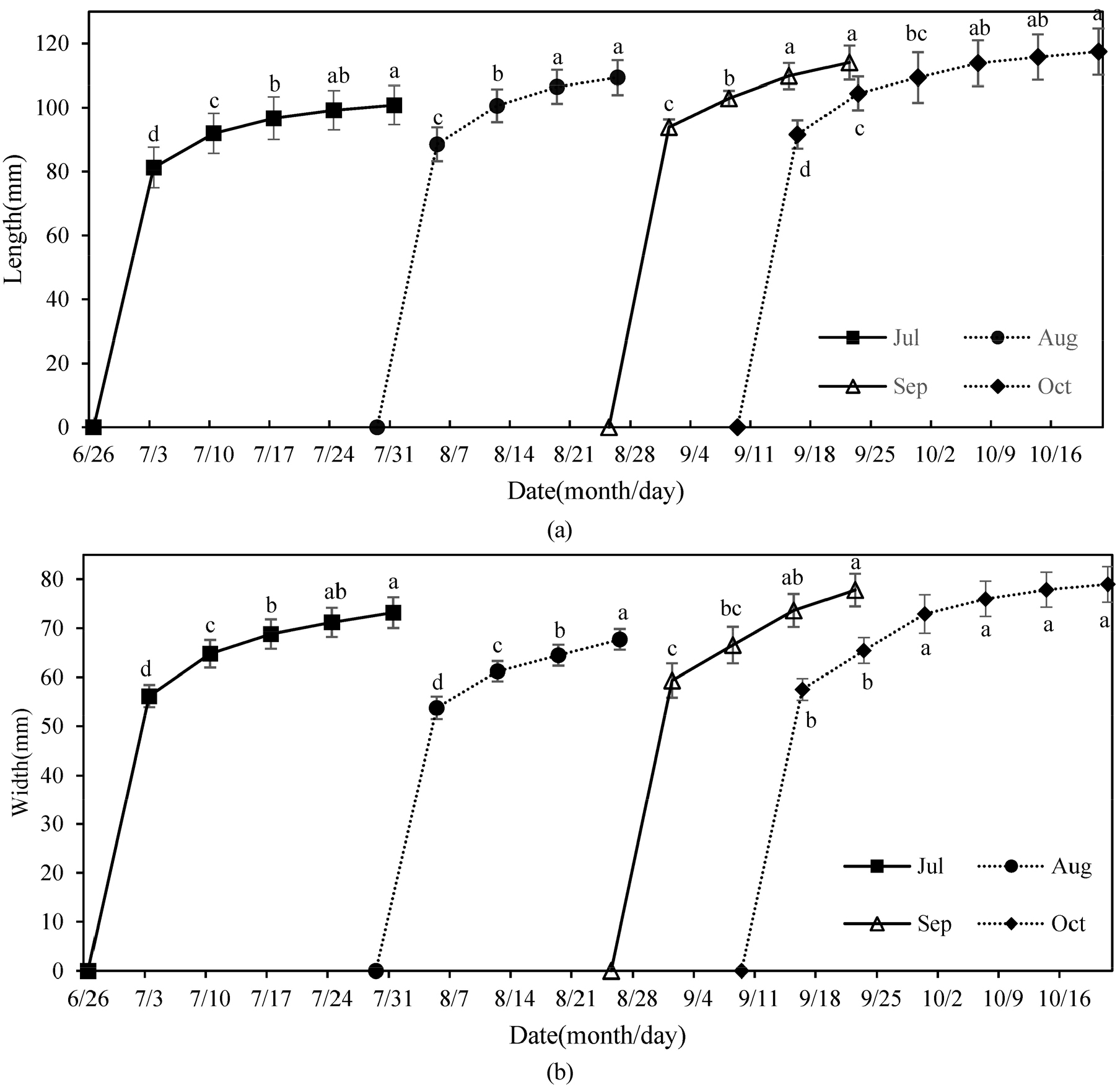
The investigation of changes in fruit enlargement showed that on the 14th day after flowering (DAA 14), the longitudinal diameter was 92.0-104.5 mm, reaching 90.6% of the total longitudinal diameter, and the transverse diameter was 61.2-66.6 mm, reaching 87% of the total transverse diameter. Additionally, the daily fruit enlargement from flowering to harvest was investigated at 7-day intervals, namely, 12.69, 1.59, 0.80, 0.50, and 0.25 mm for the longitudinal diameter, and 8.10, 1.12, 0.78, 0.46, 0.27, and 0.16 mm for the transverse diameter, indicating that both longitudinal and transverse fruit enlargement increased rapidly in the early stages after flowering and tended to decrease over time. These results suggest that the management of early fruit enlargement after flowering is important in determining the fruit size of fleshed pitaya.
Analysis of quality according to irrigation conditions by harvest time
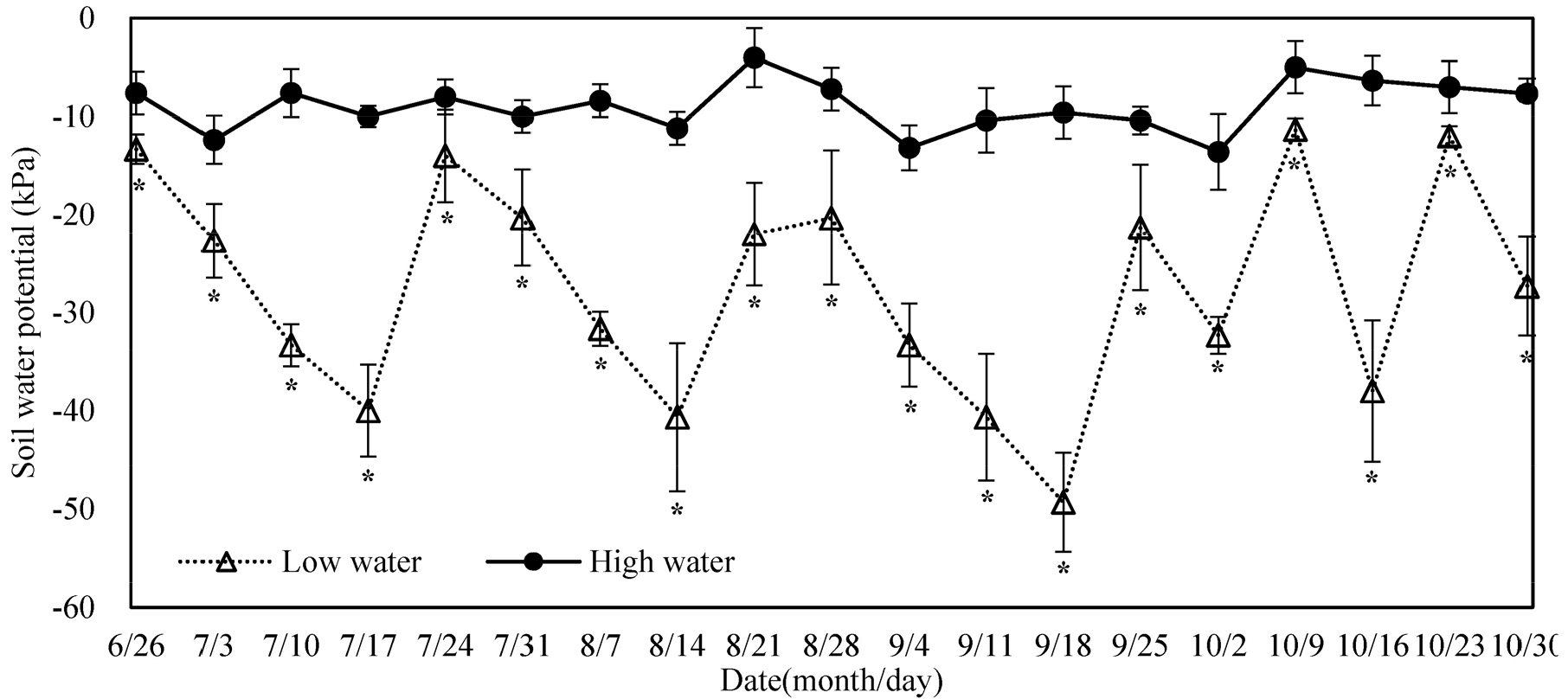
The soil characteristics of the test farm were as follows: Gujwa series with dark brown soil color and soil texture of silt loam. Considering the physical properties of soil before the test, the bulk density, particle density, and porosity were 1.24 g/cm3, 2.34 g/cm3, and 46.9%, respectively. Considering the three-phase distribution, the solid, liquid, and gaseous phases were 53.1%, 27.4%, and 19.5%, respectively, with the liquid phase being higher than the gas phase. During the period of fruit enlargement and maturation from July to October, the high moisture treatment maintained an average soil moisture tension range of –10 ± 10 kPa, with irrigation conducted at approximately 7-day intervals and an average irrigation amount of 9.3 tons (based on 10a) per application. Conversely, the low moisture treatment maintained an average soil moisture tension range of –30 ± 15 kPa, with irrigation conducted at approximately 14-day intervals and an average irrigation amount of 4.6 tons (based on 10 a) per application. As the roots of fleshed pitaya spread shallowly and are primarily distributed within 20 cm below the surface, tensiometers (2725ARL12 Jet Fill Tensiometer, USA) were installed at a depth of approximately 15 cm from the ground surface at the midpoint between two plants to monitor changes in soil moisture tension (Fig. 2). Irrigation was conducted regardless of treatment until flowering, and from the time of first flowering on June 26 to the last harvest on October 30, irrigation was applied with different frequencies and amounts. The soil moisture tension in the high moisture treatment ranged from -13.6 to -4.0 kPa, with an average of -8.9 ± 2.6 kPa, whereas that in the low moisture treatment ranged from -49.3 kPa to -11.3 kPa, with an average of -27.6 ± 10.9 kPa. This indicated that the low moisture treatment resulted in a wider range of fluctuations in soil moisture tension compared with the high moisture treatment.
To investigate fruit quality by harvest time according to irrigation conditions, fruits that bloomed on June 26, July 29, August 25, and September 9 were selected and randomly harvested on July 31, August 26, September 22, and October 19, respectively. Based on the harvest date, the longitudinal diameters in July, August, September, and October under wet conditions were 100.6, 108.1, 112.7, and 110.4 mm, whereas those under dry conditions were 98.9, 107.4, 111.0, and 110.7 mm, respectively. The transverse diameters by harvest time under wet conditions were 82.1, 78.0, 77.3, and 77.8 mm, whereas those under dry conditions were 78.7, 75.8, 79.2, and 79.2 mm, respectively. The fruit weights under wet conditions were 326.9, 357.6, 384.8, and 362.4 g, whereas those under dry conditions were 326.3, 357.2, 386.3, and 371.6 g, respectively (Figs. 3(a), (b), and (c)). The lack of or excess soil moisture affects fruit quality, and in Satsuma mandarin, water stress reduces the water potential and photosynthesis in the plant body, inhibiting cell division and tissue development, thereby affecting plant growth and fruit enlargement and significantly reducing fruit quality (Chae et al., 2007; Hyun et al., 1993). However, in this study, the longitudinal diameter, transverse diameter, and fruit weight by harvest time tended to be larger under wet conditions than under dry conditions, but no significant difference was observed. This is thought to be because the wilting point of the plant was not reached under dry conditions in this study, thereby not affecting fruit enlargement, resulting in no significant difference in fruit size and weight. The longitudinal diameter and weight of the fruit by harvest time were largest in September, followed by those in October, August, and July, indicating similar trends in increase and decrease according to harvest time. The transverse diameter by harvest time was observed in the following order: September, October, July, and August; fruit weight showed a higher correlation with longitudinal diameter than transverse diameter, which was similar to the results of previous studies (Lee et al., 2012), indicating that the longitudinal diameter and fruit weight of “Fuji” apples are correlated. The sugar contents from July to October were 11.5°, 11.9°, 11.2°, and 11.1°Bx under high moisture conditions, and 11.8°, 12.7°, 12.3°, and 11.9°Bx under low moisture conditions, respectively. Thus, they tended to be higher under low moisture conditions than under high moisture conditions (Fig. 3(d)). The increase in soluble solid accumulation in fruits owing to water stress caused by the drying of soil is not attributed to dehydration of the fruit but is an osmotic adjustment to cope with soil water stress, which is consistent with the results of previous studies (Chae et al., 2007; Han et al., 2014), namely, higher sink activity of fruits increases the influx to fruits, resulting in carbohydrate accumulation and increased sugar content. The sugar content was significantly higher under low moisture conditions than under high moisture conditions during the harvest period from August to October, whereas no significant difference in sugar content was observed in July. Red fleshed pitaya blooms several times a year, and the irrigation effects of fruits harvested in July, which bloomed the earliest, were insufficient to manifest increased sugar content owing to low moisture conditions. We speculated that if irrigation is conducted under low moisture conditions before flowering, the sugar content will be higher than that under high moisture conditions throughout all harvest periods. Although the acid content of fleshed pitaya is insignificant and does not greatly affect fruit quality, the acid contents by harvest time were 0.17%, 0.23%, 0.18%, and 0.14% under high moisture conditions, and 0.17%, 0.21%, 0.16%, and 0.13% under low moisture conditions (Fig. 3(e)). Although Satsuma mandarin tends to have slightly higher acid content when soil becomes dry owing to Tyvek mulching, which blocks smooth water supply within the tree body compared with no treatment (Yakushiji et al., 1998), fleshed pitaya fruit tended to have higher acid content under high moisture conditions than under low moisture conditions but no significant difference was observed. This is thought to be because fleshed pitaya, as a CAM plant, shows a different pattern from Satsuma mandarin, opening stomata at night to absorb and fix CO2 to produce glucose, and closing them during the day to prevent transpiration. Wang et al. (2019) reported that malic acid, the main organic acid of fleshed pitaya, is a major product of the dark reaction of photosynthesis, and that the accumulation of malic acid was low owing to the lower activity of organic acid synthesis-related enzymes, such as ribulose-1,5-bisphosphate carboxylase (RUBPC) and phosphoenolpyruvate carboxylase (PEPC) owing to water stress. This result is consistent with those of this study indicating lower acid content owing to low moisture conditions. The firmness values from July to October were 0.75, 0.76, 0.68, and 0.55 kg/8 mmΦ under high moisture conditions, and 0.74, 0.74, 0.67, and 0.52 kg/8 mmΦ under low moisture conditions. Thus, no significant difference was observed according to irrigation conditions, but firmness tended to decrease as the harvest time was delayed (Fig. 3(f)).
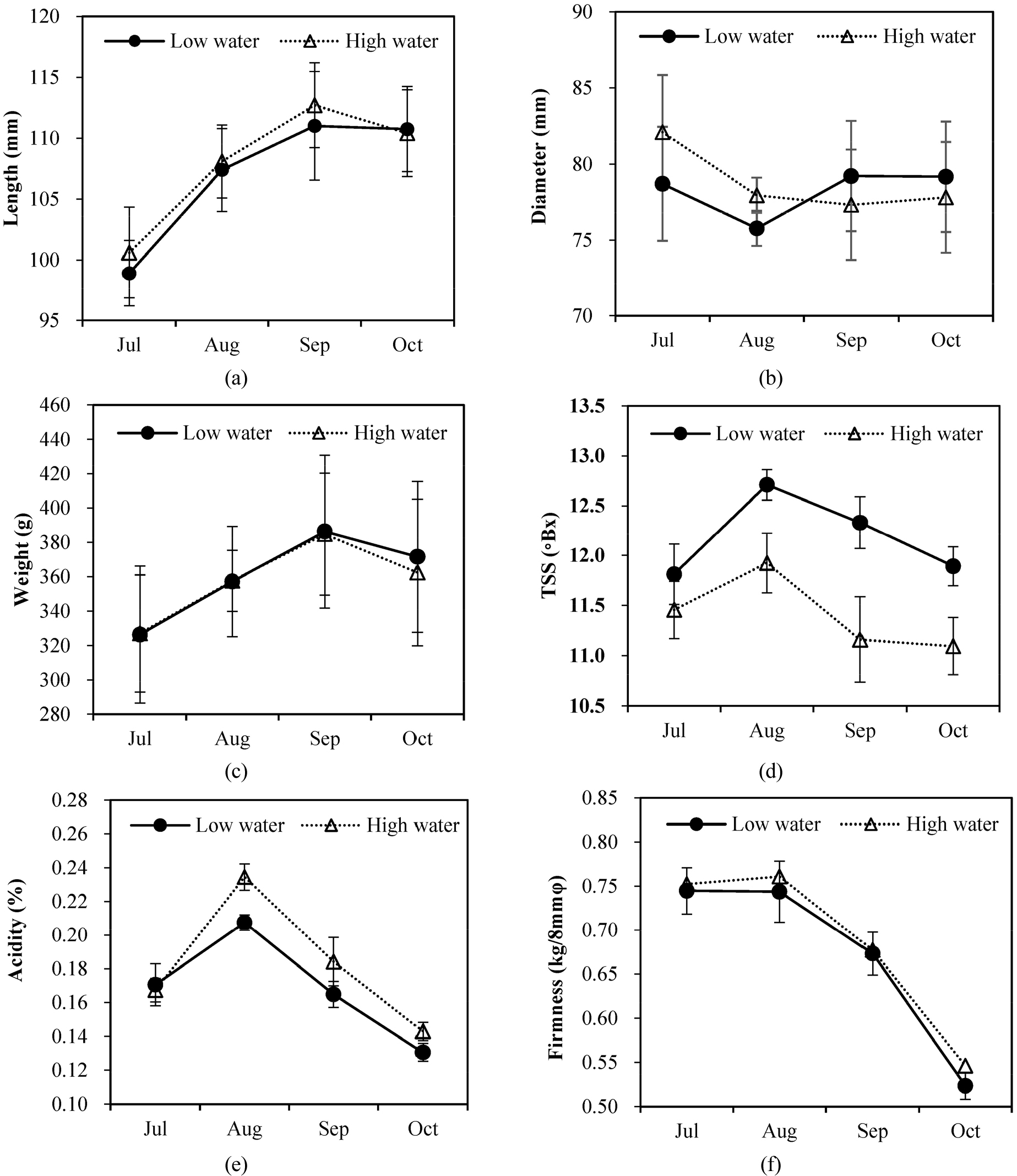
Fig. 3.
Fruit quality of red-fleshed pitaya under different harvest times and irrigation conditions: (a) fruit length, (b) fruit width, (c) fruit weight, (d) fruit total soluble solids (TSS), (e) fruit acidity, and (f) firmness of fruit flesh. Error bars indicate the SD of 10 fruits. “ns” indicates not significant, whereas the asterisk indicates significant difference at p=0.01 based on the t-test.
Major Free Sugar Content According to Irrigation Conditions by Harvest Time
In general, when measuring the sweetness effect, which is the sweet taste perceived in the mouth for the same concentration of major free sugars, fructose, sucrose, and glucose affect sweetness in that order (Mahawanich and Schmidt, 2004; Zamora et al., 1998). The results of major free sugar contents of red fleshed pitaya pulp by harvest time according to the irrigation conditions using HPLC are as follows: glucose, fructose, and sucrose comprised 49.5%-60.9%, 17.8%-24.0%, and 6.5%-12.4%. These results were similar to those of previous reports stating that white fleshed pitaya contains the highest amount of glucose among total free sugars (Rohin et al., 2014). In Satsuma mandarin, sucrose shows the highest content among total free sugars, and depending on the variety, the fructose content is reported to be more or similar to the glucose content (Kim et al., 2012). As fleshed pitaya has a different free sugar composition compared with other fruits, a smaller sweetness effect is perceived in the mouth (Liaotrakoon, 2013; Rohin et al., 2014). In this study, we confirmed the content of major free sugars by treating wet and dry irrigation conditions during the period of fruit enlargement and maturation to produce a red fleshed pitaya with a large sweetness effect. Considering the major free sugar content by harvest time according to the irrigation conditions, in July when no difference was observed in sugar contents between the wet and dry treatments, no statistically significant difference was observed in the fructose, glucose, and sucrose contents; however, in August, September, and October when there was a difference in sugar contents between the irrigation treatments, the fructose, glucose, and sucrose contents were higher under dry conditions than under wet conditions. We confirmed that under dry conditions, the increase in the sum of fructose and sucrose, which have a greater sweetness effect, was higher than that in glucose compared with wet conditions (Table 1). In conclusion, we believed that dry conditions during the period of fruit enlargement and maturation can produce fruit with a greater sweetness effect. This is because although the increase in glucose content under dry conditions was greater than that under wet conditions, the increases in fructose and sucrose contents, which have a greater sweetness effect, are greater than that in glucose.
Table 1.
Compositions of major sugars in the flesh under different harvest times and irrigation conditions
Analysis of Sugar Content According to the Harvest Time and Fruit Weight of Red Fleshed Pitaya Farms
The sugar contents of 393 fruits harvested from 10 red fleshed pitaya farms in Jeju from 2022 to 2023 was investigated by harvest time to promote its consumption through the production of high-quality fruits with higher sugar contents than white fleshed pitaya, which entered the market later. The survey dates of sugar content for each farm were August 5, September 28, and October 20 in 2022, and July 20, August 30, and October 16 in 2023. The average sugar contents by harvest time for Jeju cultivation farms were 11.7°, 10.9°, and 10.6°Bx on August 5, September 28, and October 20, 2022, and 11.1°, 11.4°, and 11.5°Bx on July 20, August 30, and October 16, 2023, respectively (Fig. 4(a)). The fruits harvested in August 2022 and 2023 from Jeju’s cultivation farms tended to show higher sugar contents compared with those in other harvest periods. Moreover, the results of sugar content by harvest time, with moisture conditions classified as moist and slightly moist during the stage of fruit enlargement and maturity, revealed that fruits in August had the highest sugar content, similar to the experimental results (Fig. 3(d)), which show a similar trend. The sugar content was highest in August 2022 and tended to decrease as the harvest time was delayed. Conversely, in 2023, it tended to increase as the harvest time was delayed. The reason for the opposite trends according to the harvest time in 2022 and 2023 is ascribed to the influence of on-site consultation to manage farms with low moisture in 2023. This is because the sugar content was higher when irrigation was conducted with low moisture while maintaining an average soil moisture tension of -30 ± 15 kPa during the period of fruit enlargement and maturation in 2022, compared with that when irrigated with high moisture while maintaining an average soil moisture tension of -10 ± 10 kPa.
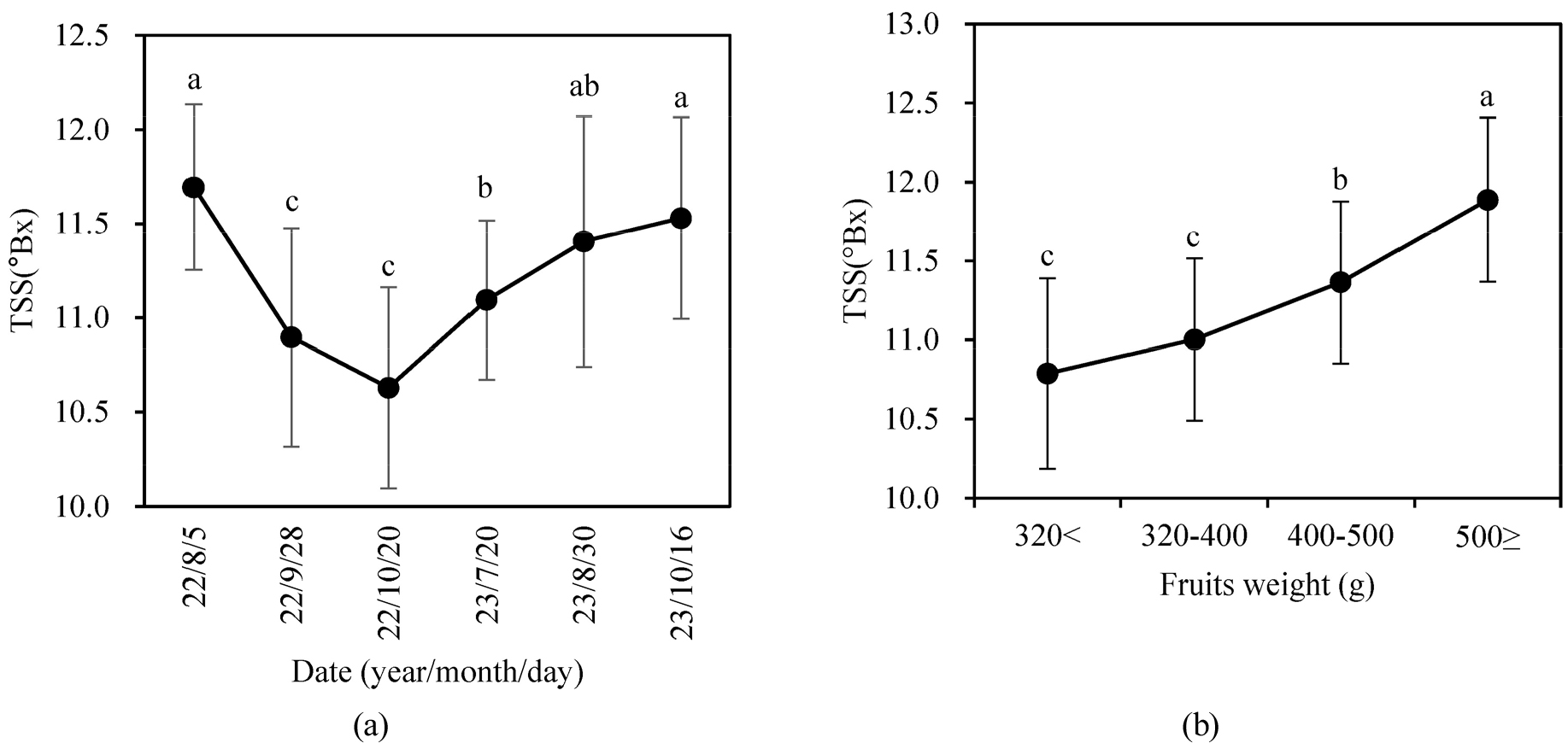
Fig. 4.
Monitoring of the total soluble solids (TSS) of red-fleshed pitaya farms in Jeju from 2022 to 2023 under (a) different harvest times and (b) fruit weights. 393 fruits harvested from 10 farms in Jeju were investigated. Different letters indicate significant difference at p = 0.05 based on Duncan’s multiple range test.
The sugar contents of 393 fruits harvested from red fleshed pitaya farms in Jeju in 2022 and 2023 was examined by dividing the fruit weight into four ranges: less than 320 g, 320 g or more and less than 400 g, 400 g or more and less than 500 g, and 500 g or more, regardless of the harvest time. The sugar contents were 10.8°, 11.0°, 11.4°, and 11.9°Bx, respectively (Fig. 4(b)). Fumuro et al. (2013) reported that the larger the fruit weight, the higher is the sugar content, and similar results were confirmed in this study. As the sugar content of the fruit increases with increasing fruit weight, commercial fruits weighing 320 g or more must be produced through flower removal and fruit thinning. This result will provide important basic data for presenting practical cultivation guidelines to improve the quality of red fleshed pitaya in Jeju in the future.
Conclusion
In this study, we hypothesize that the timing of harvest and soil moisture play significant roles in improving the quality of red-fleshed fleshed pitaya in Jeju. Additionally, to analyze the effects of harvest timing, fruit quality characteristics were investigated from July to October, whereas irrigation conditions were divided into humid and slightly humid to analyze changes in soil moisture tension and the composition of major free sugars in the fruit. The duration from flowering to harvest varied according to the temperature and diurnal temperature range, and although the fruit size (length, diameter, and weight), acidity, and firmness tended to be slightly larger under humid conditions, no significant differences were observed. In particular, maintaining a soil moisture tension of –30 ± 15 kPa and irrigating an average of 4.6 tons per 10 a at 14-day intervals resulted in higher sugar content. This is interpreted as an increase in fructose and sucrose contents owing to the enhancement of sweetness through water stress. The tendency for the increase in sugar content with larger fruit size can serve as an important criterion for farmers to improve cultivation methods by employing optimal harvest times and irrigation amounts. These results are expected to provide useful information for establishing cultivation methods aimed at enhancing the quality of red-fleshed pitaya.