


Introduction
Materials and Methods
Materials
Creating a food print
Preparing aquafaba
Aquafaba’s foaming capacity and stability
Dough preparation and analysis
Statistical analysis
Results and Discussion
Comparison of the properties of aquafaba and eggs
Optimization of 3D food printer design and output conditions
Evaluation of dough with aquafaba and analysis of 3D-printing results
Conclusion
Introduction
The recent rise in the vegetarian and vegan population, coupled with increased health and environmental awareness, has led to a surge in demand for plant-based foods. This shift is having a major impact on food culture and the food industry as a whole (Alcorta et al., 2021; Beardsworth and Keil, 1991; Fehér et al., 2020; Phillips, 2005). Plant-based foods are gaining consumer interest because they are more environmentally sustainable than animal-based foods (Boukid, 2021).
Eggs are used in a variety of culinary and baking applications as a multifunctional ingredient for flavoring, emulsifying, foaming, and thermally coagulating (Hester, 2016). In particular, egg white plays a key role in achieving these functions owing to its excellent surfactant properties (Awuchi et al., 2019; Kiosseoglou and Paraskevopoulou, 2014; Otero et al., 2022; Tyndall et al., 2024). However, owing to health concerns about cholesterol, the prevalence of vegan diets (Craig, 2010), allergies, and environmental considerations, egg consumption is declining, prompting the development of egg-replacement materials (Alonso et al., 2020; Boukid and Gagaoua, 2022).
Against this backdrop, aquafaba is gaining traction as an egg substitute. Aquafaba is a polymeric solution primarily generated from boiling chickpeas, characterized by its high viscosity and foaming stability (Tassoni et al., 2020). In addition to these physical properties, it contains proteins and polysaccharides, which can replicate the properties of egg white (Boukid and Gagaoua, 2022). Aquafaba’s foaming, emulsifying, and viscous properties allow for a variety of cooking and baking applications (He et al., 2021). Based on these properties, its potential applications in various food products such as cakes, crackers, and mayonnaise are being continuously researched (de Barros Miranda et al., 2024). Furthermore, aquafaba is gaining more attention for its ability to recycle food waste to enable eco-friendly and sustainable food production (Munshi et al., 2022).
3D food printing is a technology that allows for the production of personalized food products (Pallottino et al., 2016; Sun et al., 2015b) by adjusting the nutritional content, shape, texture, and other properties to meet consumers’ needs (Nachal et al., 2019; Sun et al., 2015a). In food printing, precision depends on factors such as the viscosity of the material, temperature, and printing speed (Liu et al., 2017; Vukušić Pavičić et al., 2024 ; Zhang et al., 2022). In particular, the physical properties of polymeric materials such as aquafaba, including viscosity and bubble stability, vary significantly depending on the mixing ratio, requiring fine-tuning of the material properties to ensure output stability and interlayer binding (İşleyici and Yavuz, 2025; Nguyen and Tran, 2021). In this study, an existing fused deposition modeling (FDM) 3D printer was modified with a syringe-based extrusion system to meet these needs, and the interlayer binding force, output stability, and structure retention of aquafaba batter were quantified.
In addition, aquafaba-based vegan cookies were produced using 3D food-printing technology, and the physical properties and printability of aquafaba batter were analyzed. To accomplish this, an existing FDM 3D printer was redesigned to print aquafaba batter. The structural stability, foaming capacity, and printing quality of the dough based on the ratio of flour, sugar, soybean oil, and aquafaba were also evaluated. By demonstrating the potential of aquafaba as an egg substitute, the findings of this study are expected to make an important contribution to the development of vegan food through food printing.
Materials and Methods
Materials
For the dough, we used flour (Daehan Flour Mill, South Korea, using U.S. wheat), canned chickpeas (Granoro S.r.l., Italy), dried chickpeas (Hyean Agriculture Company, packaged in South Korea, produced in the U.S.), eggs (South Korea), cooking oil (Sajo Daelim, South Korea, using imported soybean oil), and white sugar (CJ CheilJedang, South Korea, using imported raw sugar). The flour was dried in a vacuum oven (SH-VDO-08NG, Samheung Science, South Korea) under atmospheric pressure for 12 h at 103°C to retain the moisture content (Guénard-Lampron et al., 2021).
Creating a food print
In this study, the 3D printer Ender 3 v2 (Creality, Shenzhen, China) was modified and used as a food printer (Fig. 1). For the printer board, MKS Robin E3D v1.1 (Makerbase, Guangzhou, China) (Fig. 1) was used, with a modification of Marlin firmware version 2.0.9.2. The X-axis and Y-axis motors were equipped with Makerbase’s MKS Servo42C (Fig. 1) to reduce decoupling. To dispense the aquafaba batter, an extruder motor was mounted on the X-axis, and the dough was loaded into a 30 mL syringe. The module for mounting the extruder was designed using Autodesk Inventor 2024, a 3D computer design program, and the designed modeling file was converted to G-code by Cura 4.13, a slicing program, before outputting it.
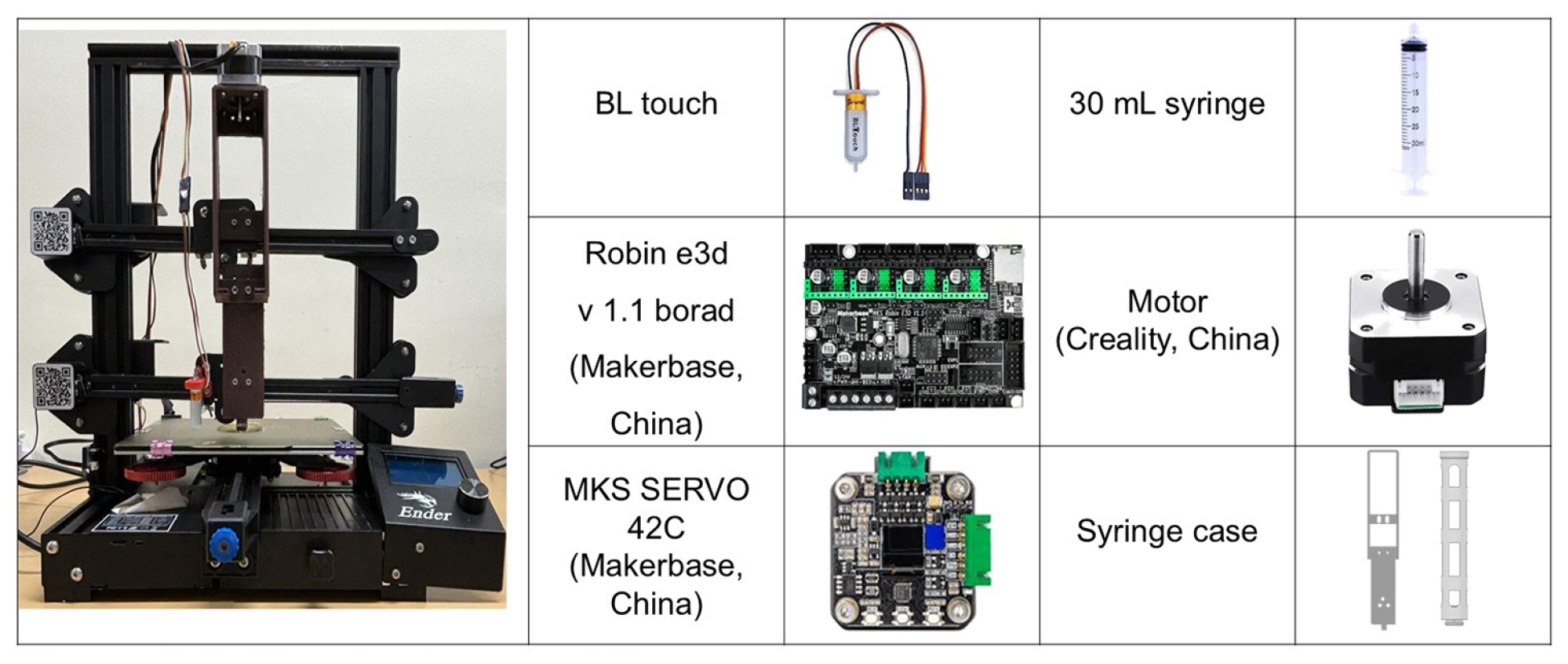
Fig. 1
3D food printer and components.
Note: This is a 3D food printer and parts modified to print dough, including aquafaba. The BL touch is automatically leveled. The Robin e3d v1.1 board and makerbase mks SERVO 42C are used to reduce the possibility of prevent step loss during printing. The 30 mL syringe, motor and syringe case were fabricated and attached to the 3D food printer to print the dough.
Preparing aquafaba
The dried chickpeas were mixed with distilled water in a 1:3 ratio and soaked at 25°C for 24 h. The chickpeas were then washed three times with distilled water to remove bitter ingredients (e.g., phytic acid, tannins) (Tufaro and Cappa, 2023). The soaked chickpeas were mixed with distilled water in 1:1, 1:1.5, 1:2, 1:2.5, and 1:3 ratios, respectively, boiled for 90 min, and then cooled for 1 h to extract aquafaba. The mixing ratio of chickpeas and distilled water is the main factor affecting the viscosity of aquafaba, as well as its protein and saponin contents (Erem et al., 2023). Previous studies have shown that a lower distilled water ratio increases the extraction efficiency, while a higher distilled water ratio could decrease viscosity and the ability to form bubbles (Alsalman, 2020). Therefore, this study evaluated the physical properties and suitability of aquafaba by varying the ratio. The extracted aquafaba was aliquoted into conical tubes in 50 mL portions and stored at -18°C for up to 30 d (Fig. 2) (Tufaro and Cappa, 2023).
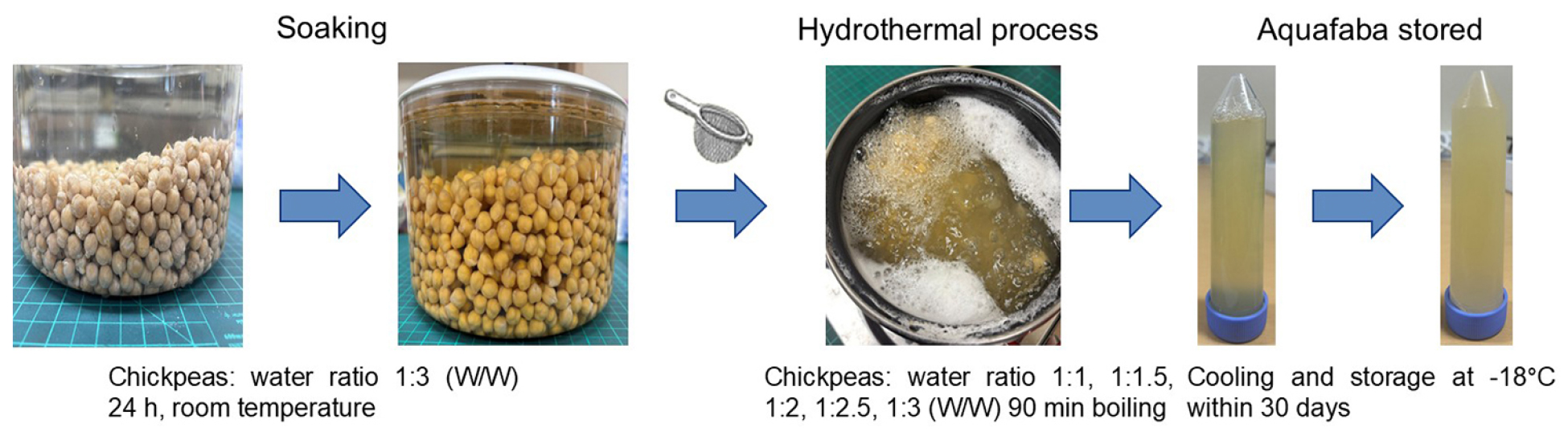
Fig. 2
Aquafaba production process.
Note: Dried chickpeas were mixed with distilled water in a ratio of 1:3 and soaked at 25°C for 24 h. The soaked chickpeas were mixed with distilled water in ratios of 1:1, 1:1.5, 1:2, 1:2.5, and 1:3 and boiled for 90 min, then cooled with the boiled chickpeas for 1 h to extract the aquafaba. The extracted aquafaba was aliquoted into 50 mL conical tubes and stored at -18°C for up to 30 d.
Aquafaba’s foaming capacity and stability
The foaming capacity (FC) and foaming stability (FS) of aquafaba were measured by referring to the methods of Martinez et al. (2016) and Shim et al. (2018) (Buhl et al., 2019; Shim et al., 2021). FC affects the volume, texture, and pore structure of confectionery and bakery products and is a key index for evaluating the functionality of aquafaba as an egg substitute (Fuentes Choya et al., 2023). In particular, stable foam contributes to maintaining the structure of the dough, improving texture, and ensuring visual consistency of the product. Hence, this study used FC and FS as the primary metrics to quantitatively compare and analyze the functional properties of aquafaba (Buhl et al., 2019). The aquafaba samples stored at -18°C were thawed at 4°C for 24 h before use in the experiments. Cryopreservation can maintain their functional properties for a longer period of time by minimizing the denaturation of proteins and saponins (Nguyen and Tran, 2021), while slow thawing at 4°C can prevent protein deformation and deterioration owing to rapid temperature changes (Xiong, 1997). Afterward, 20 mL each of aquafaba and egg white were mixed with 40 mL of distilled water. The mixture was then whipped for 5 min using a hand mixer (Offel cream whisk, China). The volume of the foam was measured immediately after whipping (VF0) and after 30 min (VF30). Then, FC and FS were calculated using Eq. (1) and (2) (Crawford et al., 2024).
VF0 = Initial foam volume
VF30 = Foam volume after 30 min
Vsample = Sample volume
In this experiment, the FC and FS of aquafaba and egg white were compared to quantify the forming capacity and stability.
Dough preparation and analysis
Flour, sugar, aquafaba or eggs, and cooking oil were mixed to produce the ink for 3D food printing. The optimal viscosity was determined by adjusting the consistency of the dough, and the optimal consistency was selected by verifying that the dough was dispensed smoothly from the 30 mL syringe using a syringe pump.
The pH of the dough was determined by measuring the concentration of egg white and aquafaba using a pH meter. For the pH measurement, 10 g of dough was mixed with 90 mL of distilled water, homogenized for 1 min, and stored at 4°C for 1 h. Then, the pH of the supernatant was measured. The pH of the cookies after baking was measured by mixing 2 g of cookies with 18 mL of distilled water, homogenizing for 1 min, and storing them at 4°C for 1 h. Afterward, the pH of the supernatant was measured (Koh et al., 2023). Five measurements were performed for each condition, and statistical analysis was performed using R 4.4.2 software with Turkey’s post hoc test.
Moisture reduction rates were calculated based on the methods of Rahmati and Mazaheri Tehrani (2014) and Nguyen and Tran (2021) (Crawford et al., 2024; Nguyen and Tran, 2021; Rahmati and Mazaheri Tehrani, 2014; Vukušić Pavičić et al., 2021). The moisture-loss rate was calculated using Eq. (3).
W1 = weight of dough before baking
W2 = measured weight after baking for 10 min and cooling at room temperature (25°C) for 30 min
The color difference of the dough was measured by image analysis before and after baking (Crawford et al., 2024; Vukušić Pavičić et al., 2021). Images acquired under the same conditions were compared by extracting red, green, and blue (RGB) values using ImageJ software (V.1.14, National Institutes of Health, Bethesda, MD, USA). The average RGB value for each sample was derived from the cookie surface and color-calibrated against a white background. The total color difference was calculated using Eq. (4) (Choudhury et al., 2024).
ΔR = Sample’s red value - white red value
ΔG = Sample’s green value - white green value
ΔB = Sample’s blue value - white blue value
Statistical analysis
Each experiment was performed five times, and the results were expressed as mean ± standard deviation. To test for statistical significance, Turkey’s test was performed using R version 4.4.2, and the results were displayed in alphabetical form in graphs and tables to identify significant differences.
Results and Discussion
Comparison of the properties of aquafaba and eggs
The FC and FS of aquafaba as a potential egg substitute in vegan baking were evaluated. The experiment was performed at room temperature (25°C) with the same stirring speed (speed 5) and time (10 min) to minimize external influences. Each experiment were performed five times, and the results were analyzed using mean and standard errors. Aquafaba showed lower values than egg white in terms of FC, but similar or higher values than egg in terms of FS (Fig. 3(a), (b)).
Egg whites had an FC of 20.32% ± 1.11%, while that of AF was slightly higher (23.69% ± 0.94%); however, the difference was not statistically significant (p = 1.000). The FC of diluted aquafaba tended to increase to 22.28% ± 1.06% at a 1:1 ratio and 33.44% ± 1.29% at a 1:1.5 ratio, with the highest FC at a 1:1.5 ratio. At a 1:3 ratio, the FC increased to 51.43% ± 2.08%, but a decrease in FS was observed.
In the FS experiment, egg white was the most stable, at 91.72% ± 1.57%. On the other hand, at a 1:1.5 ratio, aquafaba showed a FS of 83.54% ± 2.01% (p > 0.05), 86.27% ± 1.45% at a 1:2 ratio, and 77.76% ± 1.62% at a 1:2.5 ratio. The value obtained using a 1:2 ratio did not show a statistically significant difference from egg white (p > 0.05).
The FC mainly depends on the concentration of protein and surface active substances in the solution, the rate of interfacial adsorption, stirring conditions, and denaturation degree of the protein (Phillips, 2013; Wilde and Clark, 1996). Aquafaba contains proteins and polysaccharides extracted from boiling chickpeas, and these ingredients are responsible for maintaining the foam. In particular, the main protein in aquafaba has surfactant properties similar to egg white, and the polysaccharides increase viscosity, which contributes to higher FS (McClements, 2004). These physical properties and chemical composition support the potential for aquafaba to be utilized as an egg substitute.
The FC of aquafaba showed concentration dependency, but the FS exhibited similar characteristics to those of egg white. In particular, at 1:2 and 1:2.5 ratios, aquafaba performed similarly to eggs in terms of both FC and FS, confirming the potential of aquafaba as an egg substitute in vegan baking.
Optimization of 3D food printer design and output conditions
Typical 3D printers of the FDM type work primarily by heating a solid plastic filament to melt it and then printing it out through a nozzle. However, these solid filament-based systems are not suitable for printing materials such as dough. Therefore, this study modified an existing FDM printer, Creality Ender 3 v2, with a syringe-based extruder system to reliably print doughy materials (Fig. 1). The modified printer was equipped with MKS Servo42C on the X and Y axes for precise positioning and decoupling prevention. It was optimized with Marlin firmware (version 2.0.9.2) to fine-tune the extrusion speed and pressure. This ensured that the aquafaba batter was uniformly dispensed throughout the syringe nozzle.
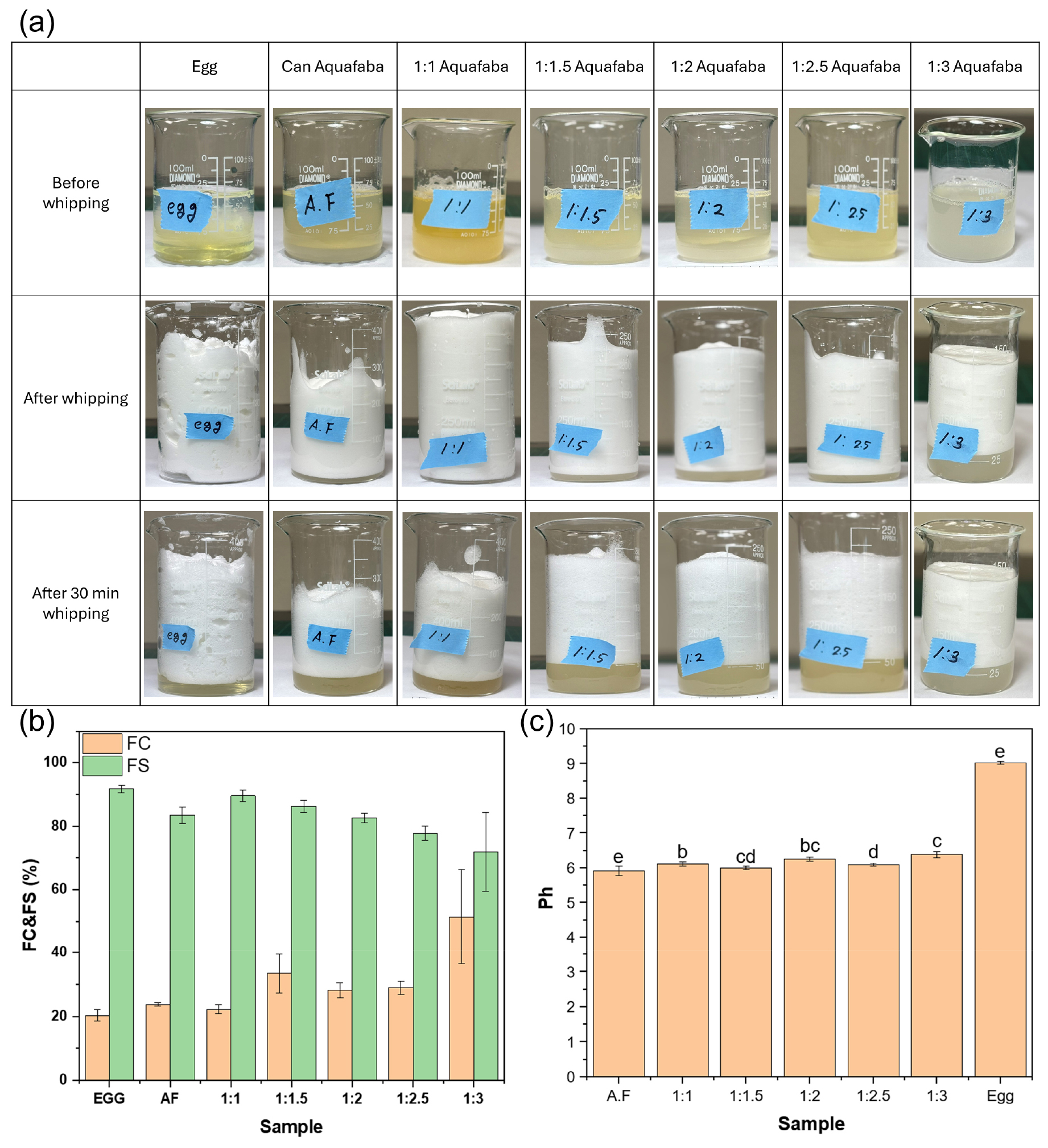
Fig. 3
(a) Images showing the measurement of FC and FS. (b) Measured values of FC and FS. (c) pH of aquafaba and egg.
Note: To measure FC and FS, 20 mL of aquafaba and 20 mL of egg white were mixed with 40 mL of distilled water, and the mixture was whipped for 5 min using a hand mixer. The volume of the foam was measured immediately after whipping (VF0) and 30 min later (VF30). (b) FC and FS were measured and calculated using Eq. (1) and (2). (c) Measured pH of aquafaba and egg.
After experimenting with the 3D printing output conditions, as can be seen in Fig. 4(a) and (b), a low viscosity of the dough caused the material to spread during output, resulting in a distorted shape. On the other hand, if the viscosity was too high (Fig. 4(c)), the dough broke or dispensed unevenly (Fig. 4(c)). This phenomenon was caused by the dough’s inability to maintain its own structural strength at a low viscosity. If viscosity was high, the syringe-based extrusion system could not provide sufficient pressure, resulting in poor ejection of the dough. This correlation between viscosity and output quality has been reported by Guénard-Lampron et al. (2021) (Guénard-Lampron et al., 2021).
To solve these viscosity issues, the mixing ratio of flour:sugar:oil:aquafaba was adjusted to 5:1:1:3, which was found to be the optimal condition (Fig. 4(d)). At this ratio, the dough viscosity was appropriate for keeping its shape stable during output and showed consistent structural stability during the layer-by-layer stacking process. In particular, the interlayer height error was kept within 3.5% on average, indicating improved uniformity of output quality. In addition, experiments with printing speed and temperature conditions showed that the most stable output results were obtained at a printing speed of 0.5 mm/s and a temperature of 25°C. In particular, the addition of soybean oil increased the dough’s flexibility, allowing it to extrude evenly when stacked layer by layer.
Furthermore, a dough (ink) was prepared by mixing flour, sugar, cooking oil, and aquafaba in a ratio of 5:1:1:3, and experiments were conducted using a syringe pump (ISOLab01, Korea) and syringe needles of various sizes to evaluate the feasibility of 3D printing output (Fig. 4(e)). However, as shown in Fig. 4(e), the modified 3D food printer provided lower extrusion force than the syringe pump, which resulted in poor ink output. Therefore, we directly used a syringe nozzle with the needle removed to improve the output speed and responsiveness, which improved the output efficiency and stability.
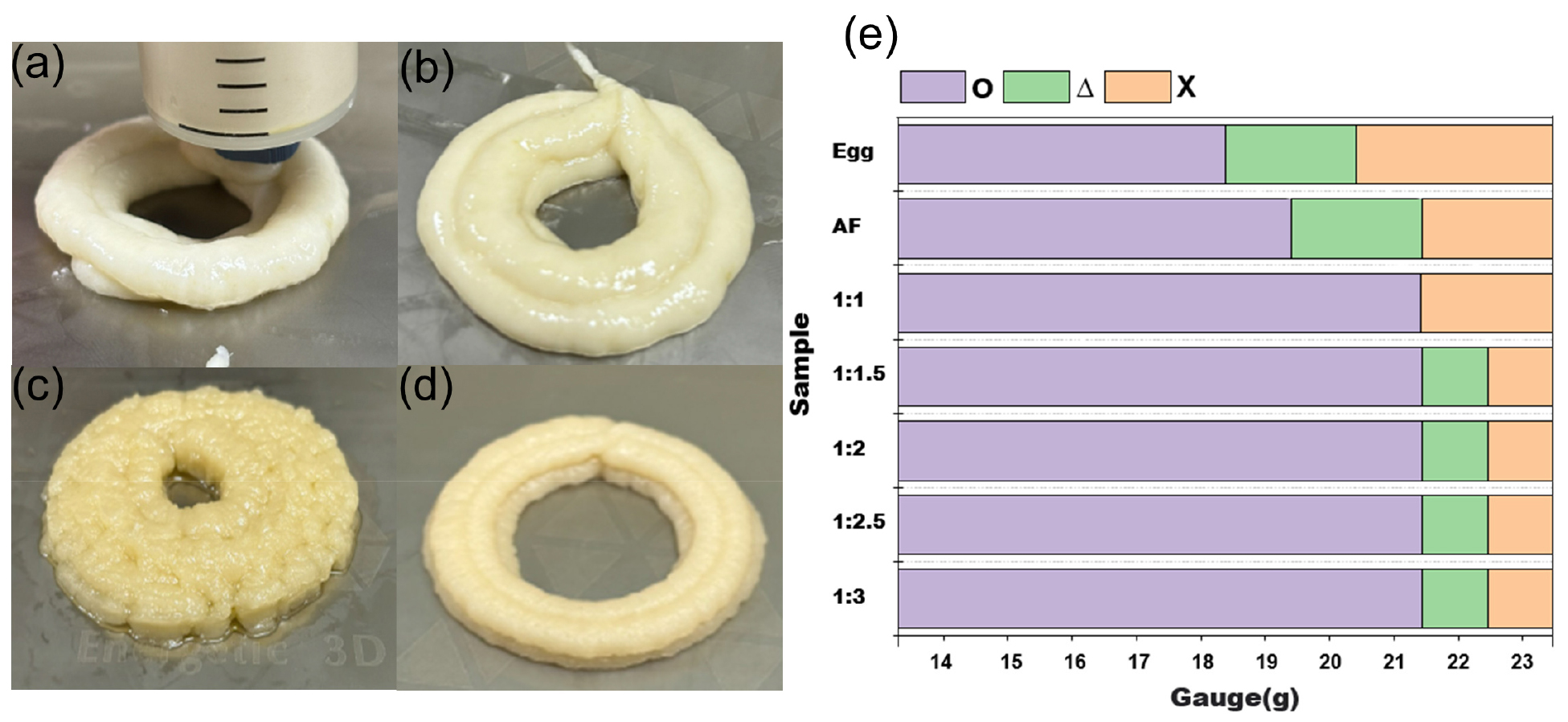
Fig. 4
(a)-(d) Post-printing images for each concentration, (e) printability based on needle gauge.
Note: As demonstrated in (a) and (b), the viscosity of the dough is inadequate, resulting in its inability to maintain its shape during the output process. (c) illustrates the consequence of elevated viscosity, leading to the formation of fractured or uneven dough, while (d) shows the outcome of printing dough with a flour:sugar:oil:aquafaba ratio adjusted to 5:1:1:1:1:3. Experiments were conducted using a syringe pump, and different-sized syringe needles were used to evaluate the feasibility of 3D printing.
Evaluation of dough with aquafaba and analysis of 3D-printing results
As a result of evaluating the physical properties of aquafaba-based cookies baked after 3D printing, the aquafaba-based dough exhibited similar structural stability to egg-based dough and retained its shape well (Fig. 5). To increase the uniformity and structural stability of the output, the internal filling density was set to 70% for this experiment. This is based on the optimal filling density conditions presented by Guénard-Lampron et al. (2021). The experiment was designed to ensure that the output dough retains its shape during baking. The output cookies were baked at 165°C for 15 min, and the physical and chemical properties of the dough were comprehensively analyzed by comparing the moisture-loss rate, pH, and color after baking.
The changes in thickness and cross-sectional structure before and after baking the egg and varying proportions of aquafaba batter were compared to evaluate the shape retention and structural stability of the dough to be used for 3D printing (Fig. 5). The changes in thickness and cross-sectional structure before and after baking were compared for aquafaba batter (Fig. 5). The egg batter resulted in a thickness increase of 18.3% ± 1.2%, while the aquafaba batter remained relatively stable at 16.4% ± 1.1% at the 1:2 concentration and 17.1% ± 1.0% at the 1:2.5 concentration (p > 0.05). As a result of analyzing the cross-sectional structure, both egg- and aquafaba-based doughs showed a smooth and uniform surface.
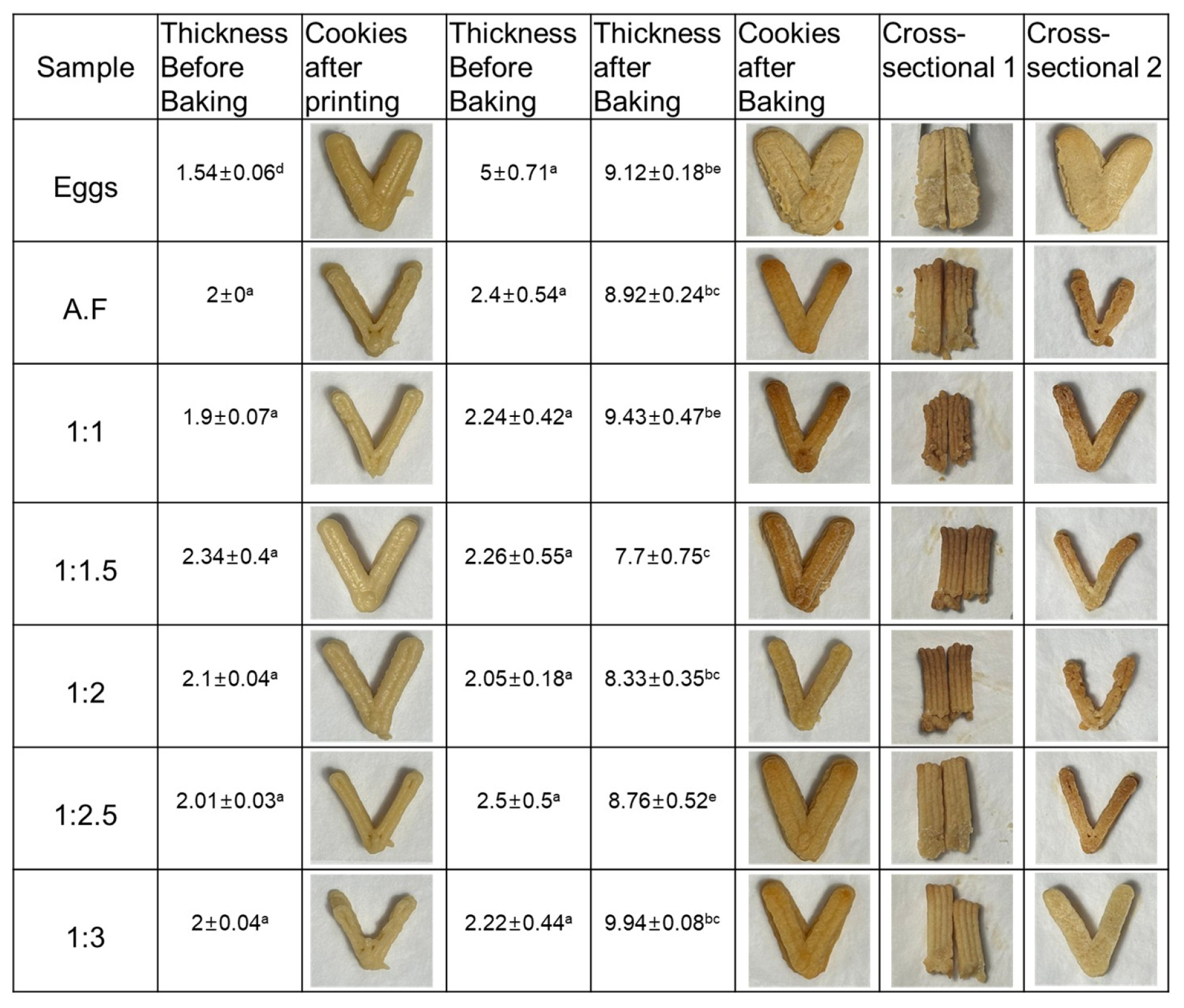
Fig. 6(a) and Fig. 6(b) show the area changes before and after baking. The aquafaba batter of the 1:2 concentration had an area change of 8.1% ± 0.9%, and the 1:2.5 concentration had an area change of 9.3% ± 0.7%, which was not statistically significantly different from the egg batter (6.2% ± 0.8%) (p > 0.05). On the other hand, the area decreased to 12.4% ± 1.3% (p < 0.001) at a 1:1 concentration and increased to 15.8% ± 1.7% at a 1:3 concentration, exhibiting a statistically significant difference (p < 0.001). This confirms that the viscosity of aquafaba batter plays an important role in its structural stability and shape retention during baking. Therefore, 1:2 and 1:2.5 are the optimal concentrations for maintaining the shape of the dough during baking.
As shown in Fig. 6(d), the moisture-loss rates of cookies made from aquafaba batter varied with concentration. The 1:2 concentration resulted in relatively low moisture losses of 21.36 ± 1.21%, and the 1:2.5 concentration resulted in 22.40% ± 0.39% (Table 1), which are statistically significantly higher than those of the egg-based cookies (15.6% ± 0.75%) (p < 0.05). However, moisture loss was significantly lower (p < 0.01) than for the 1:1 concentration (28.63% ± 1.31%) and 1:3 concentration (26.13% ± 1.03%). In particular, the 1:3 concentration had the highest moisture-loss rate of ~26%, which is believed to be a result of the dilution reducing the protein density in the dough, weakening the moisture binding capacity. On the other hand, at 1:2 and 1:2.5 concentrations, the polysaccharides and proteins were properly balanced to enhance moisture binding.
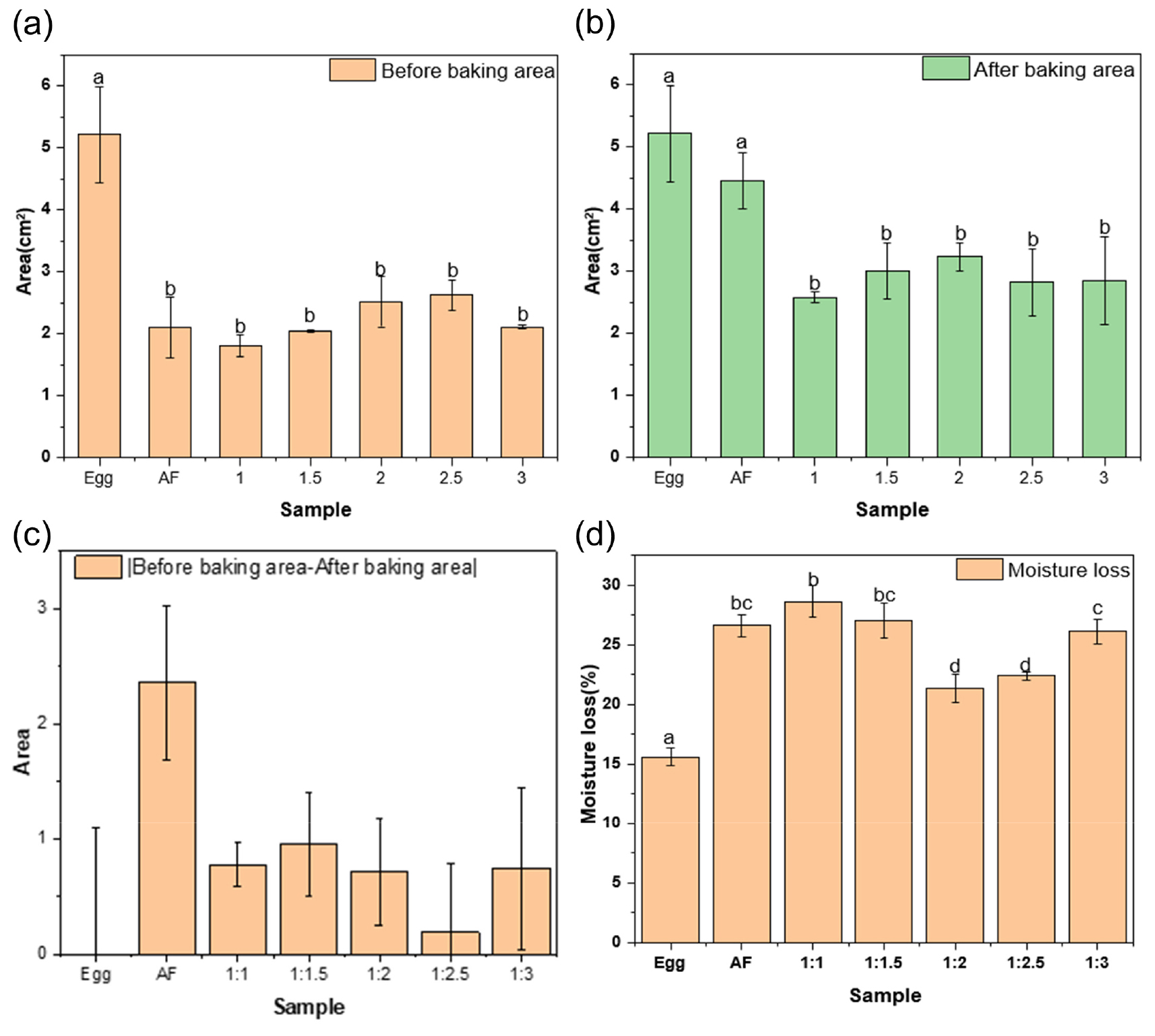
Fig. 6
(a) Cross-sectional area of the batter before baking. (b) Cross-sectional area of the batter after baking. (c) Cross-sectional area difference value. (d) Moisture-loss rate of the batter.
Note: (a) shows the cross-sectional area of the dough prior to baking, measured using Image J, (b) shows the cross-sectional area of the dough post-baking, measured using Image J, and (c) shows the cross-sectional area of the dough prior to and post-baking minus the value. (d) presents the moisture loss, calculated using Equation 3.
The pH analysis showed that the aquafaba batter remained close to neutral before and after baking, with slight variations depending on the concentration (Fig. 7). At a concentration of 1:2, it decreased slightly to 6.92 ± 0.06 before baking and 6.84 ± 0.05 after baking. At a concentration of 1:2.5, it decreased slightly to 6.89 ± 0.07 before baking and 6.81 ± 0.06 after baking, but the differences were not statistically significant (p > 0.05). Overall, the aquafaba batter showed a slightly lower pH after baking. By contrast, the egg batter had a pH of 7.43 ± 0.05 before baking and 7.71 ± 0.04 after baking, representing an increase of 0.28 (Table 1), which was a statistically significant difference (p < 0.01). This is interpreted to result from retention of the alkaline properties of the protein and fat components in the egg batter. Consequently, aquafaba batter maintained stable chemical properties that are close to neutral, which implies that it exhibits similar qualities to egg batter in baking. The 1:2 and 1:2.5 concentrations showed stable chemistry with a relatively consistent pH even after baking, while the more dilute 1:3 concentration tended to cause a slightly larger pH change owing to the decreased protein and polysaccharide concentrations. Therefore, the 1:2 and 1:2.5 concentrations can minimize pH changes during baking, which may contribute to quality consistency in vegan baking.
Table 1
FC, FS, and 3D food-printing performance comparison.
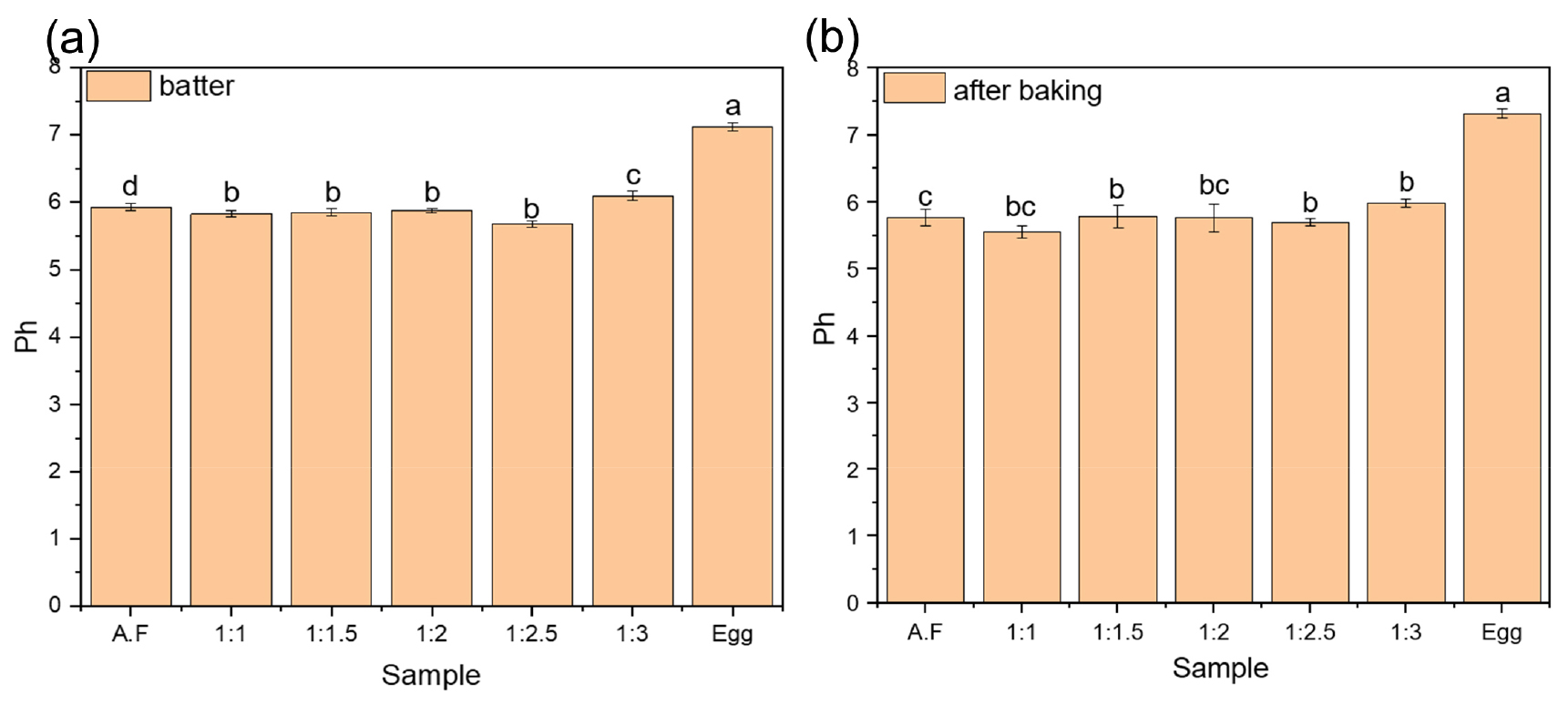
Fig. 7
(a) pH of liquid, batter, and after baking, (b) pH of batter, (c) pH of after baking.
Note: (a) Measured pH of the aquafaba and egg batters. The pH was determined using the following method: the dough (10 g) was mixed with 90 mL of distilled water, homogenized for 1 min, and stored at 4°C for 1 h. The pH of the resulting serum was then measured. (b) pH of the aquafaba and egg batters after baking. (c) pH of the aquafaba batter and egg batter after baking. The pH was measured by mixing 2 g of cookies with 18 mL of distilled water, homogenizing for 1 min, and measuring the pH of the resulting liquid, which was stored at 4°C for 1 h.
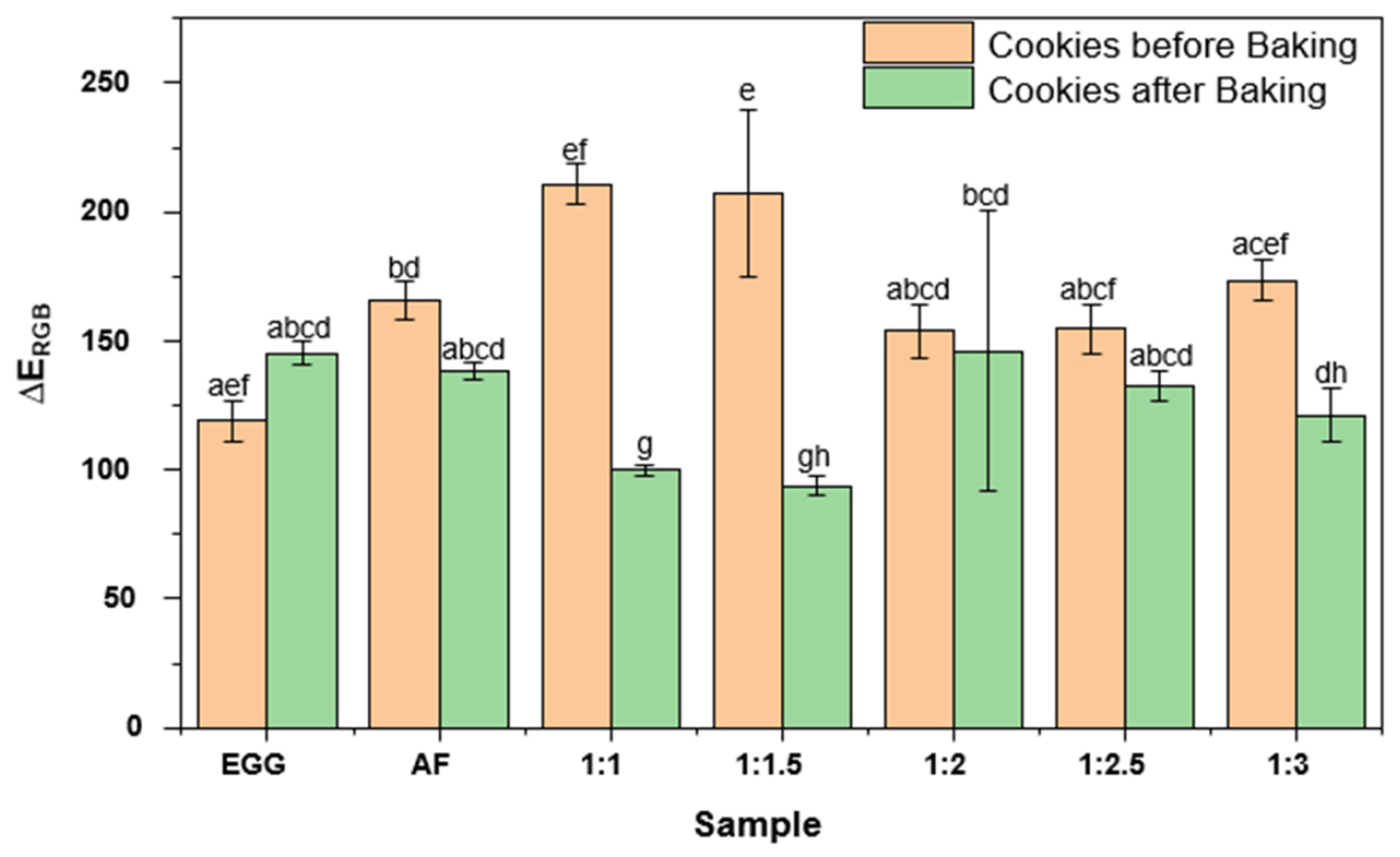
In the RGB color analysis (Fig. 8), aquafaba batter showed concentration-dependent color differences before and after baking. At a 1:2 concentration, The RGB value was 225.4 ± 2.1 before baking and 220.8 ± 1.9 after baking, while at a 1:2.5 concentration, it was 224.1 ± 2.3 before baking and 219.5 ± 2.2 after baking. Both concentrations resulted in RGB changes before and after baking of 4.6 ± 0.9 and 4.6 ± 1.0, respectively, similar to those of egg batter (4.2 ± 0.7). But the difference was not statistically significant (Fig. 5) (p > 0.05). In particular, the 1:2 concentration showed the least color change and visual consistency before and after baking.
These results indicate that 1:2 and 1:2.5 are the optimal concentrations to satisfy both the chemical and physical stability of the dough. Although aquafaba has a lower protein content than eggs, it can maintain a certain level of surfactant properties even after thermal denaturation, and the polysaccharides serve to strengthen the structural support of the foam with an increase in viscosity (Buhl et al., 2019; McClements, 2004). These properties of aquafaba are believed to contribute to its FC and stability during the baking process. This study confirms that aquafaba has the potential to be suitable for vegan 3D food printing. In particular, the 1:2 and 1:2.5 concentrations performed the best in terms of FC and stability, area change, moisture loss, pH stability, and color change, confirming its potential as an egg substitute in vegan baking and 3D printing.
Conclusion
This study quantified the physical properties of aquafaba-based dough and its suitability for 3D food printing at varying concentrations. Evaluation metrics included FC, FS, print output quality, moisture loss, and pH change after baking. The results showed that the 1:2 and 1:2.5 concentrations led to a similar performance to egg white in terms of foam properties, output stability, water retention, and pH retention. Each concentration exhibited distinct strengths. The moisture-loss rate was statistically significantly different from that of eggs, but in terms of functionality, the results were stable with no degradation in quality, maintaining shape retention and visual consistency during baking. These results indicate that aquafaba has the potential to functionally replace eggs under certain concentration conditions. In conclusion, this study demonstrated the technical feasibility of developing vegan 3D-printed food using aquafaba based on quantitative data, which indicates the possibility of utilizing aquafaba as an egg substitute in future vegan and eco-friendly food production.