


Introduction
Materials and Methods
Selection of the Main Production Areas of Spring and Summer Potatoes
Survey Methods for Spring and Summer Potato Cultivation Patterns and Harvesting Operations
Results and Discussion
Results of Survey on Spring and Summer Potato Cultivation
Results of Survey on Harvesting Operations for Spring and Summer Potatoes
Conclusion
Introduction
Potatoes are among the four major food crops worldwide and are grown in several climate and environment types. In the Republic of Korea, depending on harvest seasons, they are divided into spring, summer, fall, and winter potatoes (Cho et al., 2010, 2020). Approximately 358,022 tons and 126,702 tons of spring and summer potatoes, respectively, were produced in 2023, accounting for 88.4% of the country’s total potato production (KREI, 2024). Spring potatoes are mainly grown in the south-central plains, such as Gyeongsangbuk-do, while summer potatoes are primarily grown in the high-altitude areas of Gangwon-do with higher slopes and altitudes (Kim et al., 2024a). Consequently, there are different cultivation methods and farm machinery due to the topographical features of the main production area where potatoes are cultivated in different patterns. As of 2021, the usage rate of potato harvesting machinery in the Republic of Korea was 72.4%, and the rate of the following cultivation processes were: 99.5% for plowing and harrowing, 83.6% for vinyl mulching, 4.6% for seeding, 97.3% for pest control, and 77.2% for harvesting (KOSIS, 2023). Of these, harvesting operations exert a direct impact on potato yield, as digging can cause breakage and damage to potatoes (Bagherpour and Talab, 2024; Rubagumya et al., 2023). Therefore, the use of harvesting machinery should be improved to increase the yield of potatoes (Chowdhury et al., 2023; Koo, 2022). However, applying standardized harvesting machinery to farmers is difficult due to the different cultivation patterns per main production area (Lee et al., 2020). There is a need for standardization in production cultivation methods and harvester usage methods to address these issues.
Numerous studies have been conducted in the Republic of Korea on the use of harvesting machinery for diverse crops. Kim et al. (2024b) developed a self-propelled potato harvester that can simultaneously dig and collect and conducted performance evaluation and economic analysis. The developed potato harvester satisfied national testing standards and showed a 12.7% decrease in costs compared to conventional work. Woo et al. (2023) developed a corn harvester with a tractor and analyzed its performance as a function of working speed. The analysis showed that the best harvesting performance was achieved at 0.12 m/s but considering the productivity per production area, 0.22 m/s was the most appropriate working speed. The work efficiency analysis demonstrated that machine harvesting at 0.22 m/s resulted in 8.4 times the labor savings compared to manual harvesting. Choi et al. (2023) developed a collection-type garlic harvester that can simultaneously dig and collect, and analyzed its work performance, and found that 89% labor savings were achieved compared to conventional work. Hong and Choi (2020) developed a self-propelled green onion harvester and evaluated its performance, and found that the higher the driving speed, the better its working performance; however, the damage rate to green onions increased. The harvest rate was 100% at all speeds, and at the maximum speed, the labor savings were 5.7 times that of conventional work.
Research on improving the harvesting machinery for these different crops has focused primarily on developing harvesters. However, studies investigating the current status of crop cultivation and harvesting practices and standardizing them are lacking. For instance, Yang et al. (2023) examined the current status of cultivation practices and harvesting operations for summer potatoes, but it only targeted summer potatoes, so a study on spring potatoes, the type with the highest yield in the Republic of Korea, is needed. Therefore, in this study, we examined the current status of cultivation patterns and harvesting operations for spring and summer potatoes in the main production areas. We examined ridge width, furrow width, planting distance, and spacing in the row among the cultivation patterns, and for assessing the harvesting operation status, we investigated yield, rate of marketable potatoes, digging damage rate, digging loss rate, and work efficiency of cultivation operations using manpower and agricultural machinery for spring and summer potatoes.
Materials and Methods
Selection of the Main Production Areas of Spring and Summer Potatoes
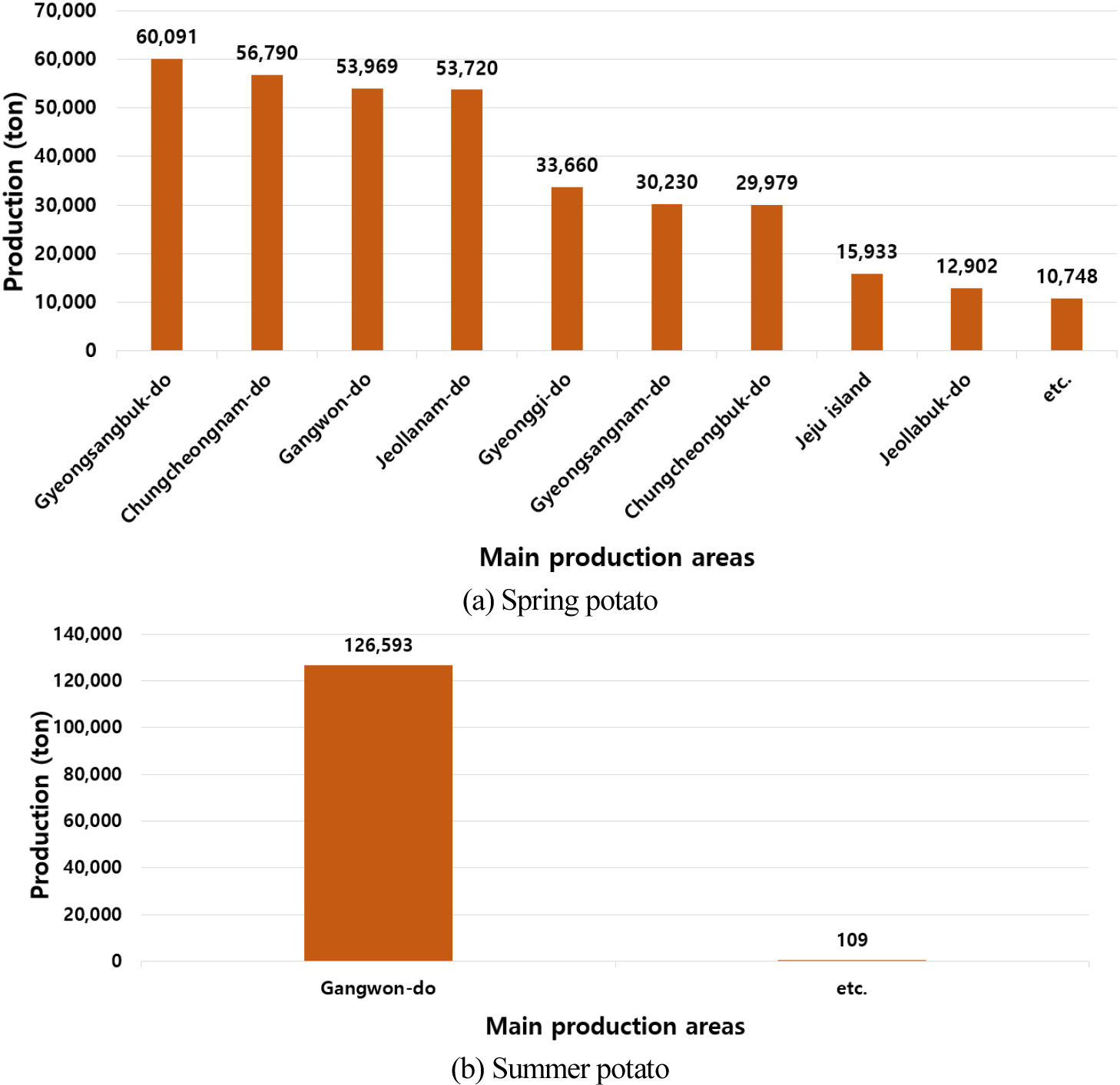
The domestic yield of spring and summer potatoes per production area in 2023 is shown in Fig. 1. Spring potatoes were produced in Gyeongsangbuk-do (60,091 tons), Chungcheongnam-do (56,790 tons), Gangwon-do (53,969 tons), and Jeollanam-do (53,720 tons). Summer potatoes were produced in Gangwon-do 126,593 tons, accounting for more than 99% of the total production (KOSIS, 2024). Therefore, in this study, we selected two sites in Pungsan-eup, Andong-si, Gyeongsangbuk-do (Field 1-2) and one site in Namsun-myeon (Field 3) for spring potatoes, and one site in Imgye-myeon, Jeongseon-gun, Gangwon-do (Field 4) and two sites in Jinbu-myeon, Pyeongchang-gun (Field 5-6) for summer potatoes, totaling six sites, three each for summer and spring potatoes.
Survey Methods for Spring and Summer Potato Cultivation Patterns and Harvesting Operations
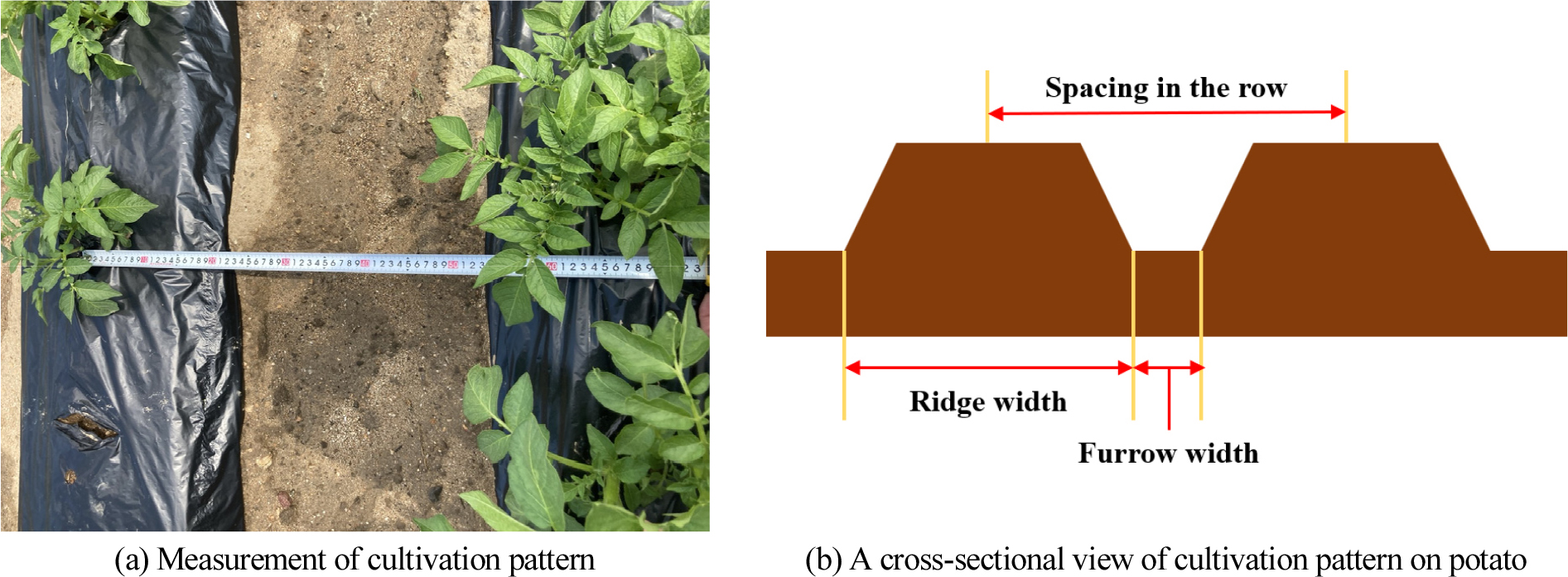
The cultivation patterns of spring and summer potatoes in six selected fields, as shown in Fig. 2(a). (i.e., ridge width, furrow width, planting distance, and spacing in the row for cultivation patterns) were surveyed, and the cross-sectional view of the investigated cultivation patterns are shown in Fig. 2(b).
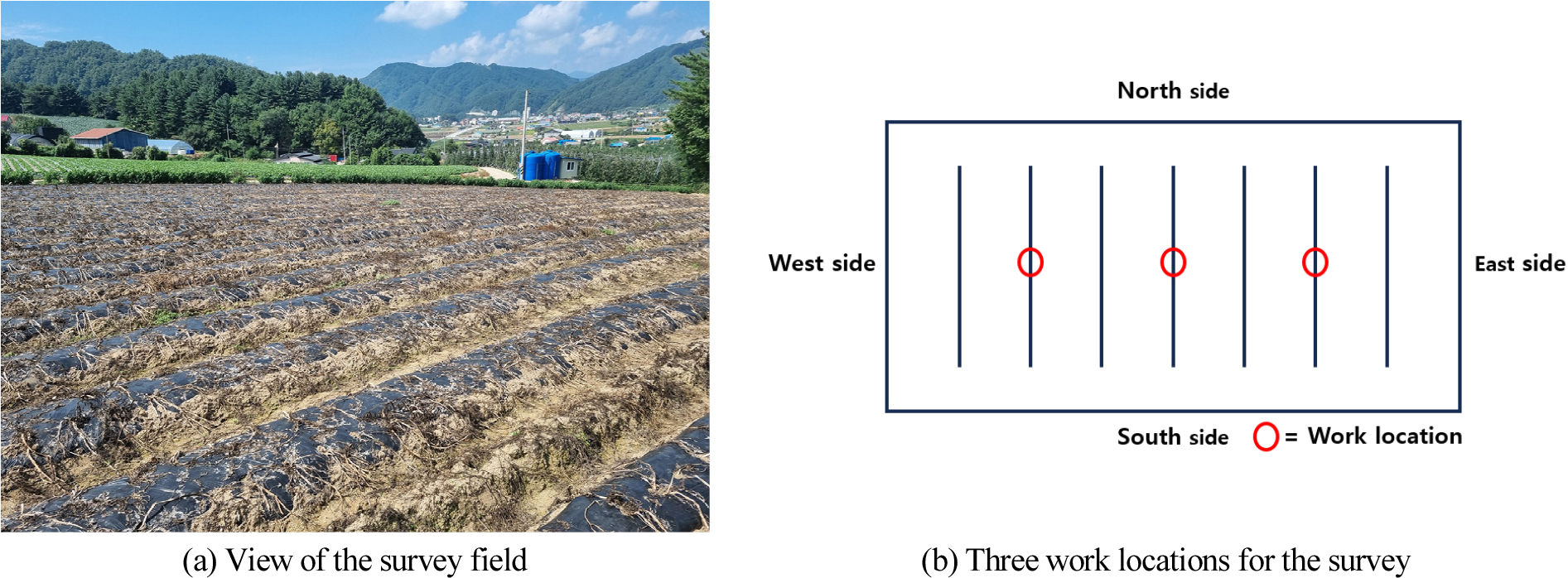
As for the status of the harvesting operation, as shown in Fig. 3(a), we investigated yield, rate of marketable potatoes, digging damage rate, digging loss rate, and work efficiency of cultivation operations using manpower and agricultural machinery. All surveys were conducted at three locations selected per field (Fig. 3(b)), and the average value of each was used as a representative value. Yields were calculated by manually harvesting potatoes at 10 weeks, weighing them, and dividing them by the planted area to derive yields per unit area. The rate of marketable potatoes was calculated as the proportion of marketable potatoes weighing 51 grams or more in the total weight of harvested potatoes and was calculated using Equation (1) (Yang et al., 2023).
Where, The rate of marketable potatoes (%)
Yield of marketable potatoes (kg)
Total yield of potatoes (kg)
The digging damage rate was calculated as the weight rate of damaged potatoes among the dug potatoes, and the digging loss rate was the weight rate of potatoes not dug during the digging operation. To derive the digging damage and digging loss rates, potatoes were dug with a harvester in three 5-meter-long ridges per field. The total weight of the dug potatoes, the total weight of the damaged potatoes among the dug potatoes, and the total weight of the un-dug potatoes were measured, and the digging damage rate and digging loss rate were derived using Equation (2) and Equation (3) (Yang et al., 2023).
Where, Digging damage rate (%)
Total weight of damaged potatoes among digging potatoes (kg)
= Total weight of digging potatoes (kg)
Where, Digging loss rate (%)
Total weight of undug potatoes (kg)
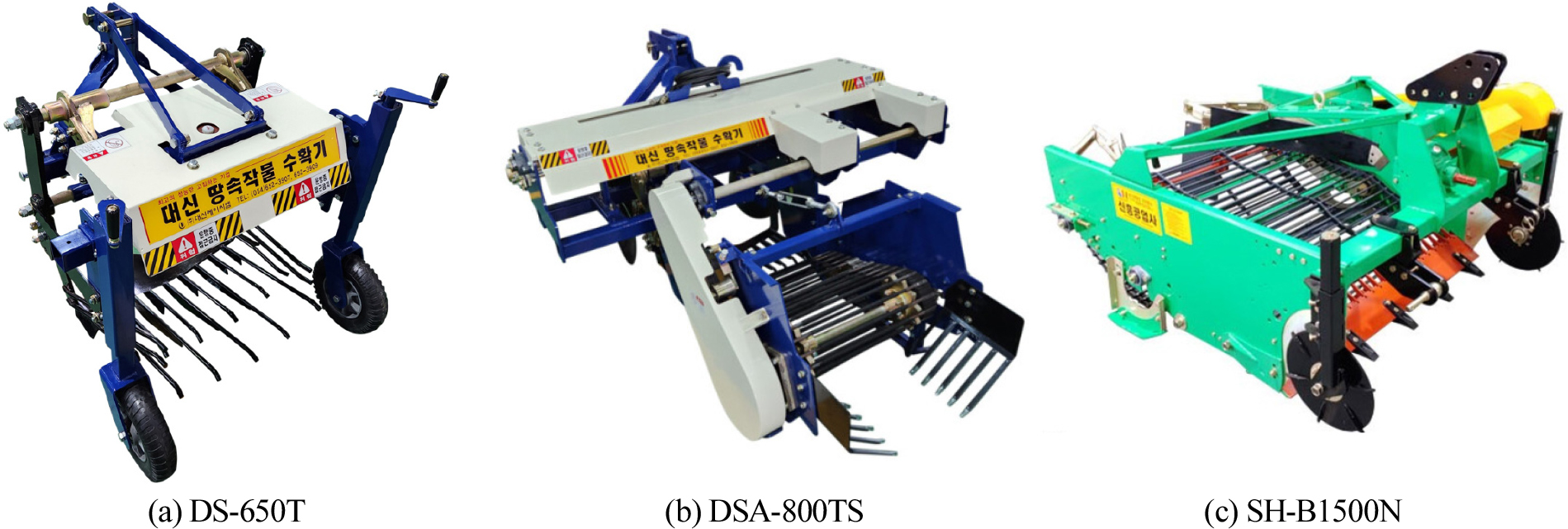
To derive the work efficiency, we measured the time required for each step using manpower and machines in the three designated areas per field. Manpower was measured by the time required for vinyl removal, digging, and pickup collection (Fig. 4). Machine work was only measured in terms of time spent on digging work (Fig. 5). The work steps for each field were performed as shown in Table 1. The work efficiency was derived from the measured work time. The specifications and images of the harvesters used per field can be found in Table 2 and Fig. 6, respectively.
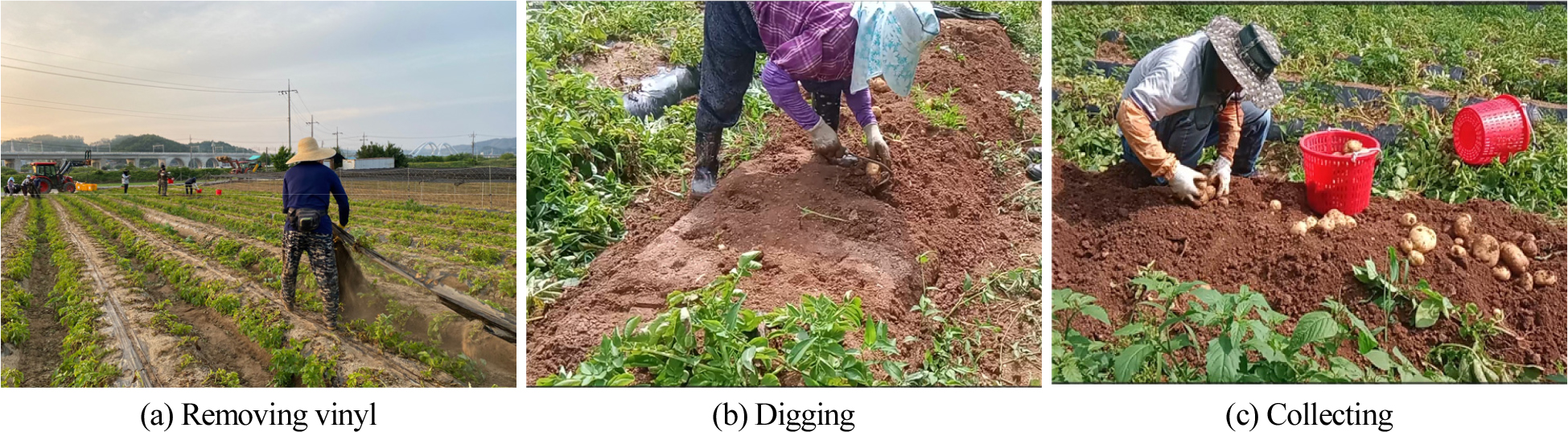
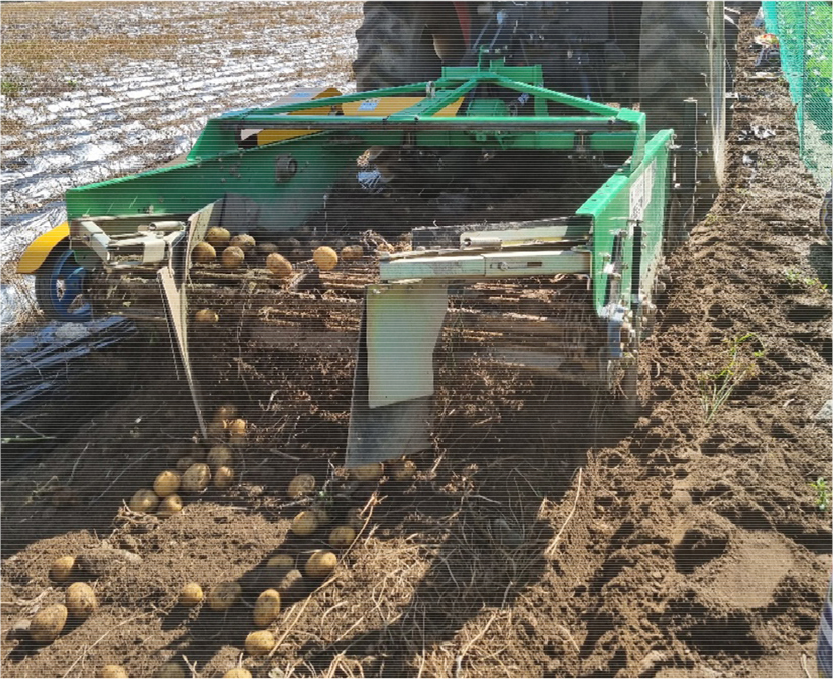
Table 1.
Working type bas‘ed on the survey field
Table 2.
Specifications of harvesters based on survey field
Results and Discussion
Results of Survey on Spring and Summer Potato Cultivation
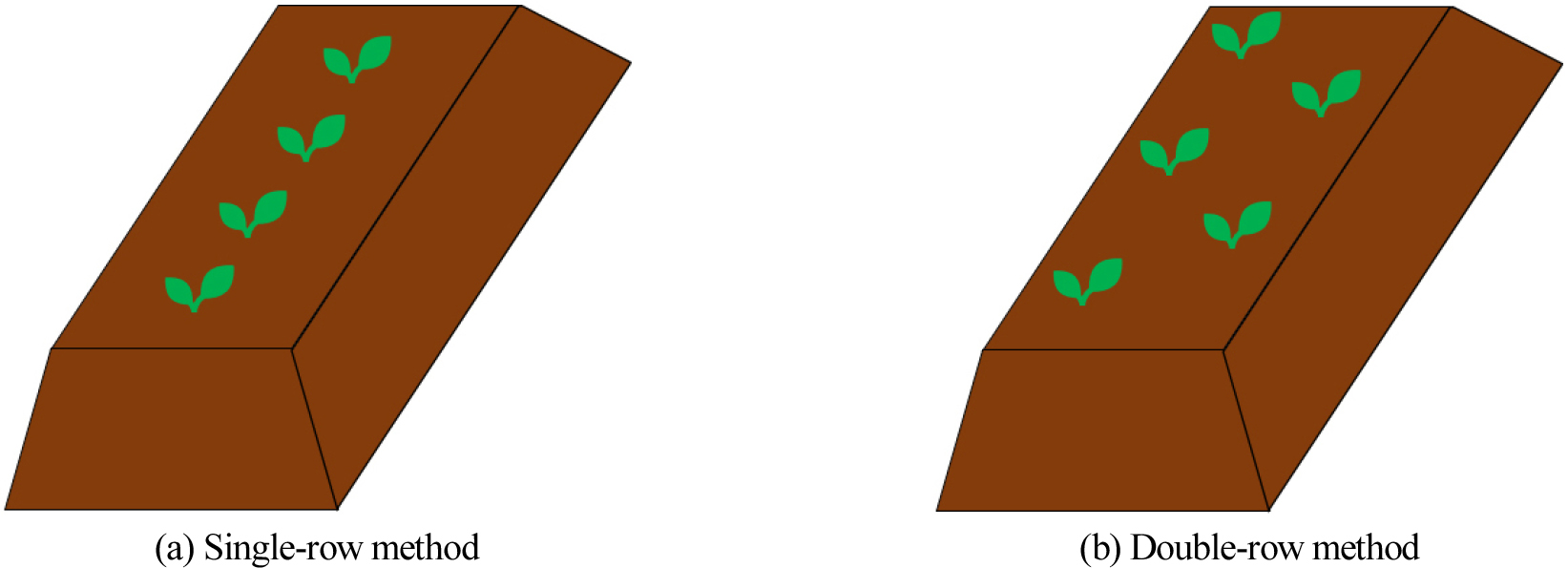
The cultivation patterns of spring and summer potatoes investigated in the six selected fields are shown in Table 3 and Fig. 7. Spring potatoes were planted in a single-row system in Field 1, with one row of potatoes planted in a single ridge, and in Field 2 and Field 3, two rows of potatoes were planted in a single ridge. Summer potatoes were cultivated in a single-row system in all three fields because of the high altitude areas of Gangwon-do, which have high altitudes and slopes, which makes it challenging to utilize agricultural land efficiently. The ridge width, furrow width, planting distance, and spacing in the row for spring potato single- and double-row cultivation patterns were 500 mm, 300 mm, 210 mm, 800 mm, and 800 mm, 500 mm, 300 mm, and 320 mm, respectively, and for summer potatoes, these were 500 mm, 300 mm, 210 mm, and 800 mm, respectively.
Table 3.
Cultivation patterns of spring and summer potatoes in survey field
Results of Survey on Harvesting Operations for Spring and Summer Potatoes
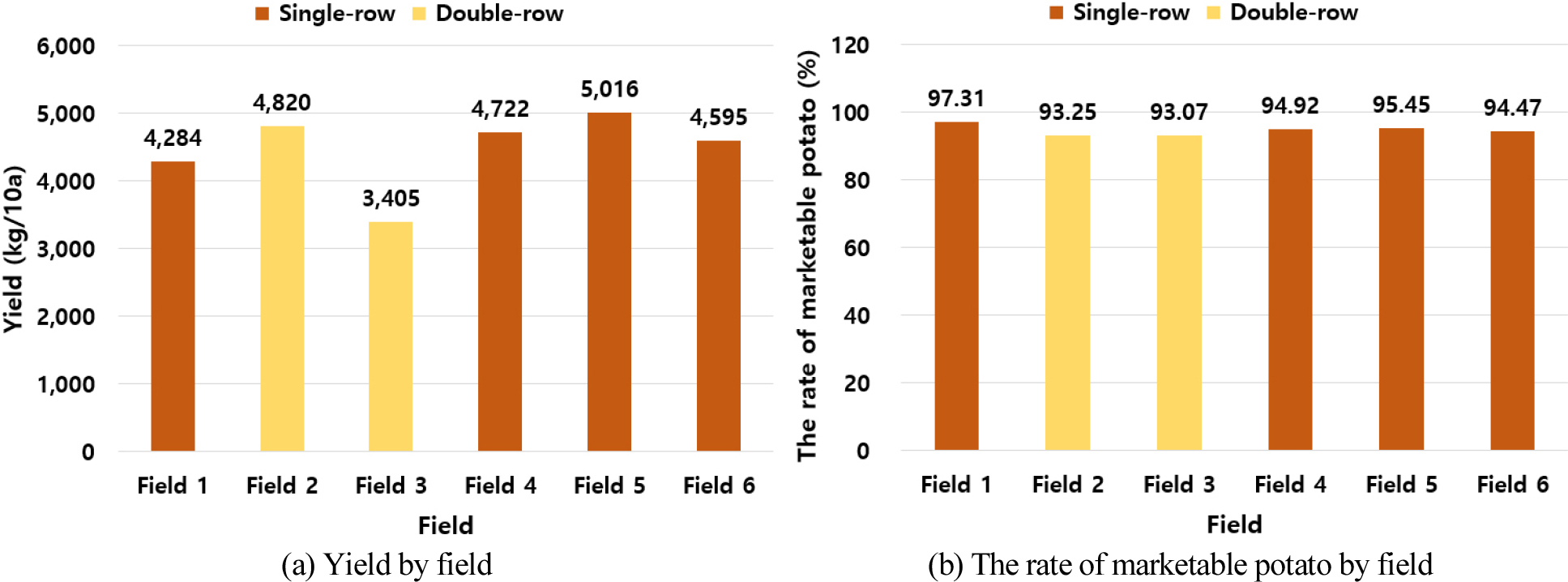
Field-specific yields of spring and summer potatoes and the rate of marketable potatoes surveyed in each field are shown in Fig. 8. Spring potato yields were 4,284 kg/10a in Field 1 with a single row cultivation pattern, and 4,820 kg/10a and 3,405 kg/10a in Field 2 and Field 3 with double row cultivation patterns, respectively. Yields in Fields 4-6, where summer potatoes were cultivated, ranged from 4,595 to 5,016 kg/10a. Yields were not significantly different across fields except for Field 3, and the rate of marketable potatoes was greater than 93% in all fields. In Field 3, the potatoes were cultivated in the same cultivation pattern as in Field 2, but yields were significantly lower compared to those of the other fields, suggesting that environmental factors such as temperature and precipitation, in addition to cultivation patterns, may have affected yields.
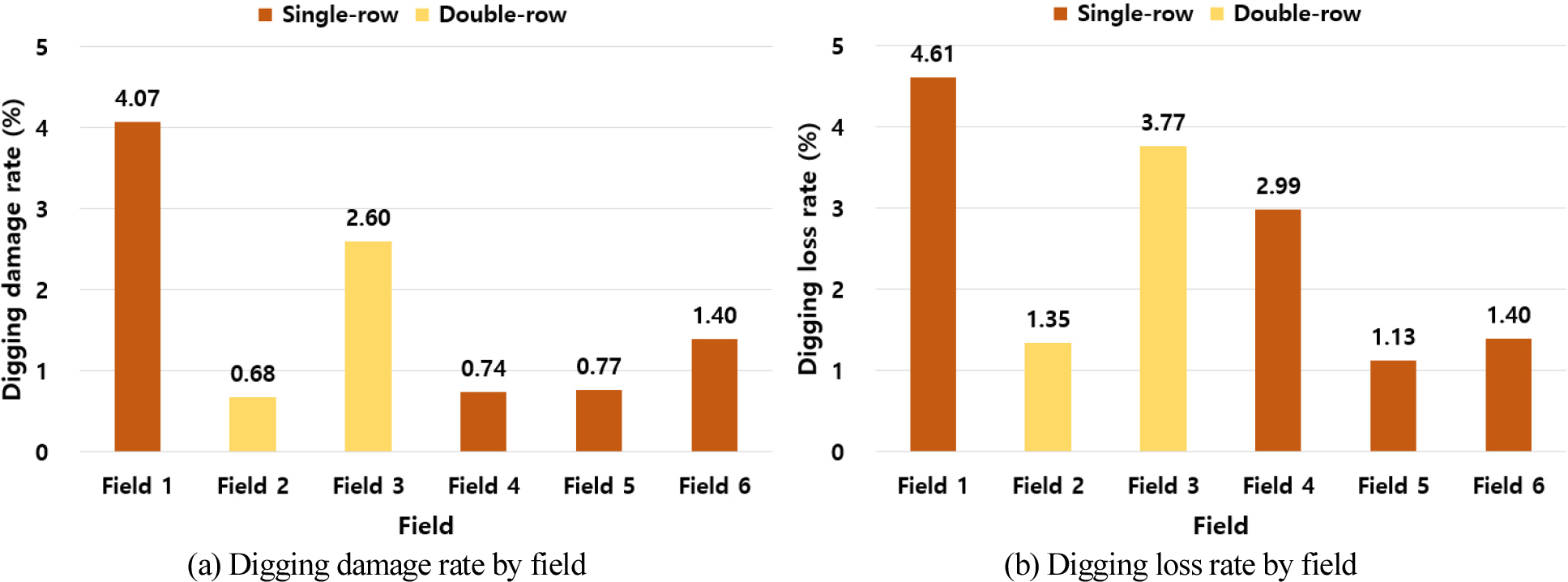
The digging damage rate and digging loss rate per field for spring and summer potatoes are shown in Fig. 9. The digging damage rate and digging loss rate for spring potatoes were highest in Field 1 with a single row cultivation pattern at 4.07% and 4.61%, respectively, followed by Field 2 and Field 3 with double row cultivation patterns at 0.68% and 1.35%, and 2.6% and 3.77%, respectively. For summer potatoes in Fields 4-6, the digging damage rates were 0.74%, 0.77%, and 1.4%, respectively, and the digging loss rates were 2.99%, 1.13%, and 1.4%, respectively. The rates are strongly influenced by the harvester type and differences in soil conditions (Yang et al., 2023; Zhang et al., 2024). Therefore, a large difference in digging damage rate and digging loss rate despite using the same harvester for digging operations between Field 2 and Field 3 is likely due to the influence of soil conditions.
The work efficiency of each work stage in each field is shown in Table 4. The vinyl removal work efficiency was 2.51 hr/10a, 3.46 hr/10a, 3.45 hr/10a, and 3.5 hr/10a for Field 2, Field 3, Field 5, and Field 6, respectively. Since vinyl removal is primarily labor-dependent, and the process of collecting and disposing of the removed vinyl requires additional time and expense, vinyl removal processes need to be simplified through the development and introduction of biodegradable vinyl.
Table 4.
Work efficiency in each field
The manual digging efficiency in Fields 1-6 was 28.38 hr/10a, 32.53 hr/10a, 26.47 hr/10a, 33.84 hr/10a, 46.82 hr/10a, and 36.57 hr/10a, respectively, which was the lowest compared to work types. The digging efficiency with machinery was 0.64 hr/10a, 0.4 hr/10a, 0.53 hr/10a, 0.61 hr/10a, 0.38 hr/10a, and 0.43 hr/10a for Fields 1-6, respectively, significantly higher than the manual digging efficiency. The pickup-to-collection efficiency was found to be 7.27 hr/10a, 8.19 hr/10a, 7.31 hr/10a, 11.34 hr/10a, 14.42 hr/10a, and 13.49 hr/10a for Fields 1-6, respectively. In the Republic of Korea, due to the stony soil characteristics, potatoes are easily damaged when pickup-to-collection operations are performed using digging and collecting harvesters (Kim et al., 2024a). Consequently, most farmers use digging-type harvesters and rely on human labor to pick up and collect products. Therefore, improving the efficiency of potato harvesting operations by developing and introducing a digging and collecting harvester that can simultaneously pick up and collect potatoes while minimizing damage to potatoes is necessary. The differences in operation time between fields are likely due to various factors, including soil conditions, slope, and worker skill.
Conclusion
In this study, we investigated the current status of cultivation patterns and harvesting operations for spring and summer potatoes to standardize the use of potato cultivation and harvesting machinery in the Republic of Korea. As for the main production areas for spring and summer potatoes for the survey, we selected six sites with the highest production, considering three sites per production type: three sites in Andong-si, Gyeongsangbuk-do, one site in Jeongseon-gun, Gangwon-do, and two sites in Pyeongchang-gun, Gangwon-do. For the cultivation pattern survey, we measured ridge width, furrow width, planting distance, and spacing in the row for cultivation patterns, and for assessing harvesting operation status, we investigated yield, rate of marketable potatoes, digging damage rate, digging loss rate, and work efficiency. The cultivation pattern survey showed that single-row cultivation was employed in Field 1, double-row cultivation in Fields 2 and 3 for spring potatoes, and single-row cultivation in Fields 4-6 for summer potatoes. Ridge width, furrow width, planting distance, and spacing in the row for cultivation patterns were 500 mm, 300 mm, 210 mm, 800 mm, and 800 mm in single-row and double-row cultivations for spring potatoes, respectively, and 500 mm, 300 mm, and 320 mm in single-row cultivations for summer potatoes, respectively. The harvest survey showed that yields were higher for summer potatoes compared to spring potatoes, with yields of 4,284 kg/10a, 4,820 kg/10a, 3,405 kg/10a, 4,722 kg/10a, 5,016 kg/10a, and 4,595 kg/10a in Fields 1-6, respectively. The rate of marketable potatoes was higher than 93% in all fields, with Field 1 having the highest rate at 97.31%. However, the digging damage rate and digging loss rate were also the highest in Field 1 at 4.07% and 4.61%, respectively. The lowest work efficiency was with human digging operations, and the highest was with machine digging operations. Relatively low work efficiency was observed in the pick-up and collection operation, requiring the development and introduction of a digging and collection type harvester. The data collected in this study can be used as the basis for further research to standardize potato cultivation patterns and harvester usage in the Republic of Korea. In future studies, it is necessary to investigate the cultivation pattern and harvesting operations across different regions. When surveying harvest operations, it is important to consider the cultivation patterns, along with temperature, precipitation, and soil conditions.