


Introduction
Materials and Methods
Design of Integrated Control System
Design of Data Communications Infrastructure in Rural Environments
Operational Framework for Data-Driven Open-Field Smart Agriculture
Results
Implementation of an Integrated Control System for Open-Field Smart Agriculture
Implementation of a Digital Management Framework for Open-Field Smart Agriculture
Scheduling Jobs and Growth Schedules
Monitoring and Control of Autonomous Farm Equipment
Monitoring and Control of Digital Water Management Technologies
Pest Monitoring and Control Systems
Discussion
Conclusion
Introduction
Agriculture in the 21st century faces enduring structural challenges that undermine the very foundation of agricultural production, including climate change, aging rural populations, labor shortages, resource depletion, and urbanization. These issues are not temporary; they are interconnected across the labor, land, and resource use structures of agriculture, and their combined effects fundamentally threaten agricultural sustainability. The food crop sector, in particular, faces a dual threat to productivity and supply stability due to an aging production base, declining arable land, and an unstable labor supply (Mba et al., 2012; Pretty et al., 2010). This situation is especially acute in countries such as South Korea, where food self-sufficiency is low and import dependence is high, necessitating a national technology strategy to enhance sustainability and resilience in agriculture (Kim et al., 2025).
Land-based food crop cultivation plays a crucial role in both domestic and international agricultural production. However, its potential is constrained by challenges in adopting the latest technologies. In open-field agriculture, productivity and quality are heavily influenced by external factors, including weather conditions, pest outbreaks, soil moisture fluctuations, and growth variations. These structural limitations make the implementation of digital technologies and real-time control more challenging compared to closed cultivation facilities such as greenhouses (Marios and Georgiou, 2017; Niu and Masabni, 2018). Despite this, the development of technologies tailored to open-field environments and the integration of these technologies are still in their early stages.
Innovations such as the Internet of Things (IoT), drones, and cloud-based data processing technologies are significantly expanding the possibilities for the digital transformation of open-field agriculture. Precise data collection through sensors, real-time data transmission via long-distance communication, information integration and analysis using cloud infrastructure, and remote control-based automation technologies are emerging as key enablers for realizing precision agriculture in open-field environments (Boursianis et al., 2022; Stehr, 2015; Tsouros et al., 2019). However, these technologies are often applied in a fragmented and isolated manner, limiting their effectiveness in practical agricultural operations and their utility as decision support systems (Karunathilake et al., 2023; Ponnusamy and Natarajan, 2021).
Open-field food crops require integrated management across all growth stages, including sowing, fertilization, irrigation, pest control, growth monitoring, and harvesting. Therefore, it is essential to develop an integrated control system that interconnects various digital agriculture technologies and performs field-centric data collection, analysis, and control functions in a cohesive manner (López-Morales et al., 2020; Sekaran et al., 2020). This integrated control system collects and processes data from various digital equipment and sensors in real time, serving as a core platform that enables farm operators to intuitively monitor farming conditions and make automated decisions (Mondal and Rehena, 2018; Rehman et al., 2022; Sreekantha and Kavya, 2017). By integrating pest detection, automated pest control, watering optimization, and growth diagnosis on a single platform, it is possible to overcome the limitations of traditional agricultural methods and promote the widespread adoption of smart agriculture.
In response to this need, this study aims to design and implement an integrated control system optimized for open-field food crop cultivation. To achieve this, the study (1) established structural linkages between various open-field smart agriculture technologies, (2) designed a communication infrastructure for real-time data collection, transmission, and integration from various sensors and equipment, and (3) implemented an integrated dashboard and control system with a user-friendly interface. By proposing a comprehensive smart agriculture platform that emphasizes practical field applicability rather than merely applying technologies in parallel, this study aims to provide a foundation for future digital-based food security strategies and contribute to the advancement of smart agriculture.
Materials and Methods
To facilitate understanding of this chapter, an overview of the study is provided below. First, the study designed an integrated control system that incorporates various open-field smart agriculture technologies for food crops and enables field-centered operations. Additionally, it described the communication methods for real-time data transmission and centralized storage and management, as well as the data collection techniques used in the open-field environment of smart agricultural technologies.
Design of Integrated Control System
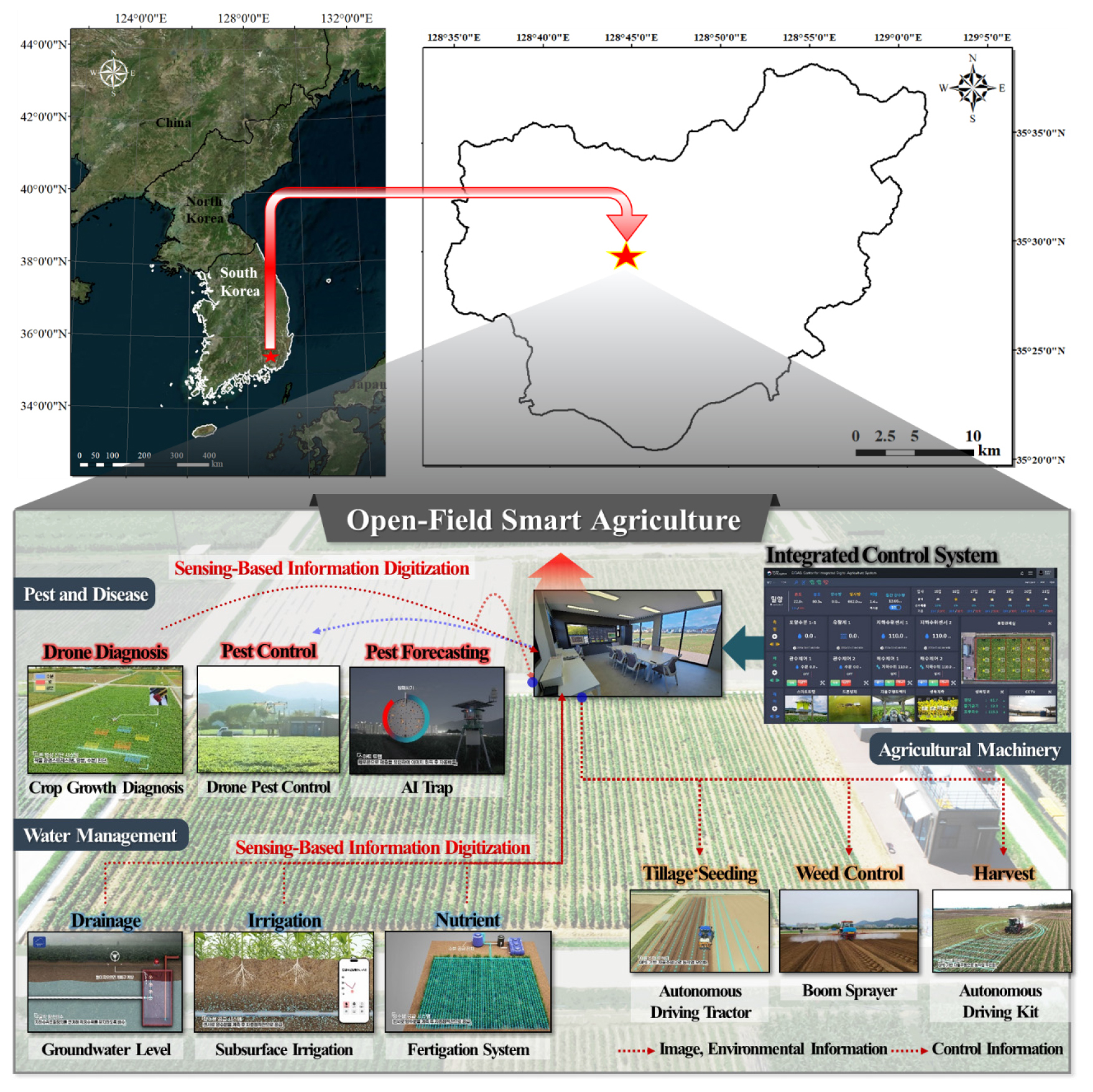
This study designed an integrated smart agriculture system optimized for open-field food crop cultivation at the Field Crop Development Division of the National Institute of Crop and Food Science in Miryang, Gyeongsangnam-do. The overall system structure is illustrated in Fig. 1. The proposed integrated control system is configured to collect and analyze real-time data from individual technologies in a cloud-based environment, enabling automated decision-making and control based on this data. The system comprises sensors, mechanical equipment control, pest management, water management, IoT gateways, communication infrastructure, an integrated control system, and cloud servers.
Design of Data Communications Infrastructure in Rural Environments
Conventional single communication systems struggle to meet the diverse conditions of open-field environments due to limitations such as limited range, high cost, and low bandwidth. Therefore, the integrated control system proposed in this study is organized around a multi-layer communication system to collect data generated from various technologies in real time and transmit it to the cloud. This multi-tiered structure enhances the strengths of each communication method and provides scalability, allowing for the flexible integration of various sensors and equipment. The system employs a combination of Ethernet, Wi-Fi, LTE, and LoRa communication methods, as shown in Table 1, and gathers data from sensors installed within each plot through an IoT gateway. The gateway transmits data over wired and wireless networks to the Integrated Control System and the Rural Development Administration (RDA) cloud. In the integrated control system server, the received data is refined and stored at minute intervals, while the communication status—such as connection status and data reception cycle—is monitored in real time to ensure system-wide communication quality and stability.
Table 1.
Types and characteristics of data communication technologies applied to integrated control system
Operational Framework for Data-Driven Open-Field Smart Agriculture
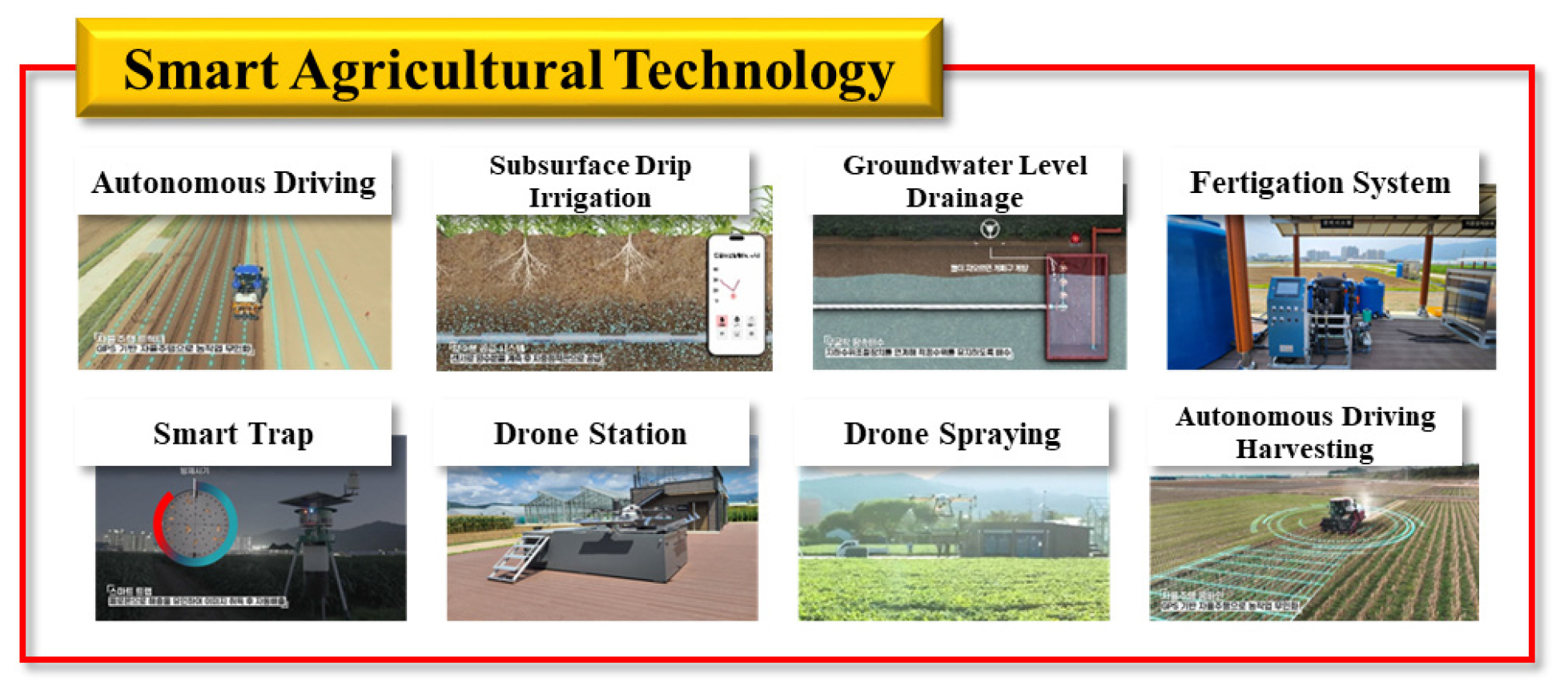
The open-field smart agriculture integrated control system has established a complex sensor network-based data collection system to gather and link various environmental information directly related to agricultural production, including climate, soil, moisture, pests, machinery, and water resources, in real time. The system comprises eight technologies, as detailed in Table 2: climate monitoring, soil and moisture sensor modules, water management devices, autonomous agricultural machinery, pest monitoring, drone equipment, communication infrastructure, and integrated control systems.
Table 2.
Descriptions of core technologies and functional components in integrated control system
For climate monitoring, weather stations installed in each plot collect real-time environmental data, including wind speed, precipitation, temperature, and humidity, as well as weather forecast data through the Korea Meteorological Administration API. The soil and moisture sensor module comprises a soil moisture sensor buried in the ground, an electrical conductivity sensor, a nutrient sensor, and a groundwater level sensor. Soil moisture sensors provide continuous moisture measurements to determine irrigation needs, while electrical conductivity sensors periodically measure the salt concentration in the soil. Nutrient sensors assist in fertilization decisions by providing real-time data on nitrogen (N), phosphorus (P), potassium (K), and more, while groundwater level sensors are connected to the drainage system and track water level fluctuations.
Water management devices include irrigation, drainage, and fertigation systems. Irrigation devices are automatically activated and deactivated based on soil moisture sensor data, with the ability for remote control and monitoring of flow. The drainage system consists of a pump-based mechanism that activates automatically in response to data from the groundwater level sensor to prevent flooding. Fertigation devices connect fertilizer tanks to irrigation pipes, regulating nutrient ratios and operating in conjunction with a real-time control system.
Autonomous agricultural machinery includes autonomous tractors and harvesters that utilize RTK-GNSS for path tracking, obstacle detection and avoidance, and real-time recording of operational status. These machines are designed to facilitate efficient and safe farming operations through remote control and management.
Pest control devices feature AI traps that use pheromones to attract pests, employing video recording and deep learning-based analytics to automatically categorize and count pest species and their densities. Unmanned aerial equipment is centered around a drone station, which includes an automated takeoff and landing platform as well as a charging dock. Drones are utilized for functions such as aerial image collection for pest surveillance and control, along with real-time remote flight control.
All data collected from these technologies is transmitted to RDA’s cloud via telecommunications infrastructure. The integrated control system, located in the control room, provides an intuitive interface for users by aggregating and visualizing the collected data in real time.
Results
Implementation of an Integrated Control System for Open-Field Smart Agriculture
This study implemented an integrated smart farm system for land-based food crop cultivation, featuring a control system that monitors data collected from various technological elements in real time. Fig. 2 presents the dashboard interface of the integrated control system, which consolidates weather information, soil sensor data, moisture and nutrient levels, drainage control systems, pest management equipment, drone operation status, growth analysis results, and real-time CCTV footage into a single platform. The sensors measuring soil moisture, electrical conductivity, groundwater levels, and soil temperature are positioned in the plot, as illustrated in Fig. 2(f). Each sensor within the integrated control system is visualized, enabling automatic control of irrigation and drainage valves based on this data. Additionally, the operational status of smart traps and drone stations for pest monitoring is provided in real time, supported by video and data feeds.
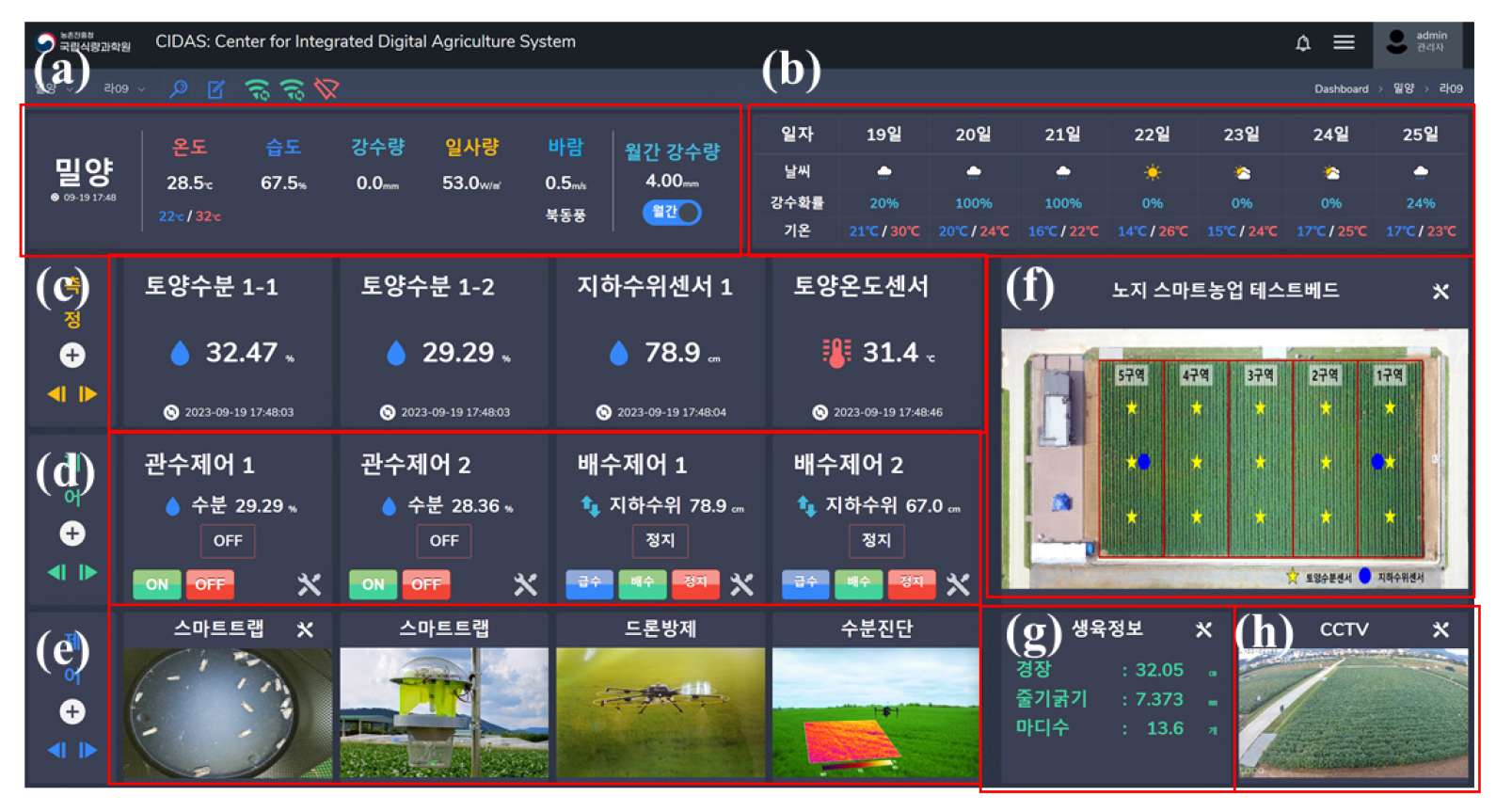
Fig. 2.
Visualization interface of integrated control system: (a) Weather information; (b) Weather forecast data from Korea Meteorological Administration (KMA); (c) Real-time sensor information; (d) Real-time control equipment; (e) Diagnostic dashboard; (f) Main image; (g) Growth information; (h) Real-time CCTV camera.
Implementation of a Digital Management Framework for Open-Field Smart Agriculture
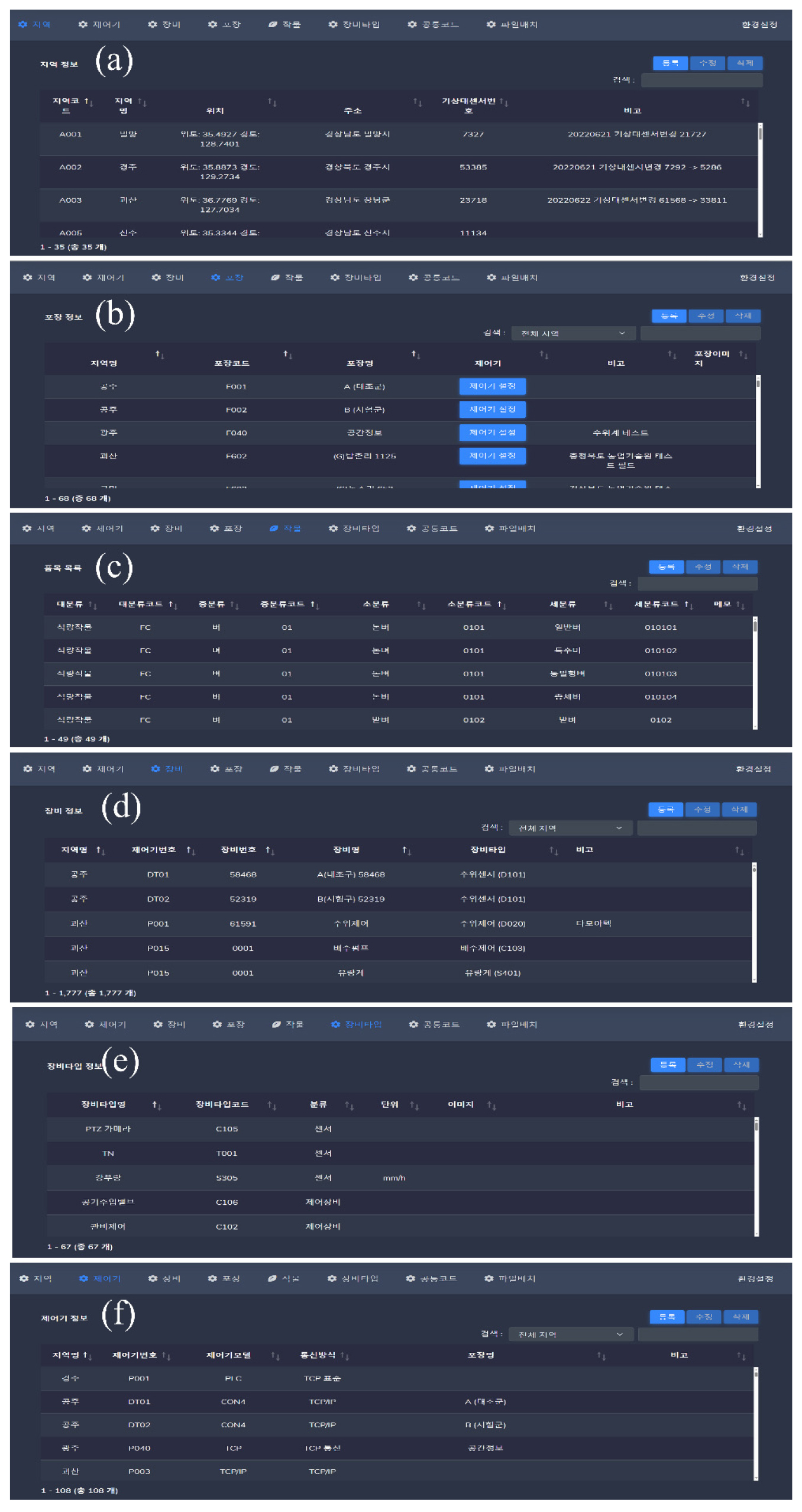
To ensure the efficient operation of open-field smart agriculture, a digital information management system is essential. This system must be capable of collecting and managing various field information in a standardized format while linking equipment control, growth analysis, and decision-making processes. Fig. 3 displays the digital management interface visualizing the main information items within the integrated control system developed in this study. Fig. 3(a) outlines the basic information for the administrative region and destination, including details such as area name, address, unique identifier, and registration date. This information serves as the top-level unit of identification for referencing plot and crop details throughout the entire system.
Fig. 3(b) displays a screen that manages information for individual plots within each destination. It is organized to facilitate identification and linkage through details such as plot name, area, parcel number, unique code, and manager. Fig. 3(c) illustrates items for managing crop information, including crop classification, cultivated varieties, sowing and harvest dates, and cultivated area. This information is connected to growing schedules, pest responses, yield forecasting, and more, enabling precision agriculture functions. Fig. 3(d) presents a screen that monitors the operational status of agricultural equipment, such as tractors, drones, irrigation devices, and AI traps. It includes information such as equipment ID, communication module number, installation location, and management type. Fig. 3(e) standardizes equipment type information, categorizing it by equipment model name, control protocol, sensor interworking, etc., and serves as a reference for equipment registration and control module mapping. Fig. 3(f) manages controller information, specifying the ID, port settings, protocols, and communication methods of various controllers that interface with the equipment. It provides essential data for inter-system compatibility and network settings. This information is integrated with the centralized control system in real-time and is organically linked within the overall database structure. As a result, users can move beyond simple queries to automate tasks, maintain equipment, monitor growth, and more using digital information. Moreover, the structuring and digitization of field information can significantly enhance operational efficiency and data scalability when managing multiple plots and equipment simultaneously.
Scheduling Jobs and Growth Schedules
One of the key features of an integrated control system is providing a unified user interface for managing task scheduling and growth monitoring. Fig. 4 presents a step-by-step visualization of the main components and behavioral flows of the UI implemented in this system. In Fig. 4(a), users can intuitively check the registered tasks and growth monitoring history for a specific date. Fig. 4(b) details the history of tasks performed on that date, while Fig. 4(c) displays the growth survey schedule with icons for easy visual recognition. Fig. 4(d) summarizes the overall activity history for the period, and Fig. 4(e) lists monthly journal files to help track historical records. Journal entries can be made through the screen in Fig. 4(f), where users can enter the date of the operation, the operator’s name, the type of farming operation, and save the information. The growth monitoring information in Fig. 4(g) allows for searching based on the observation plot or individual plant identifier, with the collected data automatically stored on the cloud server. These user interfaces enable users to intuitively manage, record, and enter schedules, while providing a unified visualization of various job data to help organize field operations and facilitate data-driven decision-making.
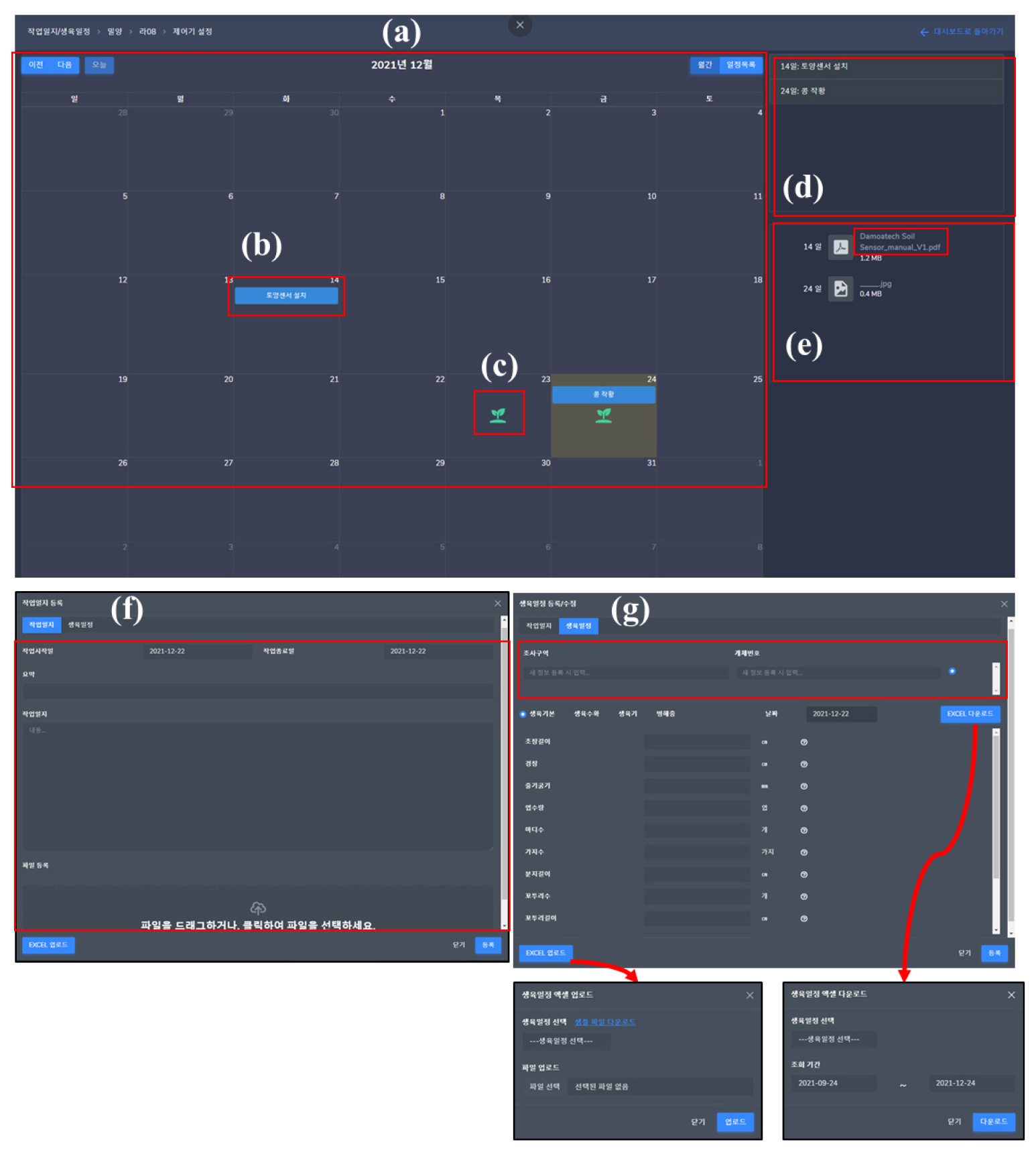
Fig. 4.
Calendar-based user interface of integrated control system for managing work schedules and growth monitoring: (a) Monthly calendar view; (b) Function for retrieving detailed information on selected work records; (c) Indicator for growth schedule registration and access to associated information; (d) Panel displaying summary of scheduled activities for current month; (e) List of work journal files related to current month; (f) Interface for creating new work journal entries; (g) Retrieval of growth schedule data based on observation plot and individual plant identifiers.
Monitoring and Control of Autonomous Farm Equipment
Fig. 5 shows a digital interface for collecting and controlling the operating status of tractors and combines in real time, including remote monitoring and control of autonomous agricultural machinery.
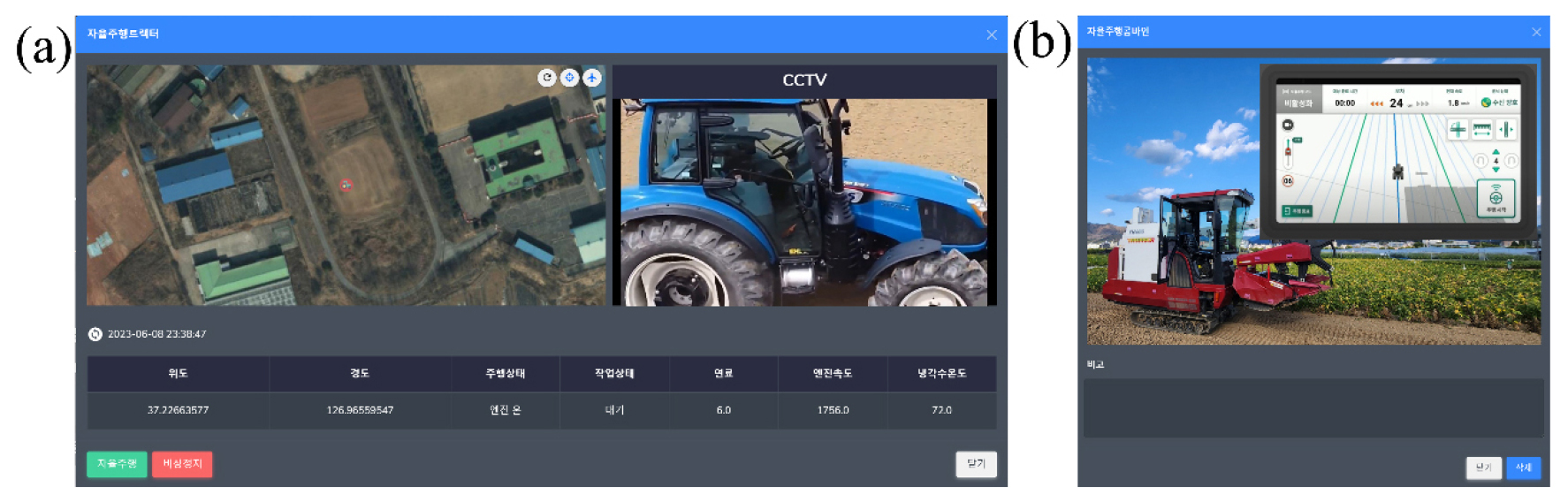
The self-driving tractor’s work status monitoring and remote control features integrate GPS-based location information, driving routes, and video data from the work area. Within the integrated control system, users can check the machine’s speed, direction of travel, working mode, and status, as well as the status of any attached tools, and send control commands when necessary. For autonomous combines, this system exemplifies a Global Navigation Satellite System (GNSS)-based straight-line driving interface, providing a visual representation of the harvest path, machine position, working width, and real-time harvested area. Currently, the user interface has been developed alongside the autonomous combine kit, but future enhancements are planned to enhance it with additional integration and configuration details. The autonomous farm machinery control system connects the operational data of farm machinery with the integrated control system, enabling data-driven optimization of operations such as work history management, maintenance cycle prediction, and fuel efficiency. This approach transcends simple automation and can be a key factor in making farm work planning and equipment management more intelligent.
Monitoring and Control of Digital Water Management Technologies
This study designed and implemented a digital interface that integrates the control condition settings and scheduling functions of irrigation, drainage, and fertigation systems, as illustrated in Fig. 6. Fig. 6(a) depicts the control condition setting and schedule registration of the irrigation system, which allows users to set irrigation conditions based on soil moisture, soil tension, and evapotranspiration, and to control the system automatically through a mode-switching function between automatic and manual. It also facilitates scheduling, enabling users to set start and end times for watering, thus automating the watering tasks. Fig. 6(b) presents an interface for setting control conditions and registering schedules for the drainage system, which determines whether to drain based on the groundwater level in the plot and sets the working time accordingly. Fig. 6(c) illustrates the fertigation system settings, allowing users to specify the fertilization cycle, types of nutrients (N, P, K), and input amounts for each zone, along with a schedule-based registration function for fertilization. These precision water management systems operate in conjunction with IoT-based environmental sensors and controllers to enable real-time monitoring and control, providing automation, precision, and flexibility within an integrated control system.
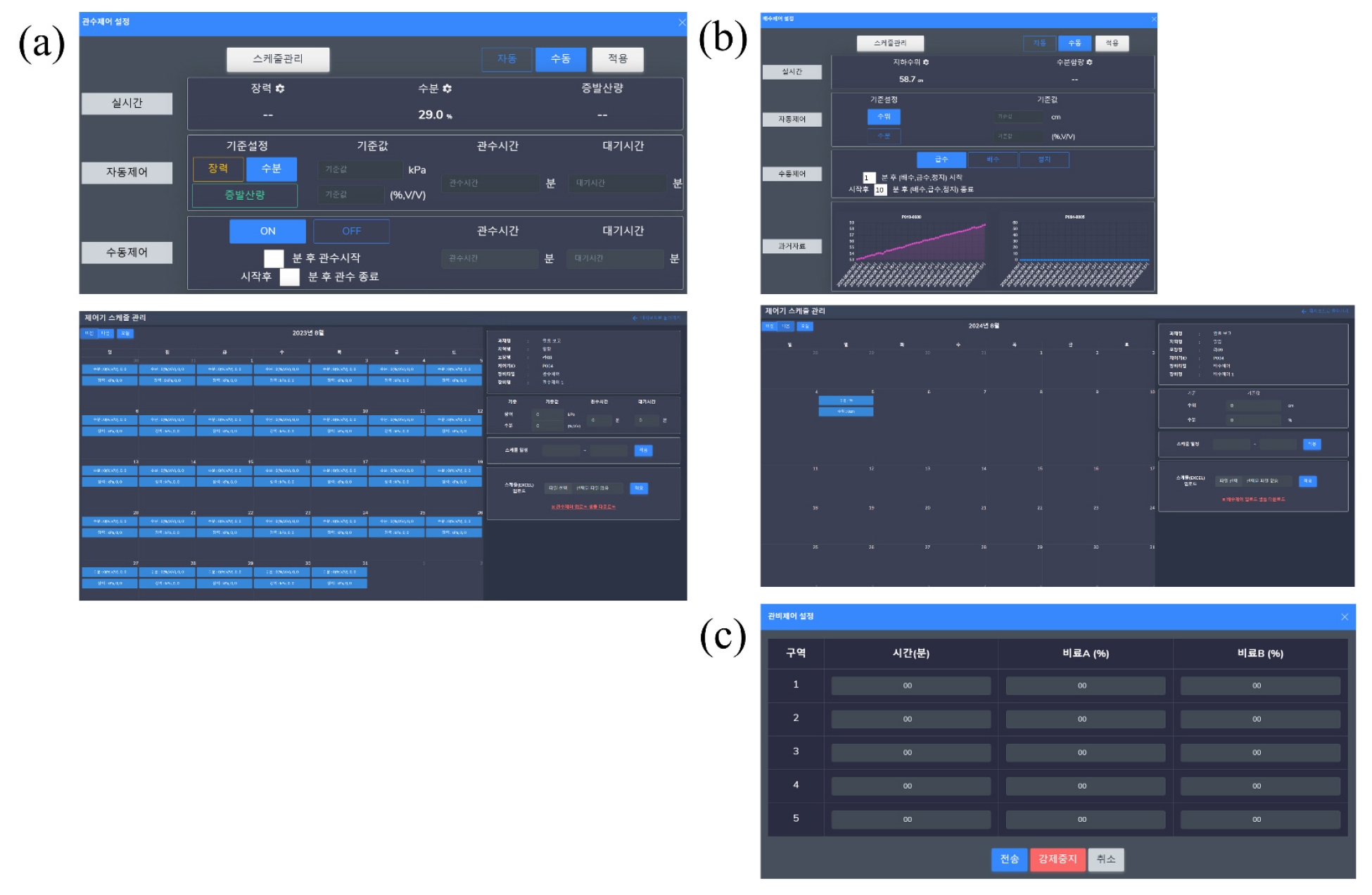
Fig. 6.
Digital interfaces for configuring and scheduling water management systems in smart agriculture: (a) Control condition settings and weekly scheduling for irrigation system; (b) Control condition settings and weekly scheduling for drainage system; (c) Operation setup and calendar-based scheduling for fertigation systems.
Pest Monitoring and Control Systems
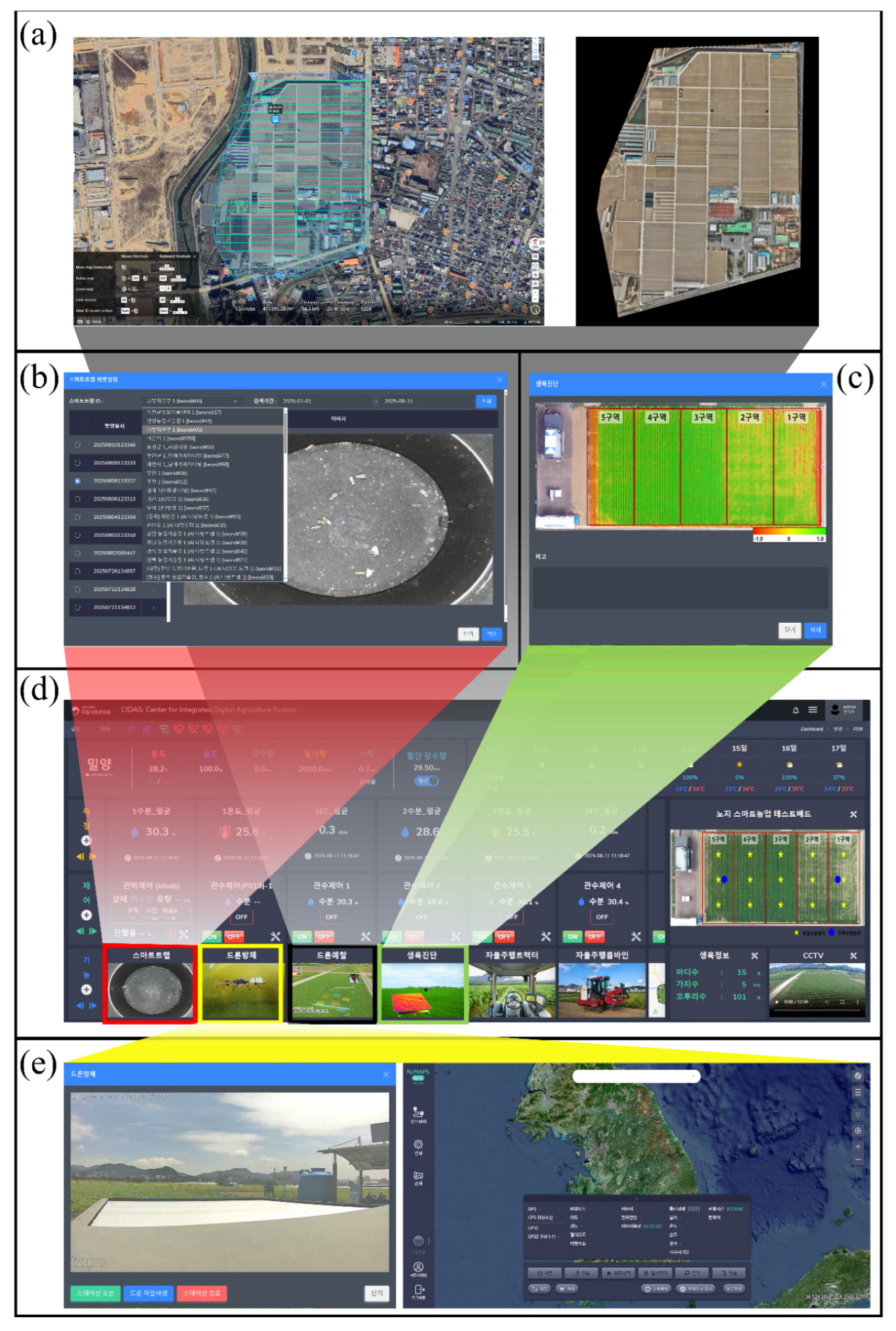
Fig. 7 illustrates the digital pest prevention and control system, which integrates AI trap analysis and control systems for the early detection and management of pest outbreaks.
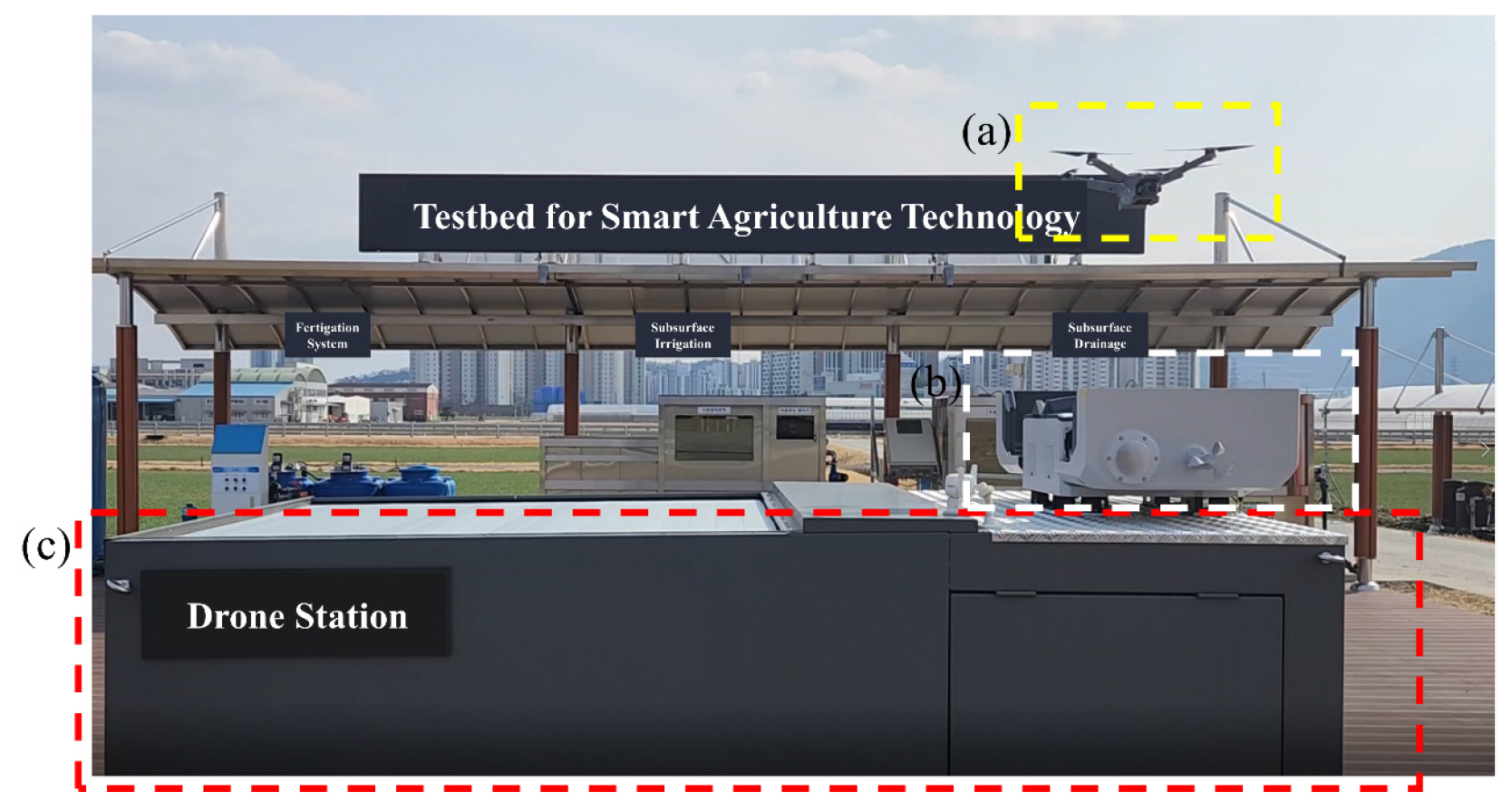
Figs. 7(a) and (c) depict drone-based pest prevention and crop growth diagnosis, respectively. As shown in Figs. 8(a) and (b), a DJI Matrice 3D drone equipped with a high-resolution RGB sensor is paired with a DJI Dock2 for automated takeoff, landing, and battery charging. The monitoring drone stations in this study are capable of periodic data collection through automated flights following predetermined flight paths and schedules. Fig. 7(c) presents drone data that can detect color and texture changes in the crop canopy, identify disease patterns, and provide a visual representation of the spatial distribution and progression of pest damage, which helps determine the scope and priority of control measures. Fig. 7(b) features an AI trap that uses pheromones to attract and capture pests, capturing images of the specimens with a high-resolution camera. It then employs deep learning-based object detection algorithms to automatically identify the species and count of pests. These automated systems greatly reduce the time and manpower required for field personnel to manually analyze samples. Fig. 7(e) illustrates drone control, which integrates landing control and automation technology. Fig. 8(c) shows the pest control drone station, which is equipped with lifting mechanisms, centering, propeller alignment, and wireless charging capabilities, facilitating automatic takeoff, landing, and remote control. Furthermore, the integrated analysis of AI trap and drone data predicts the likelihood of pest outbreaks and optimizes control timing through precise routing.
By combining sensor-based data collection with AI analytics, the system facilitates a shift from traditional pest control to preventive pest management, minimizing damage and reducing pesticide use.
Discussion
The open-field food crop integrated control system implemented in this study is illustrated in Fig. 9. It is designed to operate weather, soil, moisture, pests, machinery, water, and other agricultural elements in an integrated manner on a single platform, in real-time. This integration enables data-driven precision agriculture by linking digital technologies that were previously applied separately in open-field settings. The stability of the communication infrastructure, which centers on sensor networks, IoT gateways, and cloud servers, was verified. Additionally, the automation levels of machines, water resources, and pest management functions were tested in actual plots to demonstrate field applicability.
First, automated irrigation, drainage, and fertigation controls, linked to climate and soil environment monitoring, not only improved work efficiency but also maximized resource utilization by ensuring precision in soil moisture and nutrient management. These automation-based water management systems are considered a valid strategy for responding to weather uncertainties, such as droughts and torrential rains caused by climate change. Second, AI-powered pest detection and drone control technologies have enabled proactive responses at the earliest stages of pest outbreaks, optimizing the scope and timing of control while minimizing human input. This shift from a traditional reactive approach to a preventive one in pest management can reduce pesticide use and lessen the environmental burden. Third, controlling agricultural machinery, such as autonomous tractors and combines, has enhanced work efficiency through remote control based on real-time location information and work status. This approach is particularly effective for maintaining the continuity and quality of farming operations on large plots or in labor-scarce areas. Fourth, the system in this study is unique because it functions as an integrated control platform that visualizes and manages all data and control functions on a unified dashboard, rather than relying on a parallel set of single-function devices. This structure supports intuitive decision-making for operators and provides scalability to manage multiple plots and equipment simultaneously.
However, the commercialization of this system requires long-term verification of its application to various crops and growing environments, economic analysis, and further research on data standardization and security enhancement. Additionally, advancing AI prediction models using large-scale datasets accumulated in the past remains a key challenge in building a smart agricultural decision support system. In the future, innovation in open-field smart agriculture will continue to be promoted through wireless environmental sensors, digital image-based growth measurement, AI-driven precision water management, drone control, and integrated control systems linked with unmanned autonomous farming machines at the fourth level.
Conclusion
This study designed and built a smart agriculture integrated control system suitable for open-field food crop cultivation and applied it to actual plots to demonstrate an operating model capable of real-time linkage and precise control between elemental technologies. The proposed system includes automated control based on weather and growth data, early pest warnings, automation of drone control, and integrated monitoring through a dashboard, demonstrating high efficiency compared to traditional manual farming. In particular, by functioning as an integrated platform rather than as individual technologies, the proposed system is expected to play a key role in future digital-based food security strategies and the promotion of smart agriculture at the local level.