


Introduction
Materials and Methods
Sweet-potato test fields and varieties
Soil characterization of sweet-potato test fields
Investigation of soil physical properties and cultivation environment
Agricultural power sources
Double-conveyor-type sweet-potato harvester
Experimental methods and measurement parameters
Results and Discussion
Digging ratios of sweet-potato harvesters according to soil texture
Damage ratios by sweet-potato harvesters depending on soil texture
Theoretical field capacity of sweet potatoes at harvest, according to soil texture
Conclusion
Introduction
The sweet potato (Ipomoea batatas (L) Lam) is one of the world’s seven major food crops and is a health food containing functional components such as beta-carotene, dietary fiber, and anthocyanins (Kwak et al., 2017; Won et al., 2024). As of 2024, China had the highest sweet-potato production globally, at 51,354,000 tons, followed by African countries such as Malawi (7,890,000 tons), Nigeria (4,091,000 tons), and Tanzania (2,227,000 tons) (OWID and FAO, 2025).
According to data from Statistics Korea for 2024, the area under sweet-potato cultivation in South Korea was approximately 5,374 ha in Jeollanam-do Province, 3,292 ha in Jeollabuk-do Province, and 2,279 ha in Gyeonggi-do Province, accounting for approximately 62% of the country’s total sweet-potato cultivation area (KOSIS, 2025b). Furthermore, South Korea’s total sweet-potato production in 2024 was recorded at 305,343 tons, of which 121,710 tons came from Jeollanam-do Province, 53,385 tons from Jeollabuk-do Province, and 33,952 tons from Gyeonggi-do Province, indicating that Jeollanam-do Province, Jeollabuk-do Province, and Gyeonggi-do Province together account for approximately 68.5% of the country’s sweet-potato production (KOSIS, 2025b). In South Korea, sweet potatoes are consumed in various forms, including fresh, steamed, roasted, dried, and as pet treats.
South Korea is facing a crisis in its agricultural sector, due to the ongoing ageing of the farming population and the decline in both the number of farmers and the area of arable land; to address this issue, the promotion of agricultural mechanization has been proposed as a solution. In 2023, the mechanization rate for paddy-field farming was recorded at 99.7%, a figure close to 100%; however, for dryland farming, the rate stood at 67%, which is significantly lower than that for paddy-field farming (RDA, 2024). In particular, the mechanization rates for sowing/transplanting and harvesting within dryland farming stood at 18.2% and 42.9%, respectively, highlighting the urgency for promoting the mechanization of these operations (KOSIS, 2025a). Sweet potatoes are representative field crops grown in South Korea, and difficulties related to their cultivation are arising owing to the low level of mechanization in field farming.
As sweet potatoes have remarkably thin skin, damage to the skin can occur during harvesting, due to friction and impact with the soil and machinery. Skin damage caused by friction and impact can lead to rot through the penetration of pathogens. Furthermore, shrinkage of the internal tissue resulting from moisture loss can lead to a reduction in dry weight, thereby diminishing the marketability of the sweet potatoes (Ray and Ravi, 2005; Shin et al., 2023; Tomlins et al., 2002; Wang et al., 2013; Won et al., 2024). Furthermore, as pathogens can spread to neighboring sweet potatoes, affecting them as well, minimizing skin damage is crucial during harvesting.
Consequently, in South Korea, sweet-potato harvesting is conducted using plow-type harvesters, which can minimize the direct impact on sweet-potato skin (Won et al., 2024). However, because of the mechanical design of plow-type harvesters, fitting a sweet-potato collection unit is difficult, resulting in the need for additional labor for collection; this, in turn, can lead to an increase in the unit price of the produce owing to labor costs. Furthermore, as plow-type harvesters break up the ridges to extract the sweet potatoes, some sweet potatoes may be left unharvested depending on the operator’s skill level and the size and shape of the plow blades. Because of these issues, some sweet-potato farms also utilize underground crop harvesters, which penetrate the area beneath the ridges to harvest the crop, in order to prevent sweet potatoes from remaining unharvested. These are categorized into types such as the vibration digging type and conveyor type, depending on their operating mechanism. In the case of vibration-digging-type root tuber crop harvesters, the digging blades penetrate beneath the ridges, and the crops are dug through soil removal via the vertical vibration of a shaker screen; however, the impact generated by the vertical vibration of the shaking mesh may damage or break the crop’s skin. If the shaker screen is too short, soil removal may not be conducted smoothly, with the risk of the crops becoming buried in the soil. As for conveyor-type root crop harvesters, the method of penetrating beneath the ridge using an excavation blade is the same as that of vibration-digging-type root tuber crop harvesters; however, the transport section is configured as a conveyor to perform soil shaking and transport the crops to the rear. Compared to the vibration digging type, the conveyor type has a longer conveying unit, which facilitates soil removal; however, friction between the conveyor and the crops may cause damage to the crop skin or breakage. As mentioned earlier, sweet potatoes are particularly prone to damage during harvesting owing to their thin skin; therefore, a dedicated sweet-potato harvester is required to minimize skin damage and maximize the digging ratio.
Soil texture, a physical property of soil, is determined by the relative proportions of sand, silt, and clay making up the soil. The compositions of these components influence the physical properties of soil, such as its structure, water-holding capacity, cohesion, and strength (FAO, 2006). This is a fundamental soil characteristic that significantly influences the operational performance of agricultural machinery. The cohesion, adhesion, and soil clod formation characteristics of soil vary depending on the soil texture, directly affecting both the working resistance of agricultural machinery and the process of separating crops from the soil.
Sweet potatoes are a representative root crop, forming tubers underground like potatoes and carrots. The mechanical harvesting of root crops involves processes such as digging, soil-crop separation, and transport; soil conditions are a major factor influencing the operational performance of harvesters during these stages (Ruysschaert et al., 2006). Furthermore, soil physical properties and soil clod formation affect crop separation performance and damage ratios (Li et al., 2024), and it has been reported that soil displacement and loss can occur during the mechanical harvesting of root crops, a phenomenon closely related to soil physical properties (Panagos et al., 2019).
Sweet potatoes are produced in soils of various textures, including sandy loam, loam, and silt loam. While the operational performance of sweet-potato harvesters can vary significantly depending on the soil conditions, research analyzing the performance characteristics of sweet-potato harvesters according to soil texture remains limited.
Therefore, in this study, harvesting operations were conducted at three sweet-potato cultivation fields with different soil textures, and the performance of sweet-potato harvesters was compared and analyzed by evaluating the sweet-potato digging ratio and damage ratio.
Materials and Methods
Sweet-potato test fields and varieties
In this study, a total of three test fields with different soil textures were selected to evaluate the harvesting performance of sweet-potato harvesters according to soil texture.
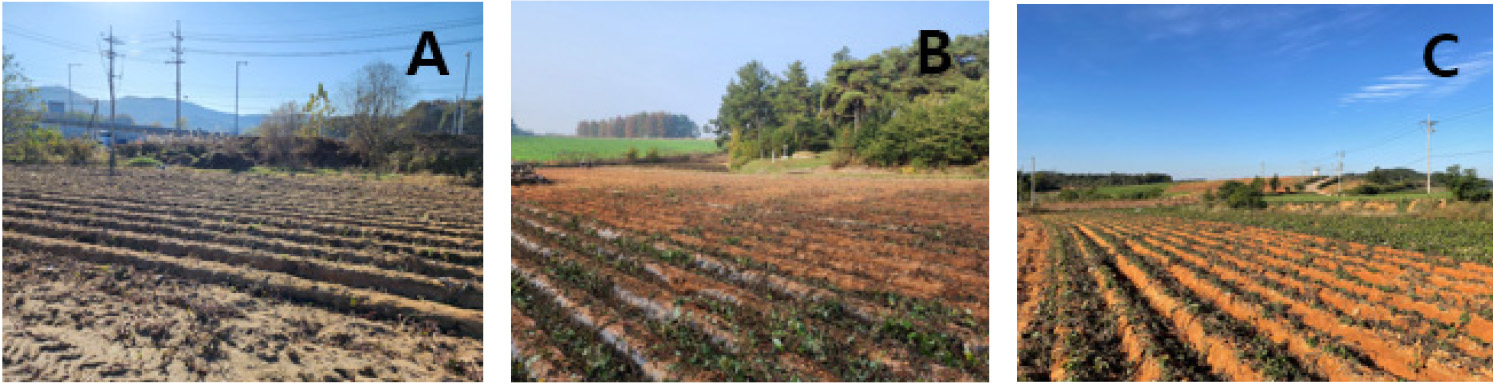
The selected test fields are located in Yeoju-si, Gyeonggi-do Province; Gimje-si, Jeonbuk Special Self-Governing Province; and Haenam-gun, Jeollanam-do Province, and their layouts are shown in Fig. 1. The sweet-potato variety cultivated at all three test fields was ‘Beniharuka.’
Soil characterization of sweet-potato test fields
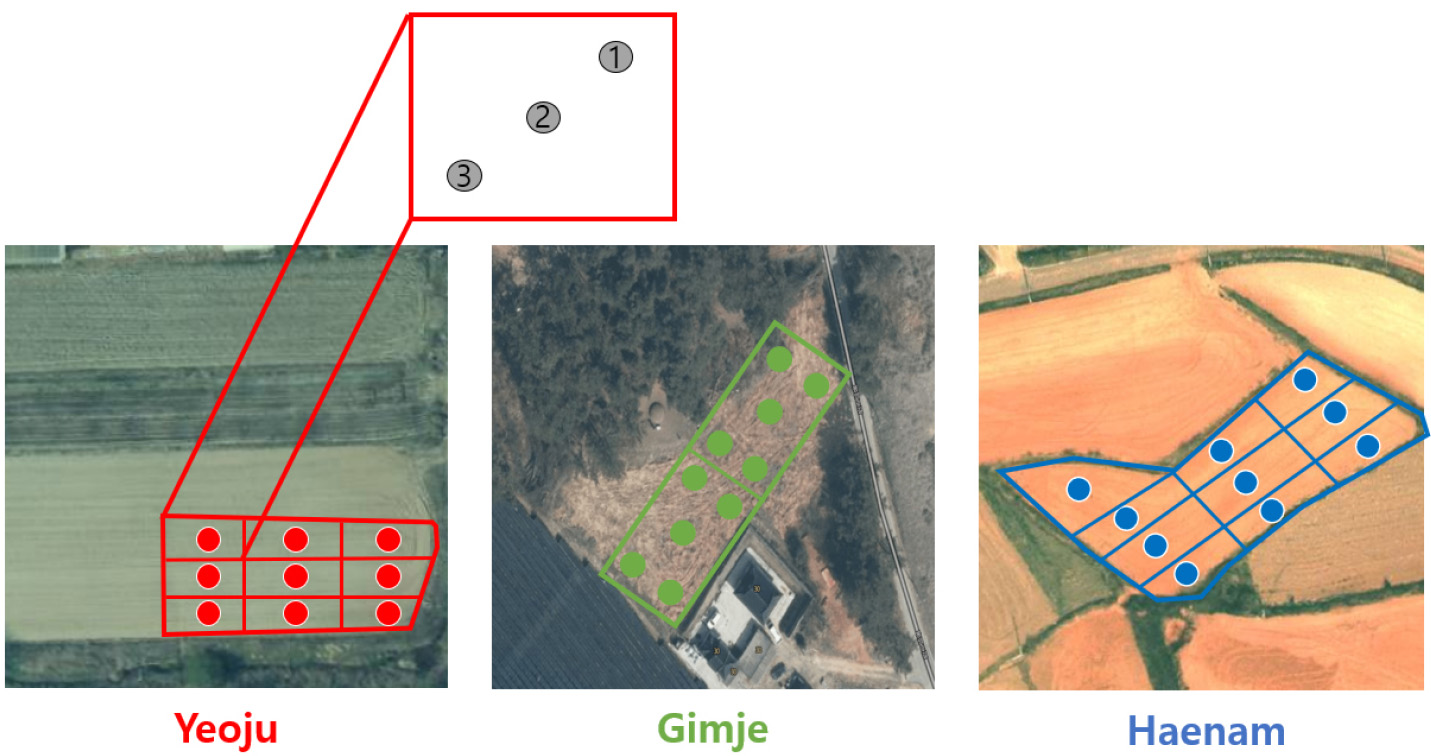
In this study, soil sampling was performed by dividing the test fields into sub-plots in accordance with the test field specifications to measure the soil texture of the soils making up each test field; Fig. 2 shows the layout of these sub-plots. The dimensions (L × W) of the Yeoju and Gimje test fields were 42 m × 15 m and 72 m × 15 m, respectively. The Yeoju test field was subdivided into nine equal sections measuring 14 m × 5 m each, while the Gimje test field was divided into two main zones, which were then subdivided into ten equal sections for a soil texture survey. In the case of the Haenam test field, unlike those in Yeoju and Gimje, the plot was polygonal in shape; the rectangular section, measuring 63 m × 27 m, was subdivided into nine equal sections of 21 m × 9 m, while the polygonal areas along the edges were treated as a single section for the soil survey.
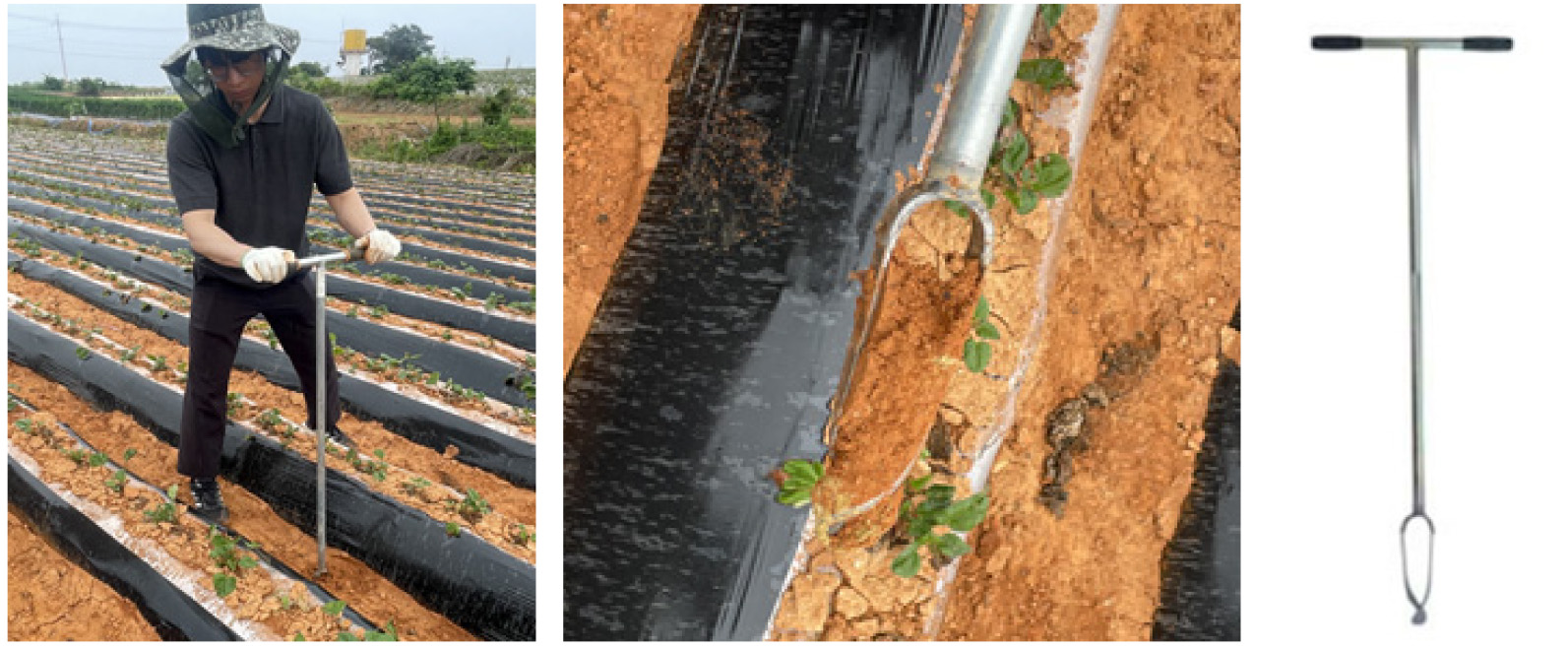
Regarding the soil sampling method, a 30-50-mm layer was removed to eliminate topsoil and foreign matter from the soil to be sampled, after which soil was collected using the soil sampler shown in Fig. 3 (Edelman Auger, Eijkelkamp, the Netherlands) (Han, 2025; Ju, 2023; Shin, 2024). A total of three soil samples were collected from each section, and the samples from a single section were placed in a single zip-lock bag, mixed together, and stored.
Soil texture analysis was commissioned to Agricultural Environment Division at Agricultural Research & Extension Services in Jeonbuk Special Self-Governing Province. The soil texture analysis was performed using the hydrometer method in accordance with ASTM D7928 (ASTM International, 2021), and soil texture classification was conducted according to the USDA classification standards; the results are presented in Table 1.
Table 1.
Soil texture analysis results for each test field
Investigation of soil physical properties and cultivation environment
For the soil physical properties, five random points were selected in the field, and soil strength, soil moisture, and soil electrical conductivity (EC) were measured at a depth of 200 mm, considering the digging depth (plowing depth). Soil strength was measured using a DIK-5532 (Daiki Rika Kogyo Co., Ltd, Japan), while soil EC and soil moisture were measured using a WT-2000 (Mirae Sensor, Korea). Five measurements were taken for each parameter, and the mean value was calculated. The sensors used and their specifications are shown in Table 2 (Won et al., 2024), and the measured soil strength, soil moisture, and soil EC are presented in Table 3.
Table 2.
Specifications of sensors
Table 3.
Soil physical properties of test fields at a 200-mm depth
Agricultural power sources
In this study, to minimize variables that might arise during sweet-potato harvesting, the research was conducted using the same tractor, and the tractor operator was the same experienced operator throughout the study. The tractor used in this study was the RX730 (Daedong Co., Ltd., Korea), and its specifications are shown in Table 4. The tractor was set to first gear for the main transmission, second gear for the auxiliary transmission (approximately 1 km/h), and first gear for the PTO (540 rpm).
Table 4.
Specifications of agricultural tractor
Double-conveyor-type sweet-potato harvester
Performance evaluation of the prototype double-conveyor sweet-potato harvester, as conducted in a previous study, revealed a sweet-potato damage ratio of approximately 30%, representing a high damage ratio (Won et al., 2024). An internal review determined that impact on the sweet-potato skin primarily occurred during the transport process after digging; consequently, the conveying unit was further improved and modified (Fig. 4).
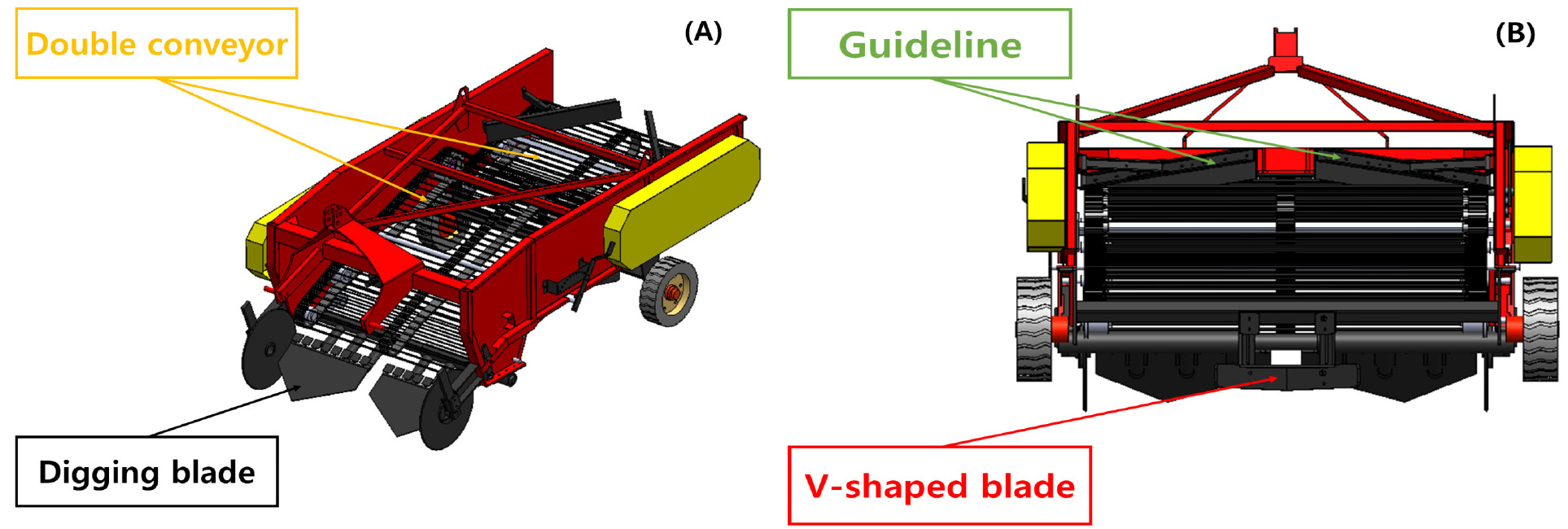
Improvements included the addition of rubber padding to the edges of the conveyor in the conveying unit (Fig. 5) and the fitting of rubber guide rails at the rear of the conveying unit to prevent skin damage caused by the sweet potatoes colliding with the harvester frame during conveyance, while also facilitating collection (Fig. 6, blue box (upper box)).
The double-conveyor-type sweet-potato harvester developed in this study was designed with dimensions of 3,030 mm × 1,880 mm × 1,200 mm (L × W × H) and weighed 830 kg; other specifications are shown in Table 5.
For the digging unit, a 500-mm-long digging blade was designed and fitted to ensure that no sweet potatoes were left in the ground. For the conveying unit, a two-stage conveyor chain was designed to facilitate the separation of soil and sweet potatoes, and rubber pads were fitted to the conveyor chain to prevent damage to the sweet-potato skin during conveyance.
Furthermore, a V-shaped blade was fitted at the rear of the conveyor, at the point where the sweet potatoes fall, to prevent the sweet-potato vines from being drawn in (Fig. 6, green box (lower box)).
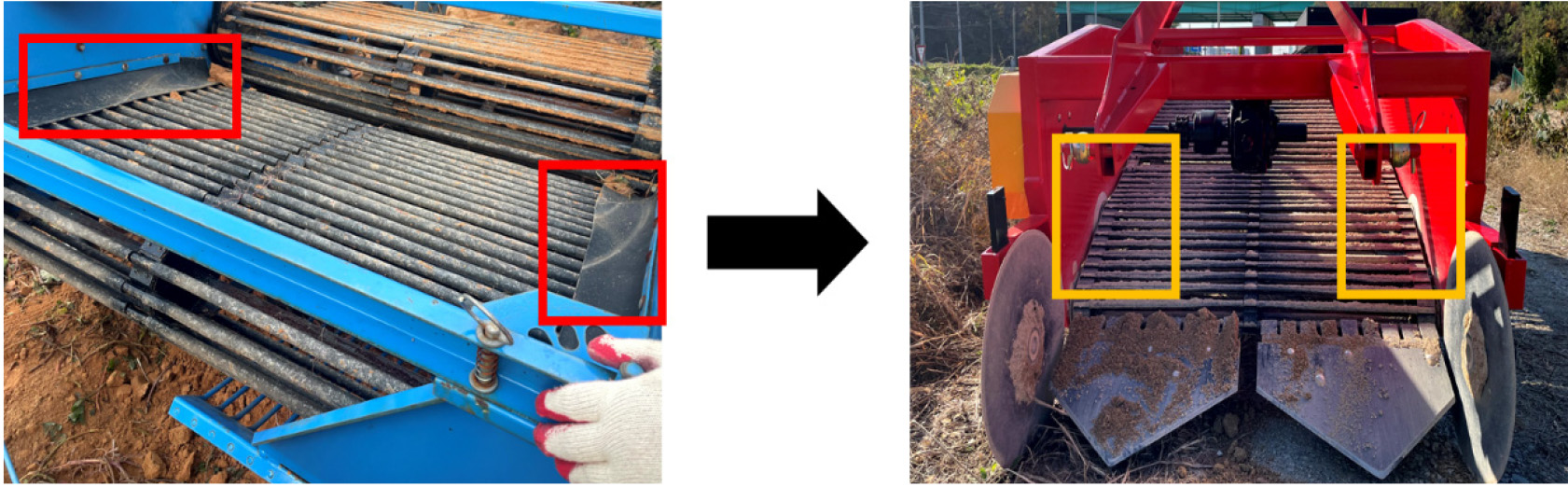
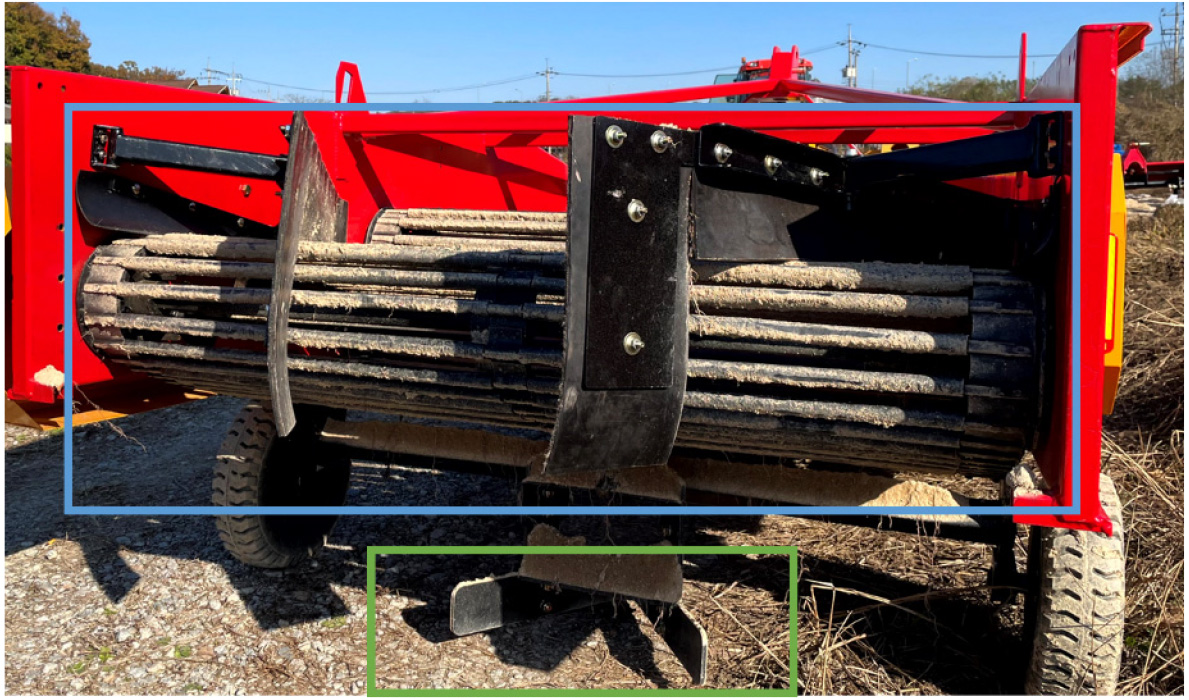
Table 5.
Specifications of the double-conveyor-type sweet-potato harvester
To evaluate the performance of the double-conveyor sweet-potato harvester developed in this study, a comparative analysis was performed with conventional root crop harvesters. A total of four types of root crop harvesters were used in this experiment: a plow-type harvester, a vibration-digging-type harvester, a ridge- independent conveyor-type harvester, and a vibration-digging & conveyor-type root crop harvester. Table 6 and Fig. 7 show the specifications of the four harvesters selected for the comparative analysis.
Table 6.
Specifications of sweet-potato harvester

Experimental methods and measurement parameters
As for the sweet-potato harvesting method, the travel distance per trial was set at a total of 5 m, with a total of three replications. The digging depth was set at 200 mm, considering the height of the ridges.
The measurement parameters for this experiment included the total weight of the sweet potatoes, the weight of dug sweet potatoes, the weight of undug sweet potatoes, the weight of damaged sweet potatoes, and the weight of broken sweet potatoes. These measured parameters were subsequently converted into the sweet-potato digging ratio and damage ratio. After the sweet potatoes were harvested, those exposed on top of the ridges were counted as dug sweet potatoes, while those remaining beneath the ridges were counted as undug sweet potatoes. The sum of the weights of the dug and undug sweet potatoes was taken as the total weight of sweet potatoes. Sweet potatoes that had been dug up by the harvester but were stuck and had not passed through the conveyor unit were not included in the weight of the dug sweet potatoes.
The digging ratio was calculated as the ratio of the weight of dug sweet potatoes to the total weight of the sweet potatoes (Eq. (1), Won et al., 2024), while the damage ratio was calculated as the ratio of the sum of the weights of damaged and broken sweet potatoes to the weight of dug sweet potatoes (Eq. (2), Won et al., 2024).
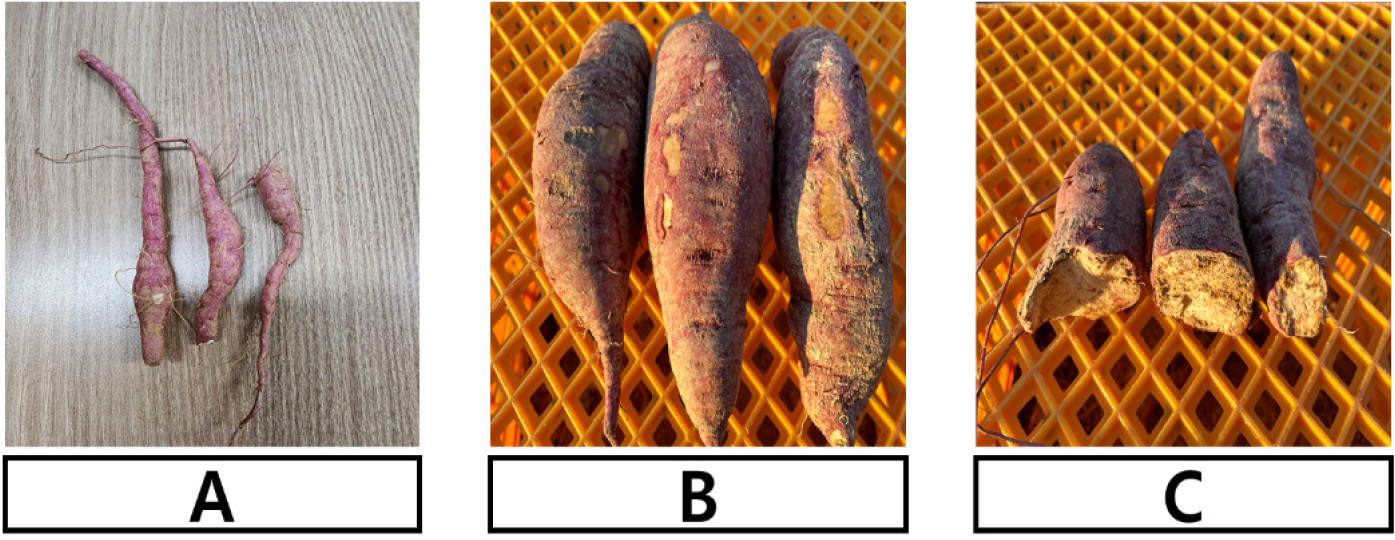
When measuring the weight of dug sweet potatoes, all stems connecting the sweet potatoes were removed, and immature sweet potatoes with a width of ≤ 10-15 mm that were of poor marketability (Fig. 8(A)) were also removed, so that only the weight of marketable sweet potatoes was measured (Won et al., 2024). Furthermore, damaged sweet potatoes were defined as those exhibiting mechanical damage—such as scratches, dents, or peeling of the skin—incurred during harvesting (Fig. 8(B)), while broken sweet potatoes were classified as those damaged by impact—such as cuts as well as splitting caused by impact between the digging blade and the conveyor unit (Fig. 8(C)) (Won et al., 2024).
Theoretical Field Capacity (TFC) was calculated using the working width (m) and working speed (km/h) of the sweet-potato harvester; as harvesting is performed in a straight line without stopping or turning, only data from straight-line travel were used (Eq. (3)).
Furthermore, a one-way analysis of variance (one-way ANOVA) was performed to test the significance of soil texture on the sweet-potato harvester’s performance, followed by Duncan’s multiple range test at a 5% significance level.
Where, = Digging ratio (%)
= Weight of total sweet potatoes (kg)
= Weight of dug sweet potatoes and undug (kg)
Where = Damage ratio (%)
= Weight of damaged sweet potatoes (kg)
Where, = Theoretical field capacity (ha/h)
= Working width (m)
= Travel speed (km/h)
Results and Discussion
Digging ratios of sweet-potato harvesters according to soil texture
Regarding the significance test of the digging ratio of sweet-potato harvesters according to soil texture, the trials conducted at the Yeoju and Haenam test fields showed a P-value of ≥ 0.05, indicating no significant difference based on the harvester type; however, the trial conducted at the Gimje test field showed a P-value of <0.05, indicating a significant difference.
The results of the digging ratios for sweet potatoes according to soil texture are shown in Fig. 9 and Table 7. In Yeoju, Gimje, and Haenam, the measured digging ratios for plow-type harvesters were 97.2%, 96.9%, and 94.6%, respectively, while those for vibration-digging-type harvesters were measured at 95.1%, 86.7%, and 97.8%, respectively. Furthermore, the double-conveyor-type sweet-potato harvesters recorded rates of 96.4%, 99.1%, and 89.6%, respectively, while the digging ratios for the ridge-independent root crop harvester were 98.9%, 94.5%, and 90.6%, and those for the vibration-digging and conveyor-type root crop harvesters were 100%, 96.6%, and 98.5%, respectively. The digging ratios of the sweet-potato harvesters varied depending on the soil texture. The soil texture at the Yeoju test field consisted of 66.83 ± 2.49% sand, 24.54 ± 1.21% silt, and 8.62 ± 1.42% clay. Owing to the low silt and clay content characteristic of sandy loam, ridges were broken smoothly during sweet-potato harvesting. Furthermore, the separation of soil from the sweet potatoes during the soil-shaking process following digging was efficient. Consequently, the digging ratios for all sweet-potato harvesters were deemed favorable. This was consistent with research indicating that soils with a high sand content drain better and have a lower density, enabling agricultural machinery to operate more efficiently (Rahman et al., 2025).
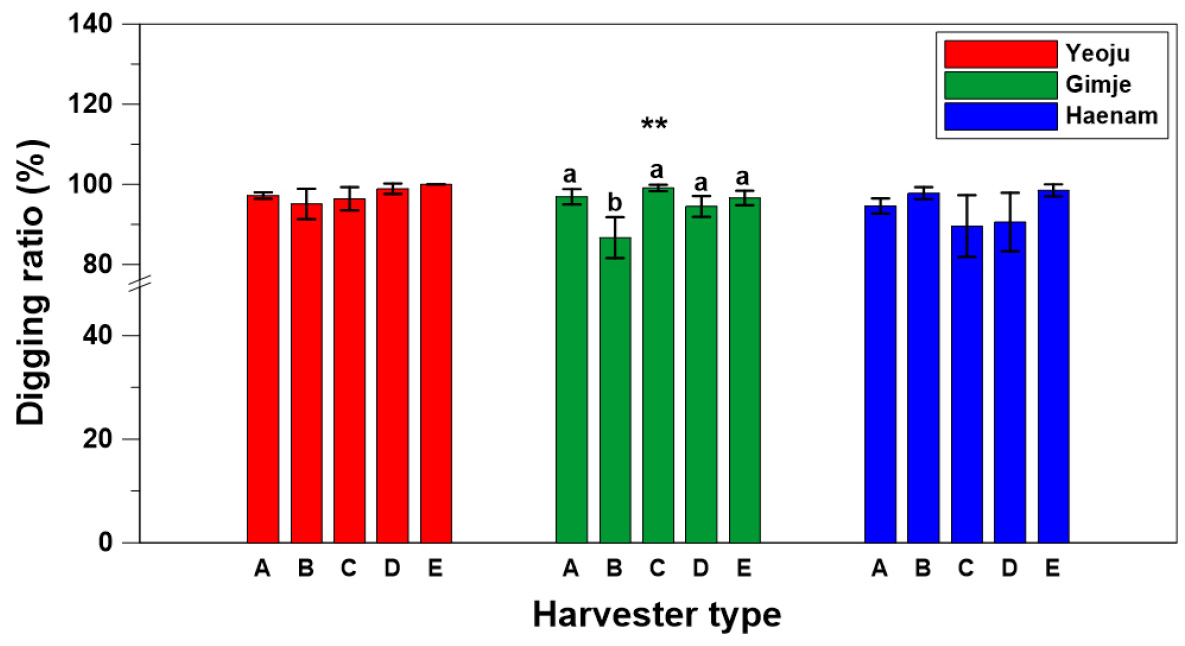
Table 7.
Digging ratio by harvester type under different soil textures
Location Harvester Type | Yeoju | Gimje | Haenam | |||
|
Digging Ratio (%) |
S.D2) (%) |
Digging Ratio (%) |
S.D2) (%) |
Digging Ratio (%) |
S.D2) (%) | |
| Plow type (A) | 97.2 | 0.8 | 96.9a | 1.91 | 94.6 | 1.9 |
| Vibration digging type (B) | 95.1 | 3.8 | 86.7b | 5.1 | 97.8 | 1.5 |
| Double conveyor type (C) | 96.4 | 2.9 | 99.1a | 0.8 | 89.6 | 7.37 |
| Ridge-independent type (D) | 98.9 | 1.3 | 94.5a | 2.6 | 90.6 | 7.3 |
|
Vibration digging & Conveyor type (E) | 100.0 | 0 | 96.6a | 1.8 | 98.5 | 1.5 |
| Pr > F | 0.1290 (NS)3) | 0.0029 (**) | 0.1624 (NS)3) | |||
1)The terms left, middle, and right indicate the positions of the corresponding groups in Fig. 9.
The digging ratios at the Gimje test field were measured to be lower overall than those at the Yeoju test field, which seemed attributable to differences in soil texture. The soil at the Gimje test field was loam with a composition of 41.63 ± 4.84% sand, 36.23 ± 3.21% silt, and 22.16 ± 2.21% clay. As this loam had a lower sand content and higher silt and clay contents compared to the soil at the Yeoju test field, it was judged that the separation of the soil from the sweet potatoes during harvesting was not smooth, resulting in a lower overall digging ratio. This was consistent with research findings indicating that a high silt content had a negative impact on field operational efficiency, while clay-rich soil, being dense and compact, increased soil resistance and impaired machinery performance (Rahman et al., 2025).
Meanwhile, at the Gimje test field, the double-conveyor-type sweet-potato harvester recorded the highest digging ratio. This is believed to be due to its conveyor unit being designed to be longer than that of other root crop harvesters, resulting in a longer soil-shaking period and, consequently, more efficient separation of the soil from the sweet potatoes.
At the Haenam test field, differences in digging ratios were observed due to variations in soil texture and the harvester’s operating method. The soil texture at the Haenam test field was found to be silt loam, comprising 29.39 ± 1.20% sand, 50.89 ± 1.60% silt, and 19.73 ± 1.98% clay. It was found to have the highest proportion of silt among the sweet-potato test fields where this study was conducted. Silt has a larger specific surface area than sand and exhibits interparticle cohesion, which may increase the formation of soil clods during the harvesting process, thereby reducing the harvesting efficiency when using mechanical harvesting methods (Ruysschaert et al., 2006).
Furthermore, soils with a high silt content have smaller particles and higher water-holding capacity, resulting in increased adhesion. This means that during sweet-potato cultivation, soil may adhere to the sweet potatoes, reducing the efficiency of separation between the soil and the sweet potatoes. The double-conveyor-type sweet-potato harvester developed in this study and the ridge-independent root crop harvester lacked a soil-shaking mechanism utilizing vertical vibrations of the shaker screen. Thus, soil fragmentation and the separation of soil from the sweet potatoes during sweet-potato digging was not smooth, resulting in a low digging ratio. In contrast, plow-type harvesters directly break up the soil using plow blades to dig the sweet potatoes; consequently, they were judged to have a higher digging ratio than conveyor-type harvesters.
Conversely, at the Haenam test field, although soil clod formation was active owing to an increase in silt content, it was observed that the formed clods were not easily broken up during the vertical vibration of the shaker screen. Instead, they either fell into the ridges or remained on the shaker screen for a certain period. Consequently, the upper parts of the harvested sweet potatoes were directly covered relatively less frequently, leading to higher digging ratios being observed with some harvesters compared to those in the Gimje test field. However, it is believed that this result arose from the combined effects of soil conditions, soil clod formation characteristics, and the structure of the harvester. Thus, it was considered that further repeated testing and quantitative analysis will be required.
Damage ratios by sweet-potato harvesters depending on soil texture
In the statistical significance test of the damage ratios by sweet-potato harvesters according to the soil texture, the P-value at the Yeoju test field was > 0.05, indicating no statistical significance; however, the trials conducted at the Gimje and Haenam test fields yielded P-values of ≤ 0.05, indicating statistical significance.
Fig. 10 and Table 8 show the damage ratios by sweet-potato harvesters depending on the soil texture. In Yeoju, Gimje, and Haenam, the damage ratios for plow-type harvesters were 19.6%, 30.9%, and 26.3%, respectively, while the damage ratios for the vibration-digging-type harvesters were measured at 38.5%, 40.1%, and 17.3%, respectively. In addition, the damage ratios for the conveyor-type sweet-potato harvesters were measured at 21.8%, 36.4%, and 12.6%, respectively. The damage ratios for ridge-independent harvesters were 30.9%, 62.2%, and 44.0% in the respective test fields, while those for vibration-digging and conveyor-type root crop harvesters were 28.9%, 39.6%, and 20.8%, respectively. As mentioned earlier, the damage ratios varied depending on the type of sweet-potato harvester, reflecting differences in soil texture. In the case of the plow-type harvester, as the plow blade broke up the ridges rather than the sweet-potato skin to dig the sweet potatoes, it was judged to have the lowest damage ratio owing to the relatively less direct contact with the sweet-potato skin. Conversely, the vibration-digging-type harvester was judged to have the highest damage ratio because the vertical vibrations of the shaker screen caused continuous impact on the sweet-potato skin. In the case of the double-conveyor-type sweet-potato harvester, although the damage ratio was found to be lower than that of the other root crop harvesters (excluding the plow-type), it was judged that the damage ratio exceeded that of the plow-type owing to direct impact between the sweet-potato skin and the conveying unit. In the case of the independent-ridge-type harvester, as the width of the conveying unit was narrow, damage to the sweet-potato skin was thought to have occurred because of collisions among the soil, sweet potatoes, and the conveying unit, likely causing damage to the sweet-potato skin. Regarding the vibration-digging and conveyor-type harvesters, the vertical vibration of the shaker screen was not as pronounced as in the vibration-digging-type harvesters. Consequently, there was less direct impact on the sweet-potato skin, which was believed to explain why its damage ratio was lower than that of the vibration-digging-type harvesters. It was previously reported that, when harvesting potatoes in cohesive soils, the damage ratio was low because of the cushioning effect provided by the soil (Wu et al., 2021), while, in non-cohesive sandy loam, where soil lacks this cushioning effect during harvesting, the likelihood of crop damage caused by mechanical impact was found to be higher. Furthermore, as sandy loam has a high sand content, resulting in low water retention and frequent dry conditions, it was considered that mechanical damage to crops was greater, leading to a higher damage ratio. This finding was consistent with a study conducted by Bentini et al. (2006).
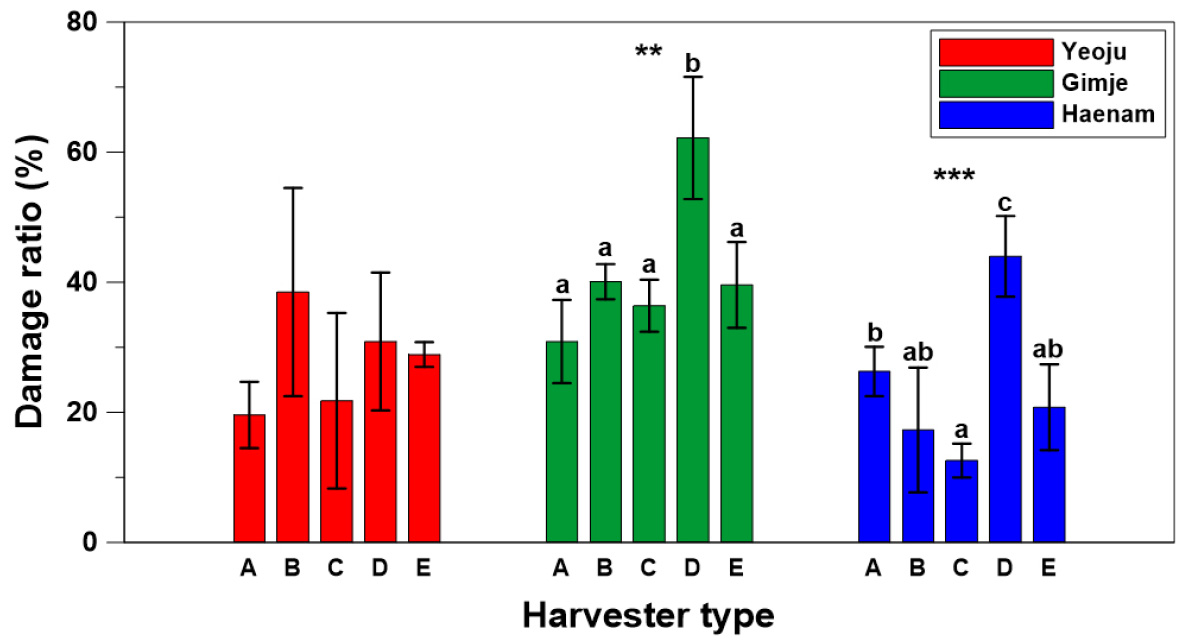
Table 8.
Damage ratio by harvester type under different soil textures
Location Harvester Type | Yeoju | Gimje | Haenam | |||
|
Damage Ratio (%) |
S.D2) (%) |
Damage Ratio (%) |
S.D2) (%) |
Damage Ratio (%) |
S.D2) (%) | |
| Plow type (A) | 19.6 | 5.1 | 30.9a | 6.4 | 26.3b | 3.8 |
| Vibration digging type (B) | 38.5 | 16.0 | 40.1a | 2.7 | 17.3ab | 9.6 |
| Double conveyor type (C) | 21.8 | 13.5 | 36.4a | 4.0 | 12.6a | 2.6 |
| Ridge-independent type (D) | 30.9 | 10.6 | 62.2b | 9.4 | 44.0c | 6.2 |
|
Vibration digging & Conveyor type (E) | 28.9 | 1.9 | 39.6a | 6.6 | 20.8ab | 6.6 |
| Pr > F | 0.2816 (NS)3) | 0.0011 (**) | 0.000995 (***) | |||
1)The terms left, middle, and right indicate the positions of the corresponding groups in Fig. 10.
At the Gimje test field, the damage ratio showed an overall higher value compared to that at the Yeoju test field. This was believed to be due to the differences in soil texture. The soil at the Gimje test field is loam with a lower sand content and higher silt and clay contents than that at the Yeoju test field. As it possesses higher cohesion and adhesion than the soil at the Yeoju test field, the soil does not break up smoothly, leading to the formation of soil clods, which seemed to result in an increase in the damage ratios owing to mutual collision and friction among the crop, soil, and machinery. These results were consistent with a previous report that collisions and friction among potatoes, soil clods, and machine components during soil-potato separation were the primary causes of potato damage (Li et al., 2024). In the case of the double-conveyor-type sweet-potato harvester, the damage ratio for sweet-potato skins was 36.4%, which was lower than that of other root crop harvesters. This was believed to be because of the rubber padding fitted to the conveying unit, which reduced friction during sweet-potato transport and, thus, minimized damage to the skin. Therefore, further research is considered necessary to reduce the damage ratio even further by adjusting the speed of the conveyor and reducing the intensity of vibrations occurring during transport. The damage ratio at the Haenam test field tended to be lower than that at the Gimje test field. This was attributed to the combined effect of the silt content of the soil at the test fields and the harvesting method. In the Haenam test field, the silt content was high, at > 50%, resulting in high soil cohesion and adhesion, causing soil to easily adhere to the crops. This soil adhesion to the crops seemed to reduce the overall damage ratio because the cushioning effect reduced the impact on the sweet-potato skin that could occur during harvesting. This is similar to findings reporting that a lower damage ratio for potatoes in viscous soil was related to the cushioning effect provided by soil (Wu et al., 2021).
Theoretical field capacity of sweet potatoes at harvest, according to soil texture
Table 9 shows the TFCs of the sweet-potato harvesters tested at test fields in Yeoju-si, Gyeonggi-do Province; Gimje City, Jeonbuk Special Self-Governing Province; and Haenam-gun, Jeollanam-do Province. The TFCs of the plow-type harvesters in Yeoju, Gimje, and Haenam were measured at 0.27 ha/h, 0.29 ha/h, and 0.22 ha/h, respectively, while those of the vibration-digging-type harvesters were 0.18 ha/h, 0.17 ha/h, and 0.13 ha/h. As for the conveyor-type sweet-potato harvesters, the TFCs were 0.20 ha/h, 0.12 ha/h, and 0.13 ha/h, respectively, while those for the ridge-independent harvesters were 0.18 ha/h, 0.13 ha/h, and 0.11 ha/h, respectively. For the vibration-digging and conveyor-type root crop harvester, the TFCs were 0.14 ha/h, 0.16 ha/h, and 0.11 ha/h, respectively. There were no significant differences in TFC among the vibration digging, double-conveyor, and ridge-independent root crop harvesters. This was likely because of the sandy loam at the Yeoju test field, where soil fragmentation was smooth, which resulted in a uniform tractor load across all harvesters. Furthermore, the TFC of the vibration-digging and conveyor-type root crop harvesters was measured to be the lowest. This seemed to be due to the harvesters being equipped with both a vibration digging mechanism and a conveyor mechanism, making soil separation most efficient. In the case of the plow-type harvester, the difference in TFC appeared to result from structural differences.
Table 9.
Theoretical field capacity as affected by soil texture and sweet-potato harvester type (Unit: ha/h)
At the Gimje test field, the TFCs of the double-conveyor-type sweet-potato harvester and the ridge-independent type harvester was significantly lower than those at the Yeoju test field. This was believed to be because the soil at the Gimje test field has a higher silt and clay content than that in the sandy loam at the Yeoju test field, resulting in less efficient soil fragmentation. As neither of the two root crop harvesters was equipped with a mechanism for soil fragmentation, the combined weight of the soil and sweet potatoes increased the load (tractive force), thereby reducing the TFC.
The TFC at the Haenam test field tended to be lower overall. In the case of the plow-type harvester, soil fragmentation was not smooth, owing to the high cohesion and adhesion of the soil, which caused an increase in load. For the other harvesters, the load generated by soil clods formed during digging—which could not escape from within the harvesters and were transported along with the crop to the conveyor—seemed to increase the tractor’s load (tractive force), resulting in an overall reduction in TFC.
Thus, the efficiency of the sweet-potato harvester was found to be significantly influenced by soil texture, consistent with a report showing that harvester efficiency was positively correlated with the soil sand content and negatively correlated with the silt and clay contents (Fahim et al., 2024).
Furthermore, it was considered that the operational performance of the sweet-potato harvesters was influenced not only by simple soil resistance or the tractor’s tractive force, but also by a combination of factors such as the soil’s clod-forming characteristics, soil-shaking efficiency, the amount of soil remaining in the conveyor, and the structural characteristics of the harvester. Additionally, as the digging and conveying mechanisms differed among harvesters, the performance of the harvesters may vary even under identical soil conditions.
Conclusion
In this study, we conducted sweet-potato harvesting on three test fields with different soil textures to evaluate the performance of a double-conveyor-type sweet-potato harvester. The double-conveyor sweet-potato harvester evaluated in this study was designed with dimensions of 3,030 mm × 1,880 mm × 1,200 mm (L × W × H). It was fitted with a 500-mm digging blade, and rubber padding was added to the conveying unit between the digging and transport stages to minimize damage to the sweet-potato skin. To evaluate the performance of the double-conveyor sweet-potato harvester, a comparative analysis was performed against four conventionally used sweet-potato harvesters. For the tractor required to operate the harvester, the travel speed was set at 1 km/h and the PTO speed at 540 rpm. To avoid new variables from arising during the study, the research was conducted using the same tractor and the same operator. The performance evaluation revealed differences depending on the soil texture. At the Yeoju test field, the double-conveyor-type sweet-potato harvester demonstrated a high digging ratio of 96.4% and a damage ratio of 21.8%, which was higher than that of plow-type harvesters. The double-conveyor-type sweet-potato harvester also outperformed both the vibration-digging-type harvester and the conveyor-type harvester. At the Gimje test field, the double-conveyor-type sweet-potato harvester achieved a digging ratio of 99.1% and a damage ratio of 36.4%. While the digging ratio was excellent and the damage ratio was lower than that of vibration-digging and conveyor-type harvesters, the damage ratio was still considered too high for widespread adoption by farmers, indicating a need for further improvement. At the Haenam test field, the digging ratio and damage ratio were 89.6% and 12.6%, respectively; while the damage ratio indicated excellent performance, the digging performance was lower than that of the other harvesters, suggesting that further research is required. This study confirmed that the digging performance and damage levels of sweet-potato harvesters vary depending on the soil texture and harvesting methods. The double-conveyor sweet-potato harvester developed in this study will undergo continuous refinement and research to improve it as a machine suitable for diverse soil textures in South Korea.