


Introduction
Research Methods
PRISMA Scoping Review
Text Mining
Network Analysis
Results and Discussion
Network Analysis
Geological and Environmental Factors
Failure Modes and Mechanisms
Engineering and Design Factors
Installation and Operational Factors
Conclusion
Introduction
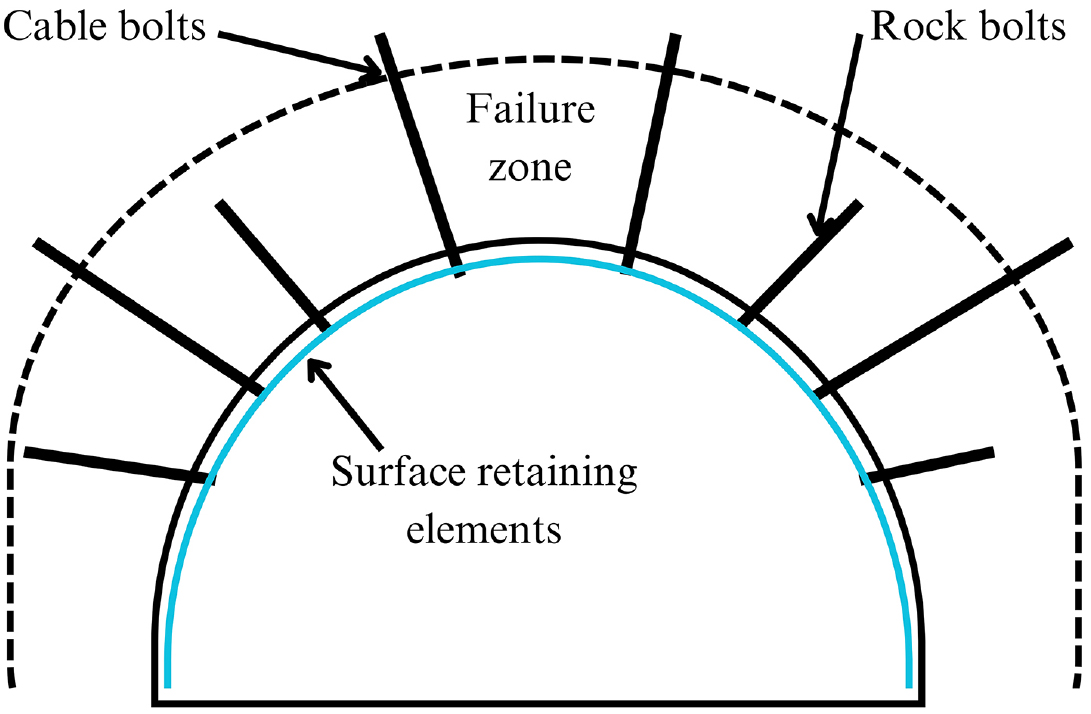
Ground reinforcement systems (GRS), including soil nails, rock bolts, cable bolts, and anchors, are essential for stabilizing slope and rock masses in geotechnical applications such as slopes, tunnels, and underground mines. Since their introduction in 1913 (Bobet and Einstein, 2011; Frenelus et al., 2022; Sun et al., 2021), these systems have become essential in geotechnical engineering for reinforcing tunnels, slopes, and mines (Frenelus et al., 2022; Lisjak et al., 2020). By reinforcing geological materials, these systems mitigate various well-documented risks, which are multifaceted and often arise from environmental, mechanical, and operational stressors. Such risks include soil variability, environmental stressors like groundwater fluctuations, and mechanical stress factors — all of which are critical to ensuring the structural stability of geotechnical systems (Gu et al., 2020; Zhao et al., 2021). Fig. 1 illustrates an example of an underground reinforcement system used in typical tunnel support, where rock bolts and cable bolts are used to stabilize the failure zone in rock masses. Rock bolts provide localized reinforcement, while cable bolts offer deeper anchorage, which is particularly beneficial in stabilizing larger or more fractured rock sections.
Despite advancements in reinforcement techniques, the inherent variability in soil and rock conditions presents significant engineering challenges. Soil heterogeneity, reflected in difference in moisture content, density, and grain size distribution, can cause reinforcement systems to perform unpredictably under fluctuating load-bearing capacities, remaining as a key challenge (Assis, 2020). Environmental stressors, including groundwater fluctuations and seismic activity, further complicate system performance by imposing loads that may exceed design tolerances. Together, these factors underscore the need for adaptable, resilient reinforcement systems (Mickovski, 2018; Smith, 2021).
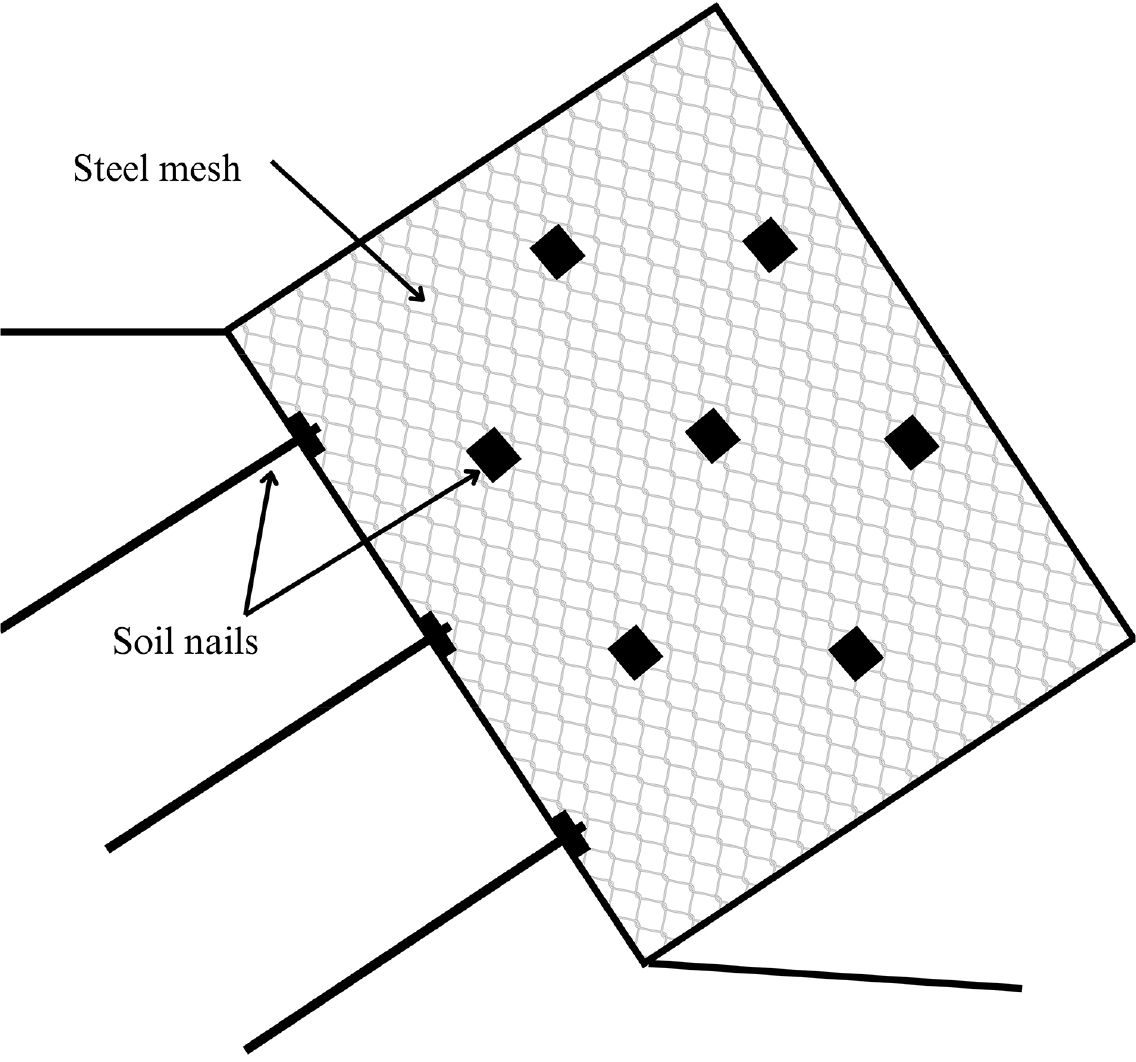
Soil nailing, in particular, has proven effective in heterogeneous soil conditions, reducing lateral displacements, and withstanding environmental stressors, including heavy rainfall and seismic loads. This method strengthens soil shear capacity, redistributes stresses, and reduces lateral displacements, proving especially useful in heterogeneous soil conditions prone to erosion and instability (Ben Ouakkass et al., 2022; Rashad et al., 2023; Yang et al., 2020). Fig. 2 shows a soil nail and steel mesh system used in slope stabilization, effectively addressing issues of erosion and stability.
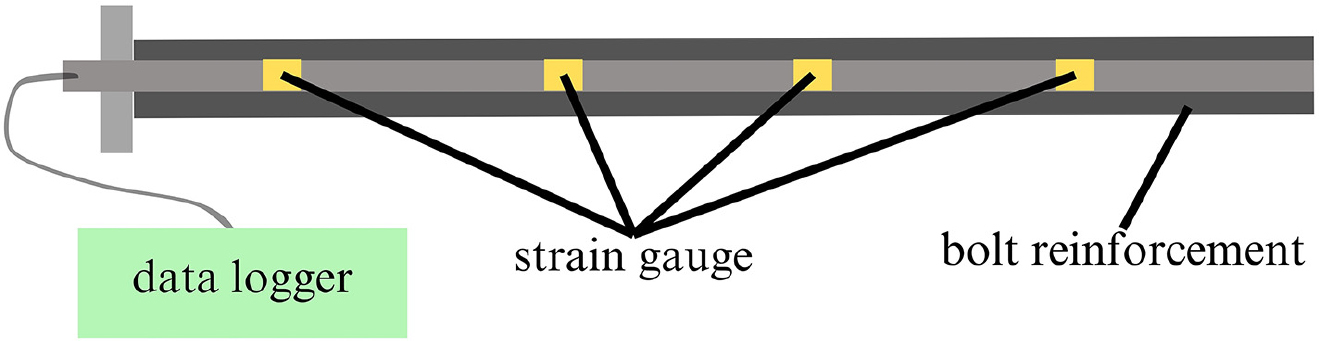
Beyond these traditional environmental and mechanical risks, the adoption of advanced sensor-based monitoring technologies introduces new, emerging challenges in ground reinforcement applications. Monitoring sensors, such as strain gauges and displacement sensors, are increasingly integrated into GRS to track structural health and provide early warning of potential failure. Fig. 3 illustrates a sensor-integrated GRS, demonstrating how such technologies enable real-time monitoring while introducing new risk factors related to calibration, environmental variability, and component durability. While electronic components have traditionally been limited in geotechnical applications due to their susceptibility to harsh conditions, they are becoming more common for specific monitoring needs. However, this approach introduces new challenges that can affect both the durability and reliability of reinforcement systems. These electronic monitoring devices are susceptible to moisture, temperature and other environmental factors, that may degrade their accuracy over time. While sensor integration can improve long-term performance by enabling real-time monitoring, it also adds layers of technical complexity, including calibration challenges, potential electromagnetic interference, and sensitivity to environmental conditions (Bačić et al., 2019; Kwaśniewski et al., 2016). Thus, while the integration of sensors offers significant benefits, it requires careful consideration of these emerging risks. Further research is essential to understand how these factors impact system performance and to develop strategies that ensure both reliability and resilience in sensor-enhanced ground reinforcement applications.
The integration of sensors into reinforcement systems, while beneficial for monitoring, requires further exploration to assess the impact of these new risks on system reliability. Failures of reinforcement systems have been documented in multiple geotechnical applications globally, illustrating the vulnerabilities these systems face under certain conditions. For instance, in North American mines, failure of GRS under dynamic loading conditions has led to numerous accidents (Chen et al., 2014; Frenelus et al., 2022). In China’s National Highway 317, the Xuecheng tunnel faced multiple structural failures attributed to improper installation, geological challenges, and hydrological stressors, leading to a two-year closure (Xu and Gutierrez, 2021). Another critical case occurred at the Sasago Tunnel in Yamanashi, Japan, where the collapse of concrete ceiling panels in December 2012 resulted in fatalities (Xu and Gutierrez, 2021). Investigations revealed that the incident was caused by a combination of insufficient maintenance and the degradation of metal bolts securing the ceiling panels. These bolts, which had deteriorated due to age and lack of inspection, failed to support the ceiling, leading to the tragic collapse (Jiang et al., 2023b; Podroužek and Wan-Wendner, 2018). These cases underscore the importance of systematically identifying risk factors to improve the stability and longevity of reinforcement systems in varying conditions.
To address the complex challenges in GRS, this study employs a systematic scoping review, text mining, and network analysis to investigate both conventional and emerging risk factors affecting ground reinforcement systems (GRS). The process begins with a scoping review, conducted according to PRISMA-ScR guidelines, to systematically identify and categorize established and emerging risks associated with GRS performance. This review is followed by text mining, which extracts key themes from the literature, revealing connections among risk factors. Finally, network analysis visually maps these relationships, providing insights into the complex interplay among environmental, mechanical, and operational risks, especially those associated with sensor integration.
The primary objective is to analyze how these combined risks impact GRS, focusing on the added challenges introduced by sensor technologies. By integrating scoping review findings with text mining and network analysis, the study offers a comprehensive, data-driven framework that supports improved design and monitoring strategies, ultimately enhancing system stability and resilience. The remainder of this article is structured to systematically consolidate existing knowledge on GRS risks. Section 2 outlines the research methodology, including the systematic literature review approach, text mining, and network analysis employed to categorize and synthesize known risk factors. Section 3 presents the consolidated findings, organizing major risk factors and visualizing their interrelationships. Finally, Section 4 discusses the practical implications for engineering applications and concludes with recommendations for future research directions.
Research Methods
The research methodology of this study integrates a systematic scoping review with text mining and network analysis to examine emerging risk factors in GRS and sensor integration. This combined approach enables a comprehensive investigation of existing literature, providing a structured framework to identify complex interdependencies among various risk factors impacting the stability and durability of reinforcement systems.
A scoping review, guided by PRISMA-ScR guidelines, was conducted to systematically collect and organize literature on risk factors relevant to ground reinforcement. Scoping reviews are increasingly utilized in engineering research for its effectiveness in synthesizing complex and diverse literature and in identifying knowledge gaps requiring further study (Xiao and Watson, 2017). Unlike systematic reviews, which focus on rigorous quality assessment of individual studies, scoping reviews aim to map broad research areas, highlighting prevalent themes, methodologies, and findings without imposing strict quality evaluation criteria (Cruzes and Dybå, 2011). This is particularly advantageous in engineering fields like geotechnics, where literature on risk factors and ground reinforcement encompasses varying methodologies, materials, and applications, which can be challenging to categorize within a single framework. This approach facilitates the synthesis of knowledge across interdisciplinary domains, allowing for the inclusion of a broad range of sources and facilitating the identification of patterns that may be obscured in narrower studies. In this study, the scoping review serves as the foundation for further analytical steps, establishing a comprehensive dataset of risk factors across the current literature. Subsequently, text mining was applied to process the extensive dataset generated by the scoping review, enabling the extraction of key terms and risk factors associated with GRS. This analysis of co-occurrence patterns among terms provided a basis for mapping interrelationships and thematic clusters within the data.
In the final stage, network analysis was employed to visually represent and analyze the relationships among identified risk factors. The network was constructed using a combination of algorithms — Force Atlas 2, Yifan Hu, and Open Ord — to optimize visualization, cluster formation, and community detection, thus highlighting prominent clusters, nodes, and community structures. Each algorithm contributes distinct advantages, collectively facilitating a nuanced exploration of risk factor organization across categories. This multi-faceted methodology supports a holistic understanding of the emerging risks in GRS, offering insights that enhance strategies for system resilience and informed risk management.
PRISMA Scoping Review
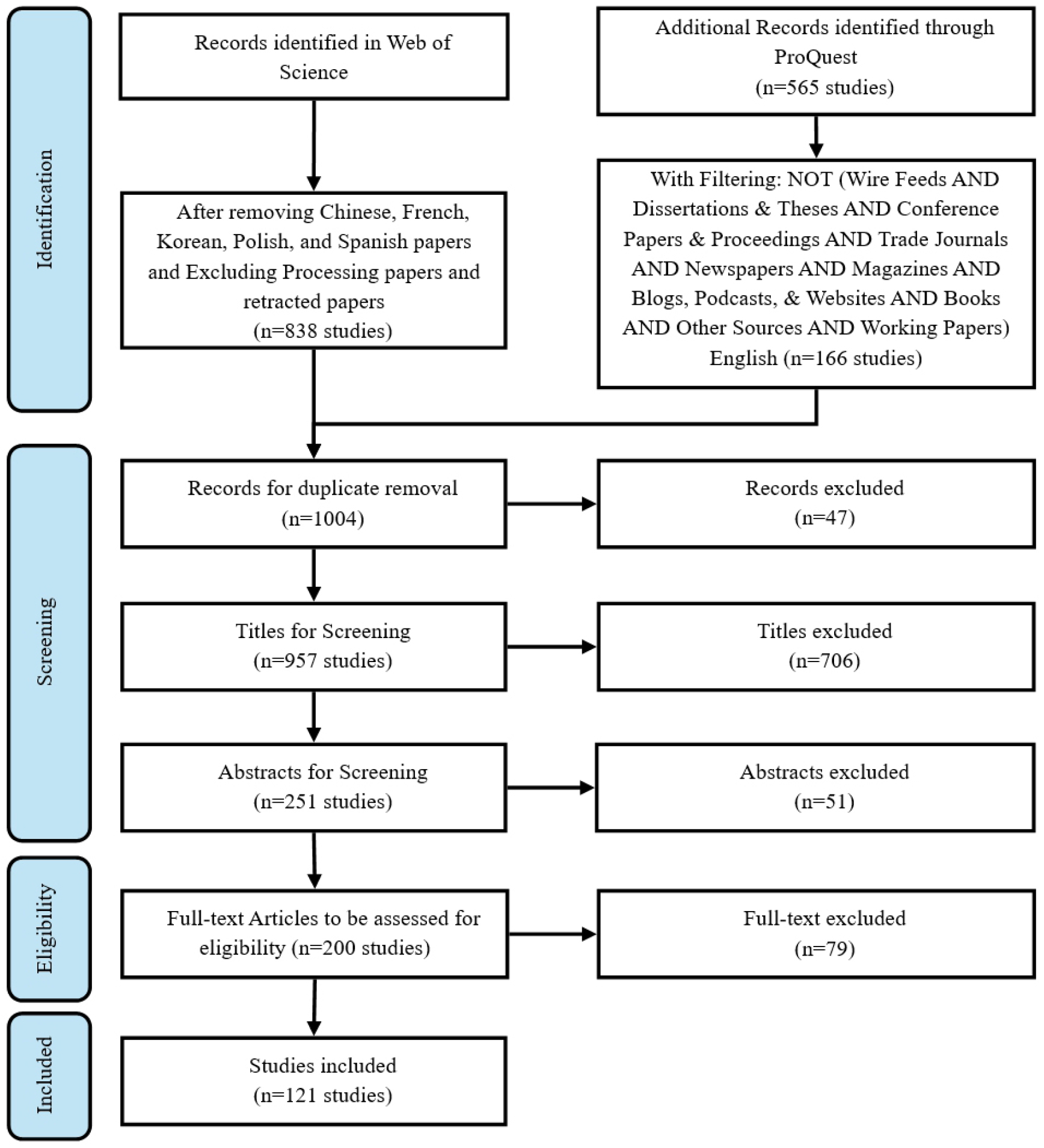
In the first stage of the framework, a scoping review was conducted to systematically map and categorize both conventional and emerging risk factors in GRS, particularly those associated with sensor integration, environmental variability, and installation practices. The scoping review adhering to the PRISMA-ScR (Preferred Reporting Items for Systematic Reviews and Meta-Analyses extension for Scoping Reviews) guidelines, as outlined by Tricco et al. (2018), provides a structured methodology for identifying, screening, and selecting relevant studies. By applying these guidelines, this review aims to maximize transparency and reproducibility, with Fig. 4 illustrating the study workflow used to ensure systematic and comprehensive literature capture.
The choice of a scoping review reflects the necessity to explores a broad range of risk factors in different engineering contexts, which could not be fully addressed by the narrower focus of a systematic review (Adams et al., 2016). Scoping reviews are particularly suited to mapping out literature in fields where both traditional and rapidly evolving factors, such as sensor technology integration, influence the subject matter. This approach allows the study to provide a comprehensive overview of the varied and emerging risks affecting GRS, forming a foundational basis for subsequent analysis and network mapping.
The review examined studies on the factors contributing to premature failure risks in GRS across geological, engineering, and installation contexts, including systems with integrated sensors. The literature search was conducted using Web of Science (WoS) and ProQuest databases, selected for their complementary strengths in providing a diverse range of high-quality, peer-reviewed content across engineering and interdisciplinary fields. WoS was chosen for its extensive indexing of technical and scientific literature, particularly in engineering, material science, and geotechnics, as it is well-regarded for high-impact journal coverage that provides rigorously vetted research on ground reinforcement risks (Mongeon and Paul-Hus, 2016; Ojemaye and Okoh, 2021). ProQuest offers comprehensive access to both academic and professional literature, making it ideal for capturing practical insights, technical reports, and studies on emerging trends, which often provide an applied perspective on risk factors such as sensor integration and installation quality (Cerruti, 2019; Minashkina and Happonen, 2022). The combination of these databases broadens the scope of the review, capturing both empirical research and applied findings across diverse engineering contexts (Setiyorini et al., 2022).
The search used Boolean search strings that were customized for both WoS and Proquest to target studies covering key topics such as mechanical behavior, testing methods, and performance characteristics of GRS. The WoS search string was as follows:
((TS=(rock bolts) OR TS=(soil nailing) OR TS=(anchor bolts)) AND ((TS=(steep slopes) OR TS=(rock slopes) OR TS=(tunnel) OR TS=(slope stabilization))) AND ((TS=(risk factors) OR TS=(risk assessment) OR TS=(risk management) OR TS=(failure) OR TS=(early failure) OR TS=(corrosion) OR TS=(material degradation) OR TS=(monitoring) OR TS=(sensor integration) OR TS=(strain gauges) OR TS=(displacement sensors) OR TS=(sensors) OR TS=(testing) OR TS=(analysis) OR TS=(inspection) OR TS=(emerging risk factors)))).
For ProQuest, a complimentary search string was constructed to emphasize monitoring and sensor integration in reinforcement systems:
((TI(“rock bolt failure”) AND SUMMARY(“monitoring”)) OR (TI(“rock bolt”) OR TI(“soil nailing”) AND SUMMARY(“monitoring”)) OR (TI(“rock bolts”) OR TI(“soil nailing”) AND SUMMARY(“risk factors”) AND SUMMARY(“sensor integration”)) OR (TI(“risk factors”) AND (TI(“rock bolts”) OR TI(“soil nailing”))) OR (TI(“sensor”) AND SUMMARY(“management”))).
By narrowing the review to these topics, the study ensured that the selected articles were highly relevant to its scope. Studies that addressed topics such as mechanical behavior, corrosion, and material degradation of sensors in reinforcement systems were prioritized, especially those that examined how environmental and operational factors contribute to premature system failure. The search included studies published between 2003 and 2024 to ensure inclusion of both foundational research and recent advancements in the field.
The initial search in WoS yielded 1,176 studies, which was narrowed to 1,162 after excluding non-English publications (Chinese, French, Indonesian, Korean, Polish, and Spanish). Additional exclusions, including proceeding papers, processing papers, and retracted articles, further refined the dataset to 838 studies. Similarly, the ProQuest search initially retrieved 565 records, which were filtered to exclude dissertations, trade journals, conference papers, and non-peer-reviewed sources, resulting in a final set of 166 English-language studies. In total, the literature search produced 838 studies from WoS and 166 from ProQuest.
Screening was then conducted using Rayyan software (Kellermeyer et al., 2018), to streamline the reference management process. Here, the removal of duplicates followed by a three-step screening process was done. The titles were first screened based on relevance and abstracts were reviewed for relevance, followed by a full-text review for studies that met initial criteria. Extracted data included study context, reinforcement types discussed, identified risk factors, and specific insights related to sensor integration or environmental impacts.
In this study, the scoping review approach strengthened the text mining process by establishing a robust, systematic foundation for extracting and analyzing relevant terms, trends, and relationships across the identified literature. Through text mining, the study efficiently identified complex relationships among risk factors, capturing interdependencies and patterns that may influence system reliability. Text mining thus amplified the scoping review’s ability to map emerging themes across a large dataset, enhancing the visualization of interconnected risks through network analysis (Cooper et al., 2018). Given the rapid developments in engineering materials and methods, integrating text mining within a scoping review is a reliable approach to highlight emergent themes that inform best practices and safety protocols in real-time.
Text Mining
With the finalized selection of studies, text mining techniques was applied to systematically identify terms representing risk factors associated with ground reinforcement failures. Text mining is a data mining technique used for extracting meaningful information form unstructured data in various fields including education, management, medical, and construction (Park and Kim, 2021). In this study, text mining and network analysis was performed using Google Colab on the full-text documents of the included studies. This approach extracted key terms and risk factors relevant to the premature failure of these reinforcement systems, providing insights into patterns and relationships in a data-driven manner.
The process began with the extraction of relevant text from the full-text PDFs of the 121 studies (Table 1) included in the review. Preprocessing steps in Google Colab included tokenization, lowercasing, and removing stop words to standardize the dataset. Lemmatization was then applied to consolidate similar terms, ensuring consistency in how concepts were represented. Following, a co-occurrence matrix was constructed to examine the relationships between terms, which helped reveal patterns among frequently co-occurring risk factors.
The structured output from the text mining analysis was then used as input for network analysis, which is described in the following section. By systematically extracting and quantifying relevant terms, text mining provided insights into commonly identified risks and their interconnections, setting the foundation for deeper analysis through network visualization.
Table 1.
Studies used for text mining
| Author | Title |
| 2003-2010 | |
| Gamboa and Atrens (2003) | Stress Corrosion Cracking Fracture Mechanisms in Rock Bolts |
| Cai et al. (2004) | An Analytical Model to Predict Axial Load In Grouted Rock Bolt for Soft Rock Tunnelling |
| Karanam and Dasyapu (2005) | Experimental And Numerical Investigations of Stresses in a Fully Grouted Rock Bolts |
| Yeung et al. (2007) | Field Evaluation of a Glass-Fiber Soil Reinforcement System |
| Rahman et al. (2008) |
Effect Of Different Salts on The Corrosion Properties of Friction Type A607 Steel Rock Bolt in Simulated Concentrated Water |
| Yin and Zhou (2009) | Influence of Grouting Pressure and Overburden Stress on the Interface Resistance of a Soil Nail |
| Li (2010) | Field Observations of Rock Bolts in High Stress Rock Masses |
| 2011-2015 | |
| Deb and Das (2011) | Modelling Of Fully Grouted Rock Bolt Based on Enriched Finite Element Method |
| Divi et al. (2011) |
Corrosion Susceptibility of Potential Rock Bolts in Aerated Multi-Ionic Simulated Concentrated Water |
| Sun et al. (2011) | Numerical Simulation of the Rock Bolts Non-Destructive Testing Based on ANSYS |
| Yan (2011) | FEM Analysis of Composite Soil-Nailing Considering Tensile Failure |
| Li (2012) | Performance of D-bolts Under Static Loading |
| Jeon (2012) | Pull-out tests and slope stability analyses of nailing systems comprising |
| Lee et al. (2012) | Evaluation Of Rock Bolt Integrity Using Fourier and Wavelet Transforms |
| He et al. (2012) | Testing of Anchored Rock Bolt with Ultrasonic Guided Wave |
| Xie (2012) | Research on Deformation Prediction of Foundation Pit Braced by Complicate Soil Nailing |
| Villalobos et al. (2013) | Re-Assessing A Soil Nailing Design in Heavily Weathered Granite After a Strong Earthquake |
| Li (2013) | Numerical Simulation of Rock Bolt Deformation under Dynamic Load |
| Nie et al. (2014a) | Development of Rock Bolt Elements in Two-Dimensional Discontinuous Deformation Analysis |
| Nie et al. (2014b) | Numerical Studies On Rockbolts Mechanism Using 2D Discontinuous Deformation |
| Ranjbarnia et al. (2014) | A Simplified Model to Study the Behavior of Pre-Tensioned Fully Grouted Bolts |
| Jiang et al. (2014) |
Time-Dependent System Reliability of Anchored Rock Slopes Considering Rock Bolt Corrosion Effect |
| Li (2014) | Impact Toughness Influence on the Bending Properties of Rock Bolt |
| Ghadimi et al. (2015) | An Analytical Model to Predict Shear Stress Distribution in Fully Encapsulated Rock Bolts |
| Komurlu and Kesimal (2015) | Improved Performance of Rock Bolts using Sprayed Polyurea Coating |
| He et al. (2015) | Fully Grouted Rock Bolts: An Analytical Investigation |
| Srivastava and Singh (2015) | Effect of Fully Grouted Passive Bolts on Joint Shear Strength Parameters in a Blocky Mass |
| Wei et al. (2015) | Corrosion Monitoring of Rock Bolt by Using a Low Coherent Fiber-Optic Interferometry |
| Zheng et al. (2015) | Serial Decoupling of Bolts in Coal Mine Roadway Supports |
| 2016-2020 | |
| Kwaśniewski et al. (2016) | Rock Bolts Health Monitoring Using Self-Excited Phenomenon |
| Li (2016) | Analysis of Inflatable Rock Bolts |
| Showkati et al. (2016) |
An Analytical Solution for Stresses Induced by A Post-Tensioned Anchor in Rocks Containing Two Perpendicular Joint Sets |
| Li et al. (2016) | Behavior of Fiber Glass Bolts, Rock Bolts and Cable Bolts in Shear |
| Sun et al. (2016) |
Improved Probabilistic Neural Network PNN and Its Application to Defect Recognition in Rock Bolts |
| Li (2017) | Principles of Rockbolting Design |
| Li et al. (2017) |
The Experimental Study of the Temperature Effect on the Interfacial Properties of Fully Grouted Rock Bolt |
| Song et al. (2017) | A Review of Rock Bolt Monitoring Using Smart Sensors |
| Ho et al. (2017) | A Load Measuring Anchor Plate for Rock Bolt Using Fiber Optic Sensor |
| Liu and Li (2017) | Analytical Study of the Mechanical Behavior of Fully Grouted Bolts in Bedding Rock Slopes |
| Rawat et al. (2017) | Pullout Of Soil Nail with Circular Discs: A Three-Dimensional Finite Element Analysis |
| Sharma et al. (2017) | Laboratory Study on Pullout Capacity of Helical Soil Nail In Cohesionless Soil |
| Hao et al. (2018) |
Non-Destructive Inspection on Anchorage Defect of Hollow Grouted Rock Bolt Using Wavelet Transform Analysis |
| Hao et al. (2018) | Non-Destructive Testing of Full-Length Bonded Rock Bolts Based on HHT Signal Analysis |
| Yu et al. (2018) | Nondestructive Integrity Evaluation of Soil Nails Using Longitudinal Waves |
| Liang and Fang (2018) |
Application of Fiber Bragg Grating Sensing Technology for Bolt Force Status Monitoring in Roadways |
| Meng et al. (2018) | Experimental Study on the Shear Behavior of Bolted Concrete Blocks with Oblique Shear Test |
| Nakamoto et al. (2018) | Centrifuge Modelling of Rock Bolts with Facing Plates |
| Wu et al. (2018) | An Experimental Framework for Simulating Stress Corrosion Cracking in Cable Bolts |
| Salcher and Bertuzzi (2018) | Results Of Pull Tests of Rock Bolts and Cable Bolts in Sydney Sandstone and Shale |
| Tahmasebinia et al. (2018) |
Numerical And Analytical Simulation of The Structural Behaviour of Fully Grouted Cable Bolts Under Impulsive Loading |
| Sun et al. (2018) | Non-Destructive Test Method of Rock Bolt Based On D-S Evidence and Spectral Kurtosis |
| Wang et al. (2019a) |
Experimental Study on Degradation Behaviors of Rock Bolt Under The Coupled Effect Of Stress And Corrosion |
| Bačić et al. (2019) | Trends In Non-Destructive Testing of Rock Bolts |
| Wang et al. (2019b) | Investigating The Supporting Effect of Rock Bolts In Varying Anchoring Methods In A Tunnel |
| Chen et al. (2019) | The Analytical Approach to Evaluate the Load‐Displacement Relationship of Rock Bolts |
| Zhu et al. (2019) | Corrosion Damage Behavior of Prestressed Rock Bolts under Aggressive Environment |
| Lin et al. (2019) | Early Warning of Rock Slope Failure Based on Bolt Axial Force Monitoring |
| Cai et al. (2019) | Development Of Two New Rockbolts for Safe and Rapid Tunneling in Burst-Prone |
| Guo et al. (2019) |
Testing Mechanical Properties of Rock Bolt under Different Supports Using Fiber Bragg Grating Technology |
| Wu et al. (2019b) | Performance of a New Yielding Rock Bolt Under Pull and Shear Loading Conditions |
| Wu et al. (2019a) | Shear Performance of Rock Joint Reinforced by Fully Encapsulated Rock Bolt |
| Wu et al. (2019c) | Experimental Study on the Performance of Rock Bolts in Coal Burst-Prone Mines |
| Li et al. (2019) | Laboratory Testing and Modeling of a High-Displacement Cable Bolt |
| Aghchai et al. (2020a) |
Analytically Determining Bond Shear Strength of Fully Grouted Rock Bolt Based on Pullout Test Results |
| Aghchai et al. (2020b) |
In Situ Rock Bolt Pull Tests Performance in an Underground Powerhouse Complex: A Case Study in Sri Lanka |
| Arêdes et al. (2020) | Pullout Testing of Soil Nails in Gneissic Residual Soil |
| Li et al. (2020) |
Model Test of The Stability Degradation of A Prestressed Anchored Rock Slope System In A Corrosive Environment |
| Che et al. (2020) | DEM Investigation of Rock-Bolt Mechanical Behaviour in Pull-Out Tests |
| Ding and Gu (2020) |
Analysis of the Mechanical Characteristics of Bolts under Roof Separation Based on Exponential Function |
| Hadjigeorgiou et al. (2020) | Impact of Steel Properties on the Corrosion of Expandable Rock Bolts |
| Hao et al. (2020) |
A Novel Energy-Absorbing Rock Bolt with High Constant Working Resistance and Long Elongation: Principle and Static Pull-Out Test |
| Yu et al. (2020) |
Performance Evaluation of GFRP Rock Bolt Sensor for Rock Slope Monitoring by Double Shear Test |
| Kang et al. (2020) |
Experimental Study on the Mechanical Behavior of Rock Bolts Subjected to Complex Static and Dynamic Loads |
| Komurlu et al. (2020) | Investigation of Load Bearing Capacities of Grouted Rock Bolts with New Auxetic Head Designs |
| Mahmoudi-Mehrizi et al. (2020) | Physical Modeling of the Helical Anchor Walls’ Behavior Using Particle Image Velocity |
| Peng and Timms (2020) |
Hydrogeochemical Modelling of Corrosive Environment Contributing to Premature Failure of Anchor Bolts in Underground Coal Mines |
| Wang et al. (2020) |
An Improved Numerical Simulation Approach for the Failure of Rock Bolts Subjected to Tensile Load in Deep Roadway |
| Sjölander et al. (2020) |
Verification Of Failure Mechanisms and Design Philosophy for A Bolt-Anchored and Fibre- Reinforced Shotcrete Lining |
| Vlachopoulos et al. (2020) |
The Performance of Axially Loaded, Fully Grouted Rock Bolts Based on Pull-Out Experiments Utilizing Fiber Optics Technology and Associated Numerical Modelling of Such Support Elements |
| Zhang et al. (2020a) | An Analytical Model for Estimating the Force and Displacement of Fully Grouted Rock Bolts |
| Chen et al. (2020b) | Experimental Study of Bolt-Anchoring Mechanism for Bedded Rock Mass |
| Wu et al. (2020) |
Experimental Research on the Mechanical Performance of the Bolted Rock under Lateral Impact Load: Effect of Prestress, Body Material, and Anchorage Style |
| Chen et al. (2020a) | Analysis of Deformation Characteristics of Fully Grouted Rock Bolts Under |
| Zhang et al. (2020b) | An Investigation into Bolt Anchoring Performance during Tunnel Construction in Bedded Rock Mass |
| Yu and Lee (2020) | Smart Sensing Using Electromagnetic Waves for Inspection of Defects in Rock Bolts |
| 2021-2024 | |
| Zheng et al. (2021) | Analytical Model of Shear Mechanical Behaviour of Bolted Rock Joints |
| Chen et al. (2021b) | Analytical Studying the Axial Performance of Fully Encapsulated Rock Bolts |
| Chen et al. (2021a) |
Analytical Study of the Confining Medium Diameter Impact on Load-Carrying Capacity of Rock Bolts |
| Zhao et al. (2021) | A Pull-Out Test Study on the Working State of Fully Grouted Bolts |
| Wu et al. (2021) |
A Study of the Anchorage Body Fracture Evolution and the Energy Dissipation Rule: Comparison between Tensioned Rock Bolts and Torqued Rock Bolts |
| Song et al. (2021) | Deformation and Mechanical Properties of a Constant‐Friction‐Force Energy‐Absorbing Bolt |
| Ma et al. (2021) |
Electrochemical Study of Stainless-Steel Anchor Bolt Corrosion Initiation in Corrosive Underground Water |
| Yuan et al. (2021) |
Experimental And Numerical Investigation on The Deterioration Mechanism for Grouted Rock Bolts Subjected to Freeze–Thaw Cycles |
| Chang et al. (2021) |
Influence Of Anchorage Length and Pretension on The Working Resistance of Rock Bolt Based on Its Tensile Characteristics |
| Li et al. (2021) |
Investigation on Methods of Determining the Grouting Quality of Embedded Rock Bolts Using High Frequency Guided Waves |
| Chen et al. (2021c) | Studying The Performance of Fully Encapsulated Rock Bolts with Modified Structural Elements |
| Zhang et al. (2021) | Study on Stress and Deformation of Bolt Joints of Shield Tunnel under Static and Seismic Action |
| Goyal and Shrivastava (2022) |
Analysis of Conventional and Helical Soil Nails Using Finite Element Method and Limit Equilibrium Method |
| Frenelus et al. (2022) |
An Insight from Rock Bolts and Potential Factors Influencing Their Durability and the Long-Term Stability of Deep Rock Tunnels |
| Tahmasebinia et al. (2022) |
A Numerical Investigation to Calculate Ultimate Limit State Capacity of Cable Bolts Subjected to Impact Loading |
| Guo et al. (2022) | Design And Mechanical Characteristics Research of Rock Burst Prevention |
| Li et al. (2022a) |
Experimental Study of the Effect of Axial Load on Stress Wave Characteristics of Rock Bolts Using a Non-Destructive Testing Method |
| Sun et al. (2022) |
Failure Mechanism of Anchored Rock under Constant Resistance Values of Cable Based on Particle Flow Code |
| Chen et al. (2022b) |
Investigating the Influence of Embedment Length on the Anchorage Force of Rock Bolts with Modified Pile Elements |
| Xiong et al. (2022) |
Numerical Modeling of an Umbrella-Shaped Bolt and Its Anchorage Characteristics in Rock Engineering |
| Du et al. (2022) | Progress and Perspectives of Geotechnical Anchor Bolts on Slope Engineering in China |
| Li et al. (2022b) |
Simulation Study on Mechanical Characteristics of Rock Bolt in Rock Mass with Bedding Separation Based on the Nonlinear Bond Slip Relationship |
| Chen et al. (2022a) |
Studying the Bond Performance of Full-Grouting Rock Bolts Based on the Variable Controlling Method |
| Yu et al. (2022) | Study on Bond Defect Detection in Grouted Rock Bolt Systems under Pullout Loads |
| Ren et al. (2023) | Evaluation Of the Properties and Applications of FRP Bars and Anchors |
| He et al. (2023) | Mechanical Behavior of Anchor Bolts for Shallow Super-Large-Span Tunnels in Weak Rock Mass |
| Jiang et al. (2023a) |
Mechanical Behavior of Fully Grouted Rock Bolts in Hydraulic Tunnels Subjected to Elevated Ground Temperatures |
| Zhu et al. (2023) |
Mechanical Properties of Full-Grouted Prestressed Anchor Bolts under Typical Bed-Separation Conditions |
| Li et al. (2023) | Mechanical Properties of GFRP Bolts and Its Application in Tunnel Face Reinforcement |
| Lama and Momayez (2023) | Review of Non-Destructive Methods for Rock Bolts Condition Evaluation |
| Gregor et al. (2023) | Shear Behaviour of Fibreglass Rock Bolts for Various Pretension Loads |
| Feng et al. (2023) | Study On Stress Variation of Advance Fiberglass Anchor Bolts During Tunnel Excavation Process |
| Staniek (2023) | Technical Problems and Non Destructive Testing Of Rock Bolt Support Systems In Mines |
| Chen et al. (2023) | The Effectiveness of Epoxy Coating for Preventing Microbially Induced Corrosion of Rock Bolts |
| Zhao et al. (2024) | Failure Mechanism of Fully Grouted Rock Bolts Subjected to Pullout Test |
| Chen and Xiao (2024) | State-Of-The-Art on The Anchorage Performance of Rock Bolts Subjected to Shear Load |
Network Analysis
Following the selection and text mining of relevant studies, network analysis was conducted to visualize the relationships among identified risk factors in GRS. This approach maps connections within complex systems to identify key risk factors, reveal clusters, and highlight influential elements affecting system stability and reliability. By using co-occurrence data from the text mining results, the analysis provided a structured view of interdependence, offering insights into the complex interactions that impact reinforcement performance. Visualization and analysis were conducted in Gephi (Bastian et al., 2009), employing a combination of algorithms — Force Atlas 2, Yifan Hu, and Open Ord — to enhance clarity, stability, and interpretability of the network. Each algorithm contributed distinct strengths to the analytical process, culminating in a cohesive visualization that systematically maps the interconnections among risk factors and highlights clusters of emerging risks.
The Force Atlas 2 algorithm was applied first to establish an organized layout by balancing attraction-repulsion dynamics, grouping related risk factors while keeping unrelated ones visually distinct. This algorithm clusters nodes with strong associations, outlining core themes, such as environmental and mechanical risks, with a clear visual separation that enhances the readability of major categories (Olszowski et al., 2022), was applied to cluster related terms. Following this initial clustering, the Yifan Hu algorithm was used to refine and stabilize the layout. By coarsening the network graph into a reduced scale, optimizing spatial organization, and expanding it back to its original size, Yifan Hu ensures even distribution of nodes, minimizes overlaps, and enhances proportional spacing. This refinement step is particularly beneficial for complex networks, maintaining the clusters from Force Atlas 2 while enhancing readability and interpretability (Nikkhah et al., 2021). Lastly, Open Ord algorithm was implemented to detect community structures and highlight nodes within the stabilized network. By identifying communities through modularity, Open Ord reveals clusters with strong internal connections, highlighting influential nodes that serve as critical connectors within the network (Nikkhah et al., 2021).
These algorithms allowed for the effective mapping of connections between various risk factors and failure nodes, revealing clusters of risk factors commonly associated with specific failure modes and helping identify emerging risk factors. The network relationships between the risk factors and failure modes are illustrated in the following sections through a network graph.
This methodology, combining scoping review with text mining and network analysis, provides a comprehensive approach to identifying and understanding the complex risk landscape affecting GRS. The following section presents the synthesis of findings, with a detailed discussion on the major risk factors and their interdependencies as visualized through network analysis.
Results and Discussion
This section analyzes the various risk factors affecting GRS, organized into four primary domains: geological and environmental factors, failure modes and mechanisms, engineering and design considerations, and installation and operational factors. By employing text mining and network analysis, the study presents a framework for understanding these risk factors and how they interact within GRS. The network analysis methodology is designed to uncover patterns and relationships, visually mapping connections among risk factors and clustering related elements. This approach provides an organized structure for examining the diverse and interconnected nature of challenges that influence reinforcement stability and functionality, especially as sensor technologies increasingly play a role in monitoring and risk management.
Each of the four identified risk categories is examined in detail, beginning with geological and environmental factors, which impact reinforcement performance over time. Subsequent sections address remaining domains each with implications for the long-term resilience of GRS.
Network Analysis
The network analysis of GRS reveals three primary clusters, each representing interrelated risk factors that influence the systems’ performance and resilience. Visualized in Fig. 5, these clusters are differentiated by color: magenta for mechanical and material risks, green for environmental and operational risks, and red for soil-specific risks. Each cluster comprises nodes that represent specific risk factors, with edges illustrating their co-occurrence, thereby highlighting how certain risks aggregate and interact within GRS. This clustering offers an initial framework for understanding the interdependence within the network, providing a foundational basis for more nuanced analysis.
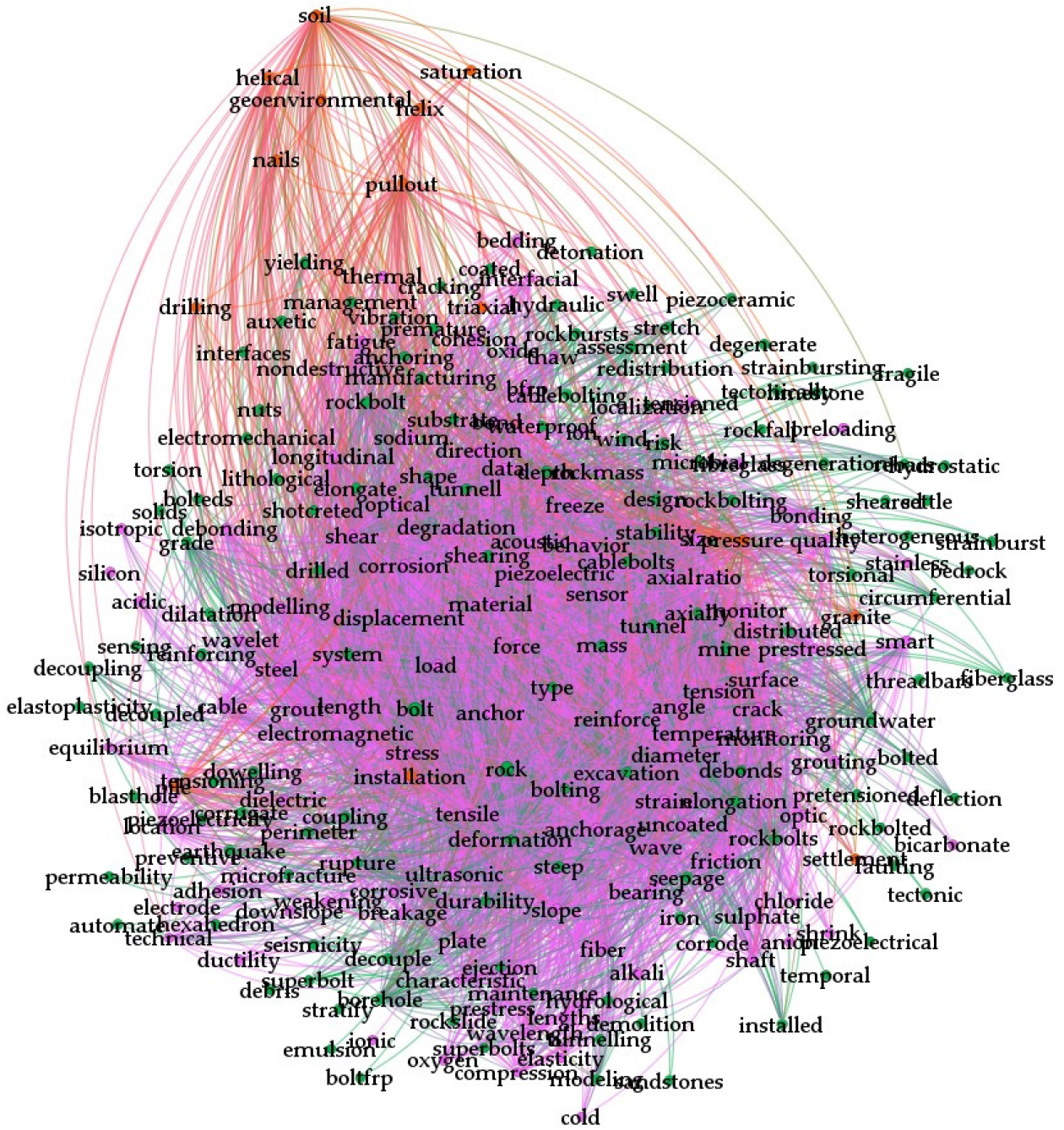
The magenta cluster is densely populated with nodes related to mechanical and material risks, such as force, material type, deformation, thermal fatigue, and corrosion. This high density underscores the interwoven nature of mechanical and material properties in GRS, suggesting that degradation in one area, such as thermal fatigue, may propagate through related properties, compromising the overall durability of reinforcement elements. The interconnectedness within this cluster points to the critical role of robust material properties in sustaining the longevity and stability of GRS under stress, particularly where single-point weaknesses could result in cascading failures.
Surrounding and overlapping the magenta cluster is the green cluster, encompassing environmental and operational risks, including factors such as moisture, temperature, strain burst, shear stress, and deflection. The overlap between the magenta and green clusters suggests a high degree of interdependency; environmental conditions, such as moisture fluctuations and temperature changes, can significantly exacerbate material degradation processes like corrosion and fatigue. This overlap highlights the necessity of materials that can withstand environmental stresses alongside mechanical loads. Nodes like corrosion and thermal fatigue, positioned at the intersection of these clusters, reveal how environmental factors directly impact mechanical integrity. This insight emphasizes that addressing mechanical durability alone is insufficient; materials must be engineered to resist environmental influences to mitigate premature degradation.
The red cluster, centered on soil-specific risks with “soil” as its central node, operates somewhat independently but remains crucial to overall GRS stability. Key nodes in this cluster, such as saturation, pullout resistance, and helical nail integrity, illustrate the fundamental role of soil properties in establishing the foundational stability required for GRS anchorage. While soil-specific risks exhibit fewer direct connections to the mechanical or environmental risks seen in the magenta and green clusters, their indirect influence on overall stability is substantial. The minimal interaction between red and magenta clusters suggests that, while soil conditions may not directly affect material properties, they exert a profound influence on foundational anchorage and load distribution. This independence emphasizes the need for thorough site-specific soil assessments when designing GRS, as soil stability forms the bedrock upon which reinforcement efficacy is established.
The interactions observed across clusters, particularly where green (environmental and operational risks) intersects with magenta (mechanical and material risks), have substantial implications for GRS design, monitoring, and resilience. Nodes that bridge environmental and mechanical categories, such as corrosion, moisture, and thermal stress, highlight the need for materials that resist both environmental and structural stressors. This finding indicates that focusing solely on mechanical durability is insufficient; GRS materials must be engineered to withstand diverse stress profiles to mitigate premature failure. Conversely, the minimal interaction between soil-specific risks (red) and mechanical risks (magenta) suggests that soil characteristics, while not directly impacting material performance, play an essential role in foundational stability, further underscoring the importance of integrating geotechnical assessments into reinforcement design.
While the network analysis reveals three clusters, the study adopts a broader analytical framework structured around four conceptual domains: geological and environmental factors, failure modes and mechanisms, engineering and design considerations, and installation and operational factors. This expanded framework facilitates a more comprehensive review by encompassing both interconnected and relatively isolated risks, addressing the multifaceted nature of GRS vulnerabilities. The clustering identifies immediate interdependencies, while the four-domain framework provides a systematic approach that captures both direct and contextual risk factors, allowing for an organized and comprehensive analysis of GRS resilience.
The rationale for separating the findings into four domains lies in the need to capture a holistic view of the risk landscape. Although the network analysis provides insight into immediate co-occurrences among risk factors, the four domains allow for a broader categorization that includes risk factors not immediately apparent within clustered structures. By integrating both closely linked and peripheral risks, this structure supports a nuanced exploration of how different categories contribute to system resilience, beyond the constraints of visible network clusters. The four-domain framework thereby extends the analysis, enabling a more robust assessment of GRS stability, durability, and reliability.
These findings align with the study’s objective to systematically identify and categorize both conventional and emerging risk factors, especially in the context of sensor integration. The network analysis not only visualizes interdependencies but also provides a structured basis for developing targeted mitigation strategies that address the complex interactions inherent in GRS stability. The following sections explore each of the four domains in depth, presenting key insights from the network analysis and discussing their implications for GRS design, monitoring, and operational practices. This structured approach ultimately informs risk mitigation strategies, contributing to the development of more resilient and reliable ground reinforcement systems capable of withstanding both established and emerging challenges.
Geological and Environmental Factors
Geological and environmental conditions heavily influence the performance and longevity of ground reinforcements by creating complex challenges in the stability of both soil and rock masses. One prominent example revealed by the network analysis is corrosion, a well-documented environmental risk factor that is strongly linked to both green (environmental) and magenta (mechanical) nodes. Corrosion weakens reinforcement elements, reducing bonding strength and overall performance, particularly in oxygen-rich environments. For instance, Song et al. (2017), reported that in the United Kingdom, the support failures are initiated by pitting corrosion, while in Australia, fractures have been associated with the combination of bending stress and stress corrosion cracking. Oxygen is a critical role in accelerating corrosion, particularly in aerated conditions (Li et al., 2020; Peng and Timms, 2020; Rahman et al., 2008; Zhu et al., 2019). The presence of chloride and sulfate ions in multi-ionic water significantly increases corrosion rates, a growing concern in recent studies (Divi et al., 2011). Ma et al. (2021) emphasized the emerging concern of the dual role of SO42- and HCO3- ions, which can significantly exacerbate material degradation, particularly in moisture-heavy environments. Additionally, Microbiologically Influenced Corrosion (MIC) is another emerging risk driven by microbial activity, which can produce acids and other by-products, accelerating degradation — particularly in humid, poorly ventilated conditions (Peng and Timms, 2020).
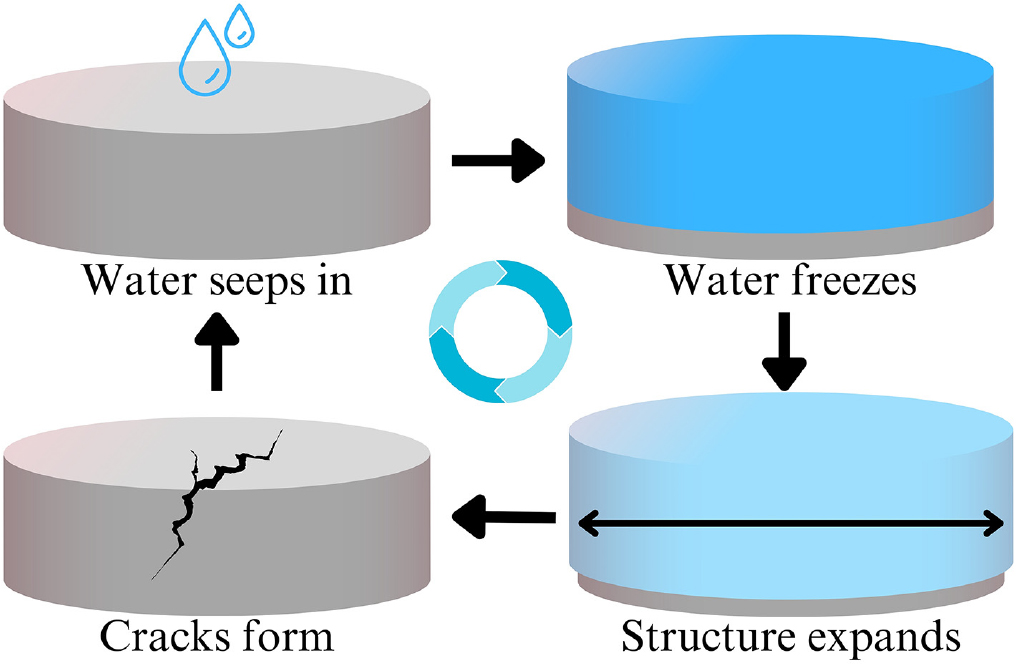
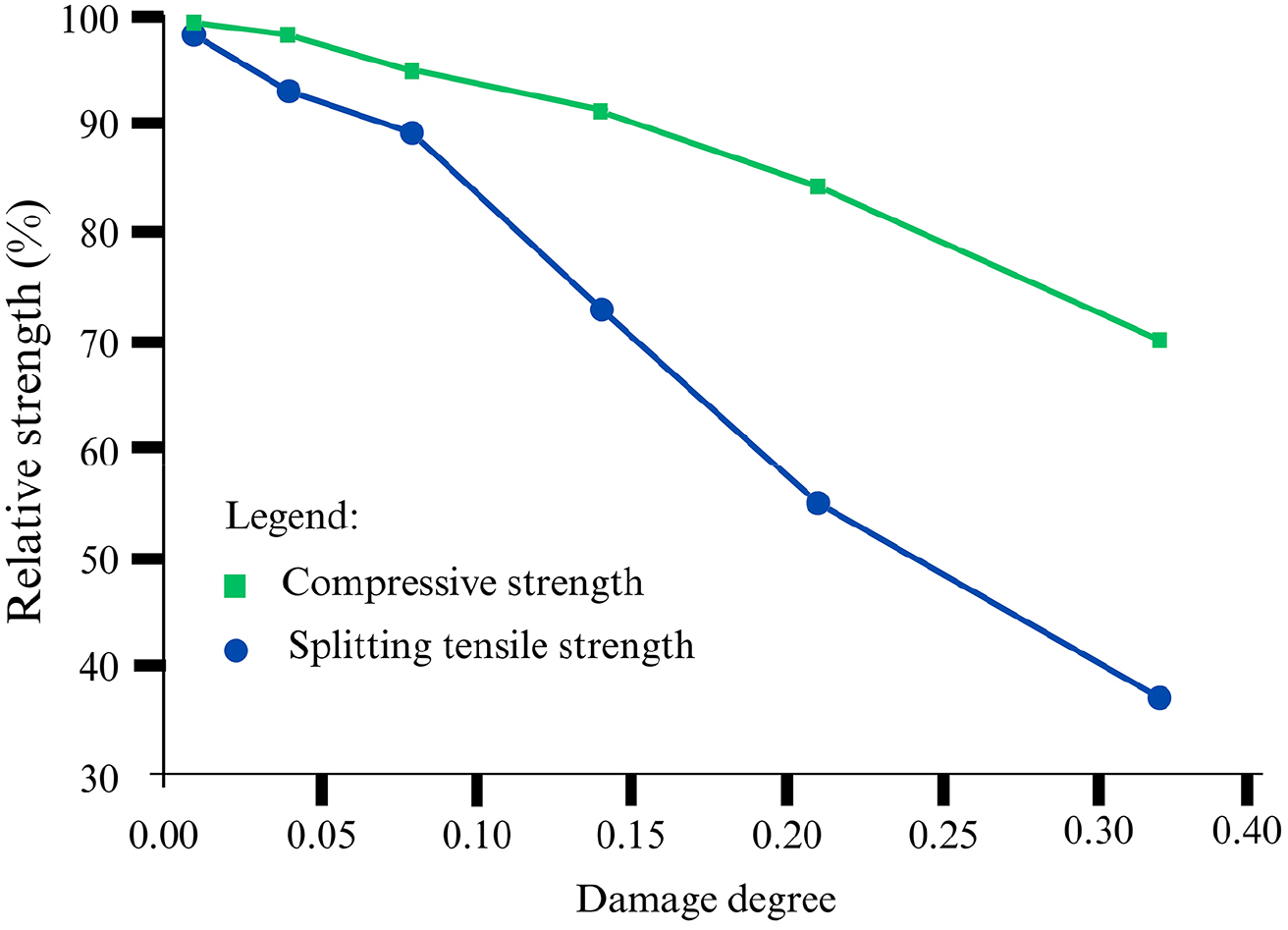
GRS are also threatened by freeze — thaw cycles, especially in regions with severe temperature fluctuations. The freeze-thaw cycle (Fig. 6) causes frost heaving as soil and rock water freezes, expands, and presses on surrounding materials. This process forms microcracks that weaken the anchorage of reinforcement systems over time. Yuan et al. (2021) found that the anchoring force of grout in rock bolts decreased by 27%, and the average bond strength reduced by 70%, after 30 freeze-thaw cycles. Similarly, Zhang and Zhao (2013) reported that the strength and elastic modulus of cohesive soils gradually decreased as the number of freeze-thaw cycles increased, indicating a clear correlation between these cycles and material deterioration. In their study on concrete materials, they found that after 350 freeze-thaw cycles, the modulus of elasticity was reduced to 68%, while the splitting tensile strength dropped to less than 40%, and the compressive strength was about 70% of the original values (Fig. 7).
Temperature fluctuations further exacerbate fatigue in GRS. Jiang et al. (2023a) demonstrated that at 80°C, maximum axial force on a bolt increased by 25% comparing to normal temperatures, affecting both the mechanical properties of the bolt and the surrounding material. These findings align with the network analysis, where nodes related to thermal stress and mechanical fatigue clustered together, underscoring how temperature variations can drive material degradation, especially under sustained or cyclic loading conditions.
In addition, dynamic loads from seismic activity, blasting, or rock bursts increase the risk of fatigue in reinforcement elements, such as rock bolts, leading to progressive weakening (Kang et al., 2020). Over time, the repeated application of these loads can induce fatigue in ground reinforcements progressively weakening them until failure occurs. Among the main issues associated with temperature fluctuations is the thermal expansion and contraction of soil nails, which may result in mechanical stresses within the nails and the adjacent soil. Thermal expansion and contraction from temperature changes can also induce tensile and compressive stresses in materials like soil nails, potentially causing cracking or failure (Hussain and Tangri, 2023).
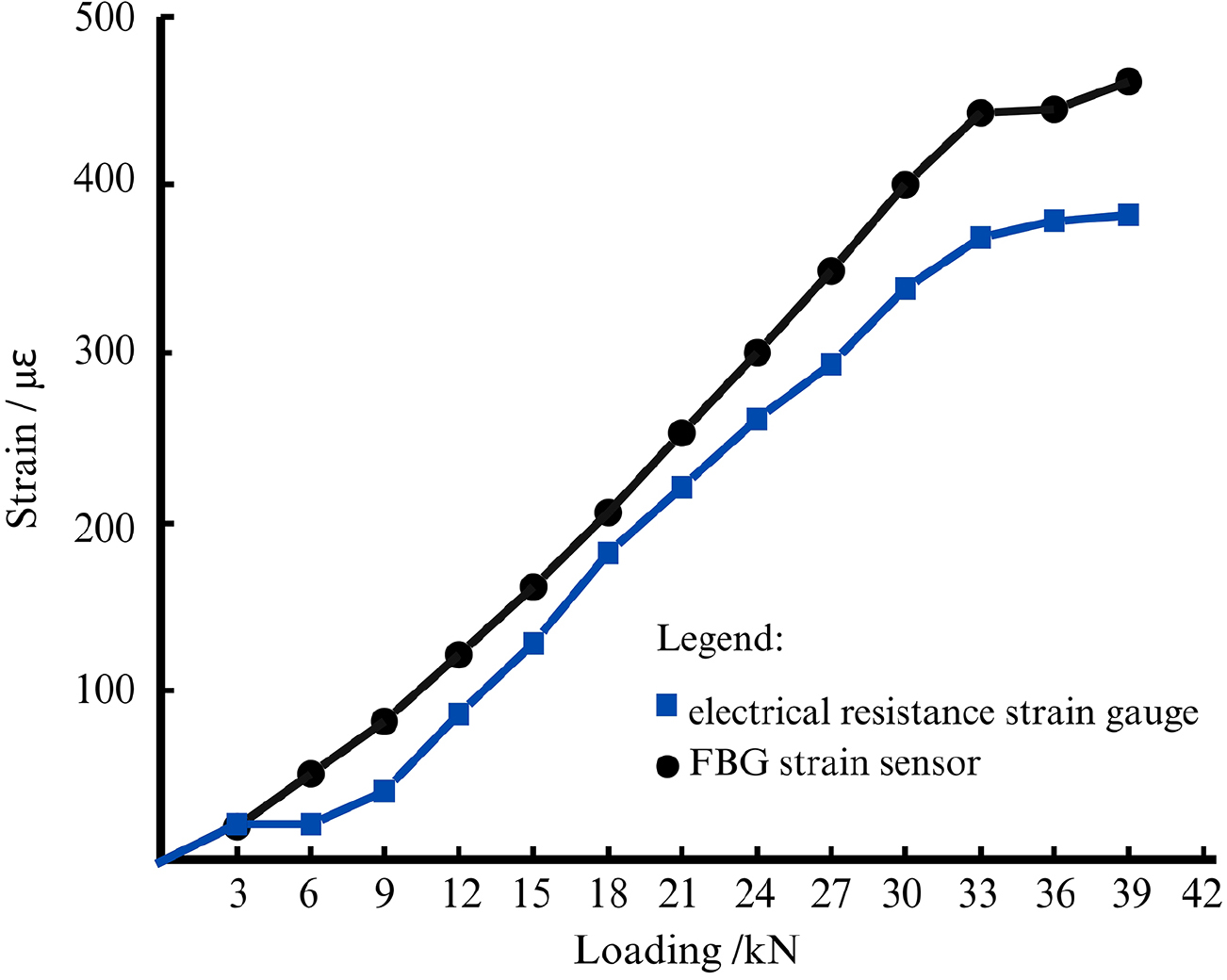
With the increasing integration of sensor technology in GRS (Ho et al., 2017; Sun et al., 2017), new challenges related to environmental conditions have emerged. Fiber Bragg Grating (FBG) sensors are increasingly used for monitoring rock bolts, soil nails, anchors, retaining walls, among other GRS. As shown in the study by Sun et al. (2017) on a geogrid-reinforced sand slope model, FBG sensors effectively measure strain distribution, with recorded strain values of up to 400 microstrain under loads exceeding 33kN, highlighting their utility in monitoring various reinforcement elements, shown in Fig. 8. Guo et al. (2019) found that while these sensors are effective at detecting mechanical changes, their performance can be compromised by oxygen and moisture levels, which accelerate corrosion and damage both the sensors and the reinforcement elements. Weng et al. (2015) and Tang et al. (2018) also noted that oxygen concentration affects the refractive index of optical fibers in FBG sensors, leading to erroneous strain measurements or sensor malfunctions.
Long term monitoring of GRS using sensors therefore must account for the fluctuations in oxygen levels and moisture, as these conditions impact the durability of the reinforcement systems and the reliability of the sensors. Frenelus et al. (2022) emphasize the importance of durability of monitoring systems, particularly in environments where corrosion and humidity degrade both the reinforcement elements and the sensors. Environmental risks not only contribute to the degradation of the reinforcement systems but also affect the development of mechanical failure modes, which are discussed in the following section.
These findings reveal the critical impact of environmental conditions on corrosion and structural degradation, underscoring the importance of choosing materials resistant to moisture and ionic compounds, particularly in high-risk settings like tunnels and mines. Monitoring systems, such as Fiber Bragg Grating (FBG) sensors, should be designed or shielded to withstand environmental fluctuations, as their accuracy can be compromised by moisture and oxygen levels. By prioritizing durable materials and sensors adapted to the environmental conditions, geotechnical engineers can help to mitigate accelerated degradation and improve the longevity of GRS.
Failure Modes and Mechanisms
Mechanical failures in GRS often occur when loading or deformation exceeds the material’s strength, leading to fractures and overall failure. One of the primary failure mechanisms is shear stress, which arises from the relative motion between reinforcement elements and the surrounding material. Cheng et al. (2021) explains that the application of shear loads results in an interaction between the reinforcement and the surroundings, producing both axial and transverse deformations in the reinforcement. The observed deformations may jeopardize the integrity of the anchorage, threatening the rock mass’s stability.
Zhao et al. (2020) identify two distinct types of shear stress that affect fully anchored reinforcements: deformation shear stress, which is caused by the movement or deformation of the surrounding rock and acts along the length of the reinforcement, and pull-out shear stress, which stems from the reinforcement’s anchoring mechanism, as forces acting on the bond attempt to extract the element from its socket. Over time, these forces degrade the system’s performance, leading to gradual failure. A critical insight is that non-uniform pretension exacerbates the effects of shear stress. Inconsistent pretension creates localized stress concentrations that may not be detected by conventional monitoring systems, raising concerns about the accuracy of failure predictions.
Another emerging risk is shear stress decay and debonding — a separation between the reinforcement and the surrounding material. Karanam and Dasyapu (2005) emphasize that shear stress decay leads to progressive debonding, which weakens the system’s load-bearing capacity. Ranjbarnia et al. (2014) highlight how shear stress decay progresses non-linearly, with an initially slow bond degradation that rapidly accelerates once weakening occurs. This concept is illustrated in Fig. 9, which shows the load-displacement relationship of rock bolts and the various stages of bond failure. Such risks are particularly significant in environments subject to cyclic loading, such as mining operations or areas prone to seismic activity.
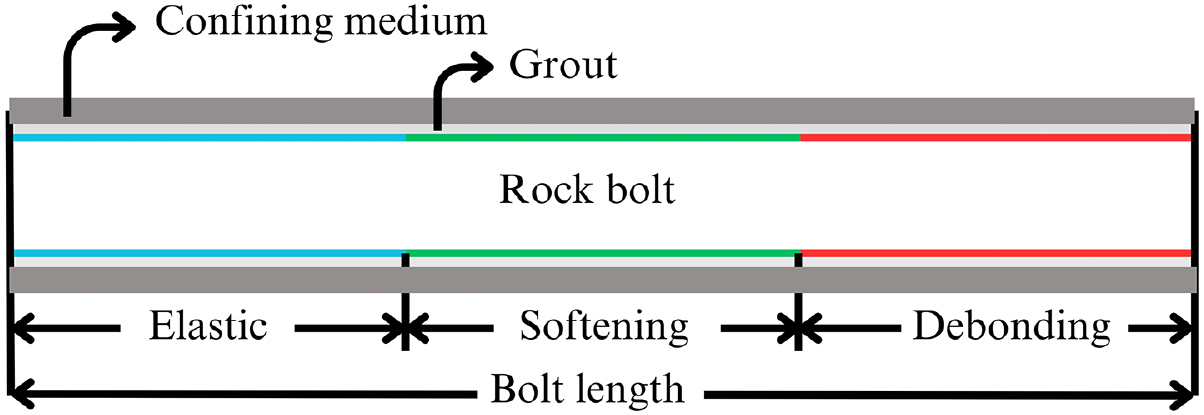
In environments exposed to dynamic loading — such as seismic activity or blasting — the risks with non-linear shear debonding become even more pronounced. Nie et al. (2014b) demonstrates that non-linear debonding alters the force distribution along a bolt reinforcement, causing significant displacement before yielding. Their study showed a 200% increase in displacement due to frictional debonding, creating localized failure points. The study expands on this, showing that pretension applied during installation significantly influences this non-linear behavior. Ma et al. (2021) found that the shear behavior of bolted rock joints is significantly affected by the pretension applied during installation. This means that well-applied pretension enhances shear stiffness, allowing the bolt to reach higher resistance at smaller displacements. However, excessive pretension can accelerate failure under dynamic conditions, presenting a challenge to conventional installation practices.
Non-uniform pretension is identified as a critical emerging factor affecting the performance of GRS. Variations in pretension along the length of the element lead to uneven stress distribution, as shown in the studies by Ranjbarnia et al. (2014) and Wang et al. (2019b) also demonstrated that increasing pretension significantly enhances the effective compression zone in surrounding rock, with average compressive stress rising from 0.036 MPa at 30 kN to 0.14 MPa at 120 kN. Where peak and residual pressures increased by up to 540.3% with higher pretension, demonstrating the critical role of pretension in improving tunnel stability and load-bearing capacity. However, this non-uniformity, especially in systems exposed to dynamic loads, leads to localized stress concentrations and early failure, which may go undetected by standard monitoring systems. This underscores the need for sophisticated monitoring systems that can provide real-time feedback on pretension and stress distribution, as stressed by Song et al. (2017).
Another emerging risk is the serial decoupling mechanism identified by Zheng et al. (2015), which refers to the gradual loss of effective bonding between the reinforcement and the surrounding material. This process can lead to significant fluctuations in axial forces, with reported losses as high as 61.7% (Zheng et al., 2015), compromising the system’s stability. Serial decoupling, particularly prevalent under cyclic loading conditions, weakens the reinforcement’s load-transfer capability and ultimately leads to failure. The shear stress distribution along the reinforcement undergoes significant changes during the decoupling process, culminating in the failure of the anchorage system (Aghchai et al., 2020a; Zhang et al., 2011).
In reinforcement systems integrated with monitoring sensors, such as fiber optic sensors or strain gauges, the challenges posed by shear stress, non-linear debonding, non-uniform pretension, and serial decoupling become more complex. The performance of these sensors can be directly affected by the mechanical behavior of the reinforcing system. As shear forces and deformations affect the bolt, it also affects the sensor and its data. For instance, shear stress decay and debonding between the reinforcing system and surrounding material can cause mechanical separation, preventing the sensors from capturing accurate load distribution data. This decoupling can result in erroneous strain measurements jeopardizing the monitoring system’s ability to detect early signs of bolt failure.
The effects of shear stress, axial loads, and debonding on reinforcement stability emphasize the need for consistent installation practices, such as proper anchoring and precise pretension application, to avoid uneven stress distribution. Non-uniform pretension, in particular, can lead to premature failure in dynamic environments. Real-time monitoring and sensor calibration are crucial in detecting early indicators of fatigue or debonding, enabling timely intervention in high-stress applications such as mining or tunneling. Integrating continuous monitoring with improved installation techniques can significantly reduce the risk of premature failure in GRS.
Engineering and Design Factors
Engineering and design considerations are fundamental in ensuring the reliability and long-term performance of GRS, particularly in challenging environments where premature failure can pose significant safety risks. Poor design choices, suboptimal material selection, and inadequate installation techniques can all contribute to premature failure, particularly in environments where these systems are exposed to extreme mechanical and environmental stresses. Once such mechanism is stress corrosion cracking (SCC), which develops when tensile stress interacts with corrosive environments, especially in reinforcements like bolts with suboptimal design (Ma et al., 2021).
To mitigate these risks, recent advancements in monitoring technologies and engineering design have gained prominence. Bačić et al. (2019) identified that sensor-based NDT acoustic and vibration techniques is an emerging trend that provides continuous monitoring on rock bolts, which allows for the early detection of failure that are caused by corrosion, stress, and grouting quality. These technologies allow for the early detection of failures caused by corrosion, stress, and grouting quality, extending the design life of reinforcement systems by identifying issues before they become catastrophic. Integrating such monitoring technologies into the design process enhances safety, particularly in high-stress or corrosive environments.
Several emerging engineering innovations have also emerged to improve performance. For instance, the quality of steel composition used in bolt manufacturing significantly influences resistance to corrosion. Hadjigeorgiou et al. (2020) highlighted that variations in the concentrations of elements such as copper, manganese, and chromium significantly influence the bolts’ resistance to corrosion. Their findings showed significant differences in corrosion rates, with some bolts exhibiting corrosion rates as low as 3.49 mm/year and others as high as 5.46 mm/year. This variability underscores the importance of selecting materials with optimized chemical compositions to enhance durability in harsh environments. However, the variability in steel quality between different suppliers introduces an emerging risk, as even if bolts that meet the mechanical requirements may steel degrade prematurely in corrosive conditions due to variations in material composition. This risk points to the need for standardized material quality across manufacturers to ensure long-term durability.
Another key innovation is the auxetic head design for bolts, which enhances load-bearing and energy absorption capacity (EAC). Komurlu et al. (2020) demonstrated that the bolts with auxetic heads significantly has a higher load bearing and energy absorption capacity (EAC) compared to the widely used grouted bolts without cone head design, noting its higher advantage for both static and dynamic load conditions. Their study showed that the energy absorption capacity of the auxetic bolts was as much as 567% greater than that of conventional bolts, with the best-performing design achieving an EAC of 180 J compared to just 27 J for the traditional design. However, their study also revealed that auxetic bolts failed at the welding points, indicating the need for further research to improve the connection between the cone parts and bolt shanks to ensure long-term reliability. While auxetic materials are known for their enhanced energy absorption capabilities, this does not universally translate to improved performance in all scenarios. Shepherd et al. (2020) observed that auxetic structures may exhibit different mechanical behaviors under impact loading compared to traditional designs, which could lead to unexpected failure modes, suggesting that thorough testing and validation are necessary to ensure reliably in real-world applications.
In addition to metallic bolts, the introduction of nonmetallic reinforcement systems like fiber-reinforced polymer (FRP) bars offers promising improvements in corrosion resistance. These composite materials are highly resistant to corrosion, making them ideal for environments where moisture or chemical exposure would degrade traditional metallic bolts (Du et al., 2022). However, the bond strength of glass fiber-reinforced polymer (GFRP) anchors varies significantly with the type of bonding agent, with epoxy resin providing a bond strength 10-40% higher than that of strands embedded in concrete, while grout offers the lowest strength at 9.3 MPa (Xue et al., 2015). This variability complicates the integration of sensors, as insufficient bond strength may lead to unreliable data, resulting in potential misinterpretations of the structural integrity of the rock mass. Therefore, further research on sensor calibration in nonmetallic bolt systems is essential.
Pretension load variation is another critical design consideration. The ability to adjust pretension loads during installation allows for more effective stress distribution along the length of the reinforcement, reducing the likelihood of failure under static or dynamic conditions. However, an increase in pretension from 0 kN to 10 kN has been shown to reduce the peak shear capability of a bolt system by approximately 20%, indicating that, while pretension can enhance performance, it significantly affects shear strength (Gregor et al., 2023). If sensors are calibrated based on expected shear loads without accounting for variations in pretension, they may provide inaccurate readings, leading to potential misinterpretations of the mass’s stability.
In slope stabilization, the use of helical soil nails (Goyal and Shrivastava, 2022) and helical anchors (Mahmoudi-Mehrizi et al., 2020) has been shown to improve load-bearing capacity and stability, particularly in weak soils or areas prone to shifting ground conditions. The screw-like design of these anchors ensures better load transfer and resistance to pull-out forces, making them more reliable in dynamic environments. Advancements in auxetic head designs for bolts have demonstrated improved stress distribution by increasing contact area with the surrounding material, reducing localized stress concentrations and minimizing the risk of failure in fluctuating stress conditions (Komurlu et al., 2020).
Finally, the selection of corrosion-resistant materials and the use of advanced coatings can further enhance the longevity of GRS. Materials that can withstand harsh environmental conditions, such as moisture or chloride exposure, reduce the risk of premature degradation. Therefore, robust design strategies, combined with continuous monitoring systems, are essential in optimizing the durability and effectiveness of reinforcement systems. Proper design ensures that it can withstand the expected loads, deformations, and environmental conditions, ensuring that bolts can withstand both static and dynamic forces over time.
While engineering advancements like auxetic head designs and FRPs improve load-bearing capacity and corrosion resistance, variability in material quality presents a challenge. Standardizing material properties across manufacturers is essential to ensure consistent performance. Additionally, as sensor integration becomes more common, careful evaluation of how these materials interact with monitoring components is crucial to avoid compromising structural integrity. Continuous monitoring systems that account for stress fluctuations will enhance safety in high-stress applications and provide valuable data to refine future design practices.
Installation and Operational Factors
The installation and operational practices of GRS, such as rock bolts, soil nails, and anchors, are crucial to their performance and longevity. Improper installation can significantly affect the shear stress distribution and overall capacity of the reinforcement system. Factors such as the installation angle, grouting quality, and displacement release rate all play vital roles in its stability and their ability to withstand dynamic and static loads.
A critical issue in installation is the grouting quality. Grouting has long been identified as essential for ensuring the stability of the bond between the reinforcement and the surrounding material, facilitating effective load transfer, and enhancing the overall structural integrity. In systems such as bolts, nails, cables, and anchor, the grout serves as a robust interface that transfers loads between the rock mass or soil and the reinforcement. The failure of fully grouted bolt reinforcements, can often be traced back to deficiencies in grouting quality, which can manifest in various forms, including debonding at the interface between the bolt, grout, and rock mass (Bačić et al., 2019). Poor grouting practices — stemming from inconsistencies, voids, or improper application — reduce the bolt’s capacity for even load distribution along its length. Even with high-quality materials, improper grouting adversely affects the reinforcing system’s overall performance, leaving it susceptible to stress concentrations, particularly in dynamic environments where inadequate bonding heightens the risk of slippage, pull-out failure, and material fatigue (Salcher and Bertuzzi, 2018).
Installation angle is another key factor influencing shear force distribution. When reinforcement systems, such as bolts or anchors, are installed at improper angles, shear forces are unevenly distributed along their length. This can lead to bending and torsional forces, which weaken the system’s ability to manage shear stresses and can cause premature failure. Misalignment creates localized stress concentrations, further reducing the reinforcement’s capacity to withstand loads. In recent years, emerging operational risks have been identified, complicating the effective use of these systems. Jiang et al. (2023a) identified the displacement release rate as a crucial factor in determining the long-term stability of reinforcement systems, noting that excessively fast release rates induce stress that can cause material fatigue or even failure over time. Both misalignment in installation angle and improper displacement release heighten the risk of premature failure, particularly in cyclic loading environments.
Another emerging risk during installation is surface damage, such as scratching, which can form weak points that initiate corrosion or cracking. Surface imperfections, like scratches, have been shown to create vulnerabilities where corrosion and cracking are more likely to begin, especially in corrosive environments (Komurlu and Kesimal, 2015), as discussed in the geological and environmental section. These imperfections reduce the overall tensile strength of the reinforcement and can lead to hydrogen absorption (Wu et al., 2018). Hydrogen embrittlement is particularly dangerous because it reduces ductility, increasing the risk of brittle failure under stress. As installation techniques and materials evolve, surface integrity is becoming a more prominent factor in determining long-term performance.
For sensor-integrated reinforcement systems, installation and operational factors introduce additional challenges. Improper installation practices, surface scratches, or misalignment not only weaken the reinforcement but also compromise the attached sensors. For instance, fiber optic sensors are particularly vulnerable to surface imperfections. Scratches or damage to the reinforcement’s surface can interfere with sensor readings, leading to inaccurate strain measurements or sensor malfunctions. Displacement release rate also directly affects sensor accuracy, as improper stress management during installation can lead to erroneous readings. If excessive or poorly managed stress is induced during installation, the sensors may provide erroneous data, compromising the overall monitoring system’s ability to detect early signs of failure.
Technological advancements offer potential solutions to these challenges. An et al. (2023) highlighted the use of industrial automation in reinforcement installation, particularly the introduction of robotic systems. Automation has significantly improved installation efficiency, reducing human error, though specific numerical data is not provided. The introduction of visual detection methods has further enhanced installation precision, with recognition rates of 99.75% and average confidence of 0.947. However, the increasing reliance on digital technologies has raised significant concerns regarding cybersecurity risks. Automated systems are susceptible to hacking and other cyber threats, which may jeopardize the integrity of the installation process and the safety of the reinforcing systems.
Installation precision, particularly in grouting quality and alignment, is essential to avoid localized stress concentrations that can lead to premature failure. Automated installation systems, including robotics and visual detection, offer promising solutions to ensure consistent quality. However, the reliance on digital technologies introduces cybersecurity risks, highlighting the need for protective measures against potential cyber threats that could compromise the integrity of installation processes. By combining automation with enhanced security protocols and consistent installation practices, the geotechnical field can improve both the durability and safety of GRS.
The risk factors impacting GRS span a diverse range of geological, environmental, engineering, and operational dimensions, each uniquely contributing to system performance and longevity. These factors interact dynamically, as illustrated in Fig. 10, with primary risk categories — such as corrosion, installation quality, and environmental stressors — revealing complex interdependencies. The interconnected nature of these categories, as highlighted by the network analysis, emphasizes the multifaceted influences on system resilience and the importance of an integrated approach to mitigation. By synthesizing these interconnected risks, Fig. 10 provides a comprehensive view of the risk landscape, supporting the need for integrated strategies in design, monitoring, and maintenance to mitigate premature failure and enhance system resilience.
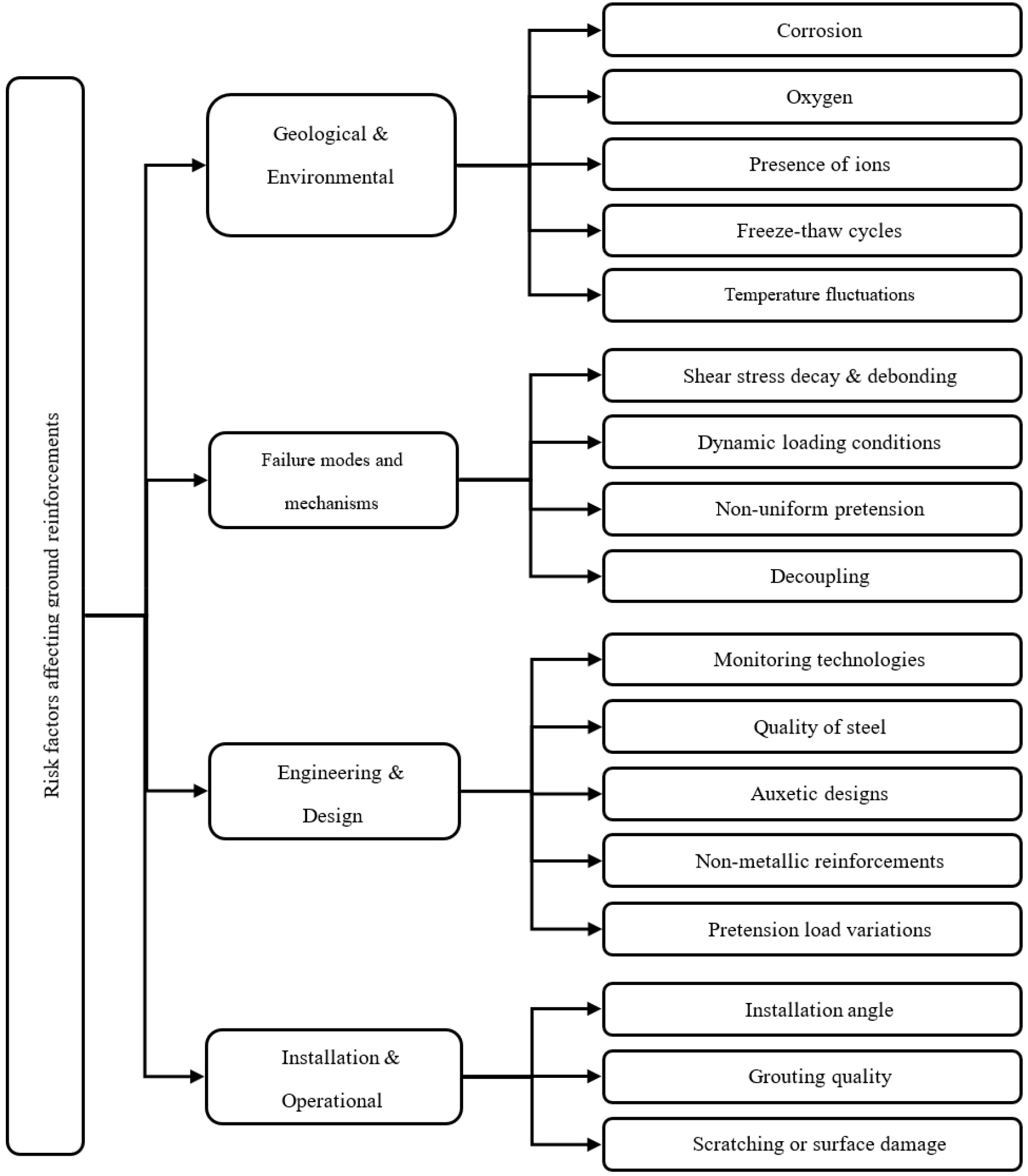
In summary, this study achieves its primary goal by systematically analyzing and categorizing risk factors in GRS through network analysis, emphasizing the impact of both conventional and emerging risks, particularly those associated with sensor integration. The results highlight critical interactions between geological, environmental, engineering, and operational factors, offering a comprehensive view of the risks that impact the stability and reliability of these systems. By integrating text mining and network analysis, this study advances a structured understanding of risk interdependencies, offering valuable insights that can inform safer engineering practices, improved sensor applications, and targeted future research on enhancing the resilience of GRS.
To build on these findings, future research should focus on developing corrosion-resistant materials, standardizing material quality, and leveraging advanced installation technologies to reduce human error and improve system longevity. Enhanced sensor calibration, cross-disciplinary collaboration, and predictive modeling for risk management will further enable proactive maintenance and holistic design solutions, advancing best practices in geotechnical engineering. This framework of interconnected risks thus provides a foundational tool for advancing monitoring technologies and informing proactive maintenance strategies in the field of geotechnical engineering.
Conclusion
This study has highlighted the complex and interconnected factors as shown in the network diagram, contributing to the premature failure of GRS, such as rock bolts, soil nails, and anchors. Key influences include geological and environmental factors — such as moisture, oxygen concentration, and temperature fluctuations — which accelerate corrosion and weaken overall performance. Emerging risks, like chloride, sulfate, and microbiologically influenced corrosion (MIC), further exacerbate material degradation. From an engineering and design perspective, advancements in materials like high-strength steel, auxetic head designs, and nonmetallic anchors have improved system resilience but introduced new challenges regarding material variability and manufacturing complexities. Additionally, installation and operational factors — including installation angle, grouting quality, and displacement release rate — have a significant impact on long-term performance, with improper practices leading to stress concentrations and sensor inaccuracies in monitoring systems. The key findings in this scoping review are as follows:
∙Corrosive environments and conditions like high humidity and the presence of chloride and sulfate ions critically accelerate material degradation, emphasizing the need for corrosion-resistant materials in tunnels and slopes.
∙Innovations such as fiber-reinforced polymers (FRP) and auxetic designs have improved system resilience, but inconsistent material quality and manufacturing variability remain challenges for ensuring long-term stability.
∙Improper installation practices — such as misalignment and poor grouting — significantly impact performance, particularly for sensor-integrated systems, where even minor surface damage can distort readings.
∙The integration of sensors into reinforcement systems introduces new risks, as mechanical stressors and degradation can compromise sensor accuracy. Proper calibration and integration are essential for real-time monitoring.
This study offers a structured understanding of interdependent risk factors in GRS, providing actionable insights for a wide range of stakeholders. Geotechnical engineers, construction firms, and maintenance teams can apply these findings to improve design, installation, and maintenance practices, while sensor manufacturers and regulatory bodies can use this framework to inform standards and advance monitoring technologies. Academically, this research establishes a foundational framework for future studies on reinforcement system resilience, specifically regarding sensor integration and the evolving demands of high-stress geotechnical applications.
In agriculture, soil reinforcement can stabilize erosion-prone areas, improving land usability and protecting farmland. Addressing risks in soil reinforcement enhances agricultural engineering by supporting soil stability crucial for crop production and sustainable land management. Additionally, in life and environmental sciences, reinforced structures aid ecosystem restoration by stabilizing slopes, wetlands, and riparian zones to prevent erosion and support fragile habitats. Insights on sensor integration, risk management, and durability from this study can enhance practices where real-time monitoring and adaptation to environmental stressors are essential for successful ecological projects. A comprehensive approach — integrating material science advancements, precise installation techniques, and robust monitoring technologies — is essential for enhancing the longevity, safety, and functionality of GRS across complex environments.